
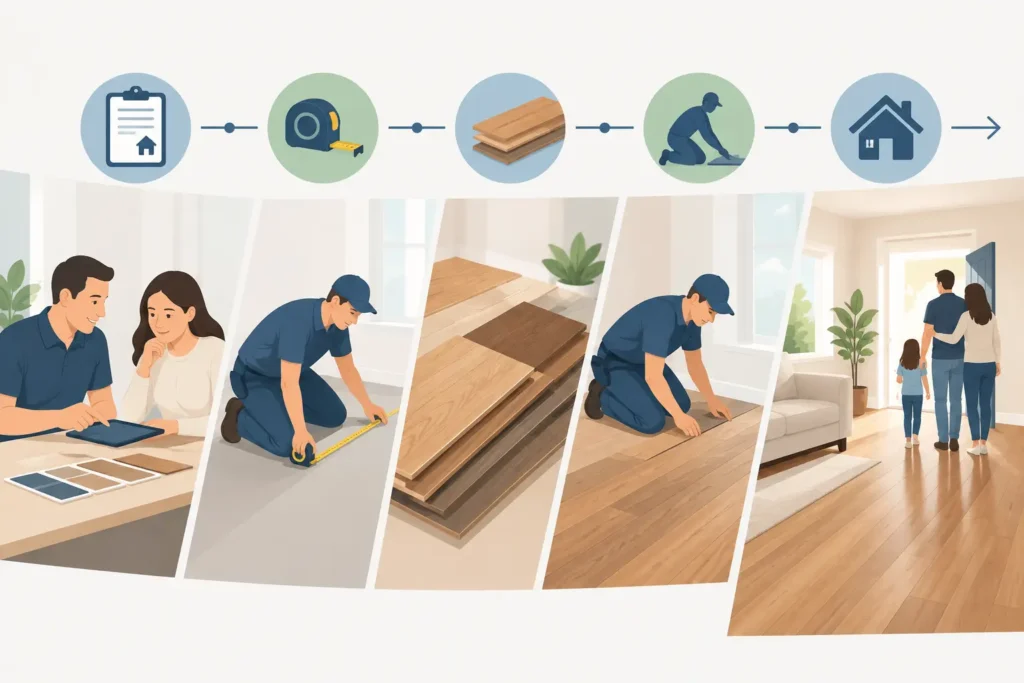
A new floor can change the feel of a home or workplace in a matter of days, but the work starts well before the first plank is installed. A realistic flooring timeline protects your budget, avoids move-in surprises, and gives the installation team time to prepare the space correctly. For homeowners, property managers, and business owners, the goal is not simply a fast installation. It is a finished floor that looks right, performs well, and lasts.
The exact schedule depends on the material, the condition of the existing floor, the size of the project, and whether the space is occupied. Vinyl plank in a vacant bedroom may move quickly. Hardwood throughout a furnished home or an active office requires more coordination. Here is what to expect from the first consultation through the time your floor is ready for normal use.
The Flooring Timeline Starts With a Site Visit
Most successful projects begin with an in-person consultation and measurement. This step is where a flooring professional evaluates the room, takes accurate dimensions, checks transitions to nearby spaces, and looks for issues that can affect installation. Moisture, uneven subfloors, damaged concrete, old adhesive, and door-clearance problems are easier and less expensive to address before materials arrive.
For a straightforward project, material selection, measuring, and preparing an estimate can often happen within a few days. If you are comparing hardwood, bamboo, laminate, and waterproof vinyl plank, allow enough time to consider how each option fits the room. A busy entryway, rental property, pet-friendly home, or office suite may need a different solution than a formal living room.
This is also the right time to discuss practical details. Will furniture need to be moved? Is baseboard removal included? Are there closets, stairs, or built-in cabinets? Does the building require proof of insurance, elevator reservations, or approved work hours? In Los Angeles-area condos and commercial properties, access rules can add days to a project if they are not planned early.
Material Selection and Ordering Can Set the Pace
Once you choose a flooring type, product availability becomes a major part of the schedule. In-stock vinyl plank, laminate, or bamboo may be ready for installation sooner than a special-order hardwood color or a commercial-grade product with a specific wear layer. The quantity needed also matters. Ordering extra material for cuts, future repairs, and pattern matching is normal, but it should be calculated correctly from the start.
A typical ordering window can range from a few days to several weeks. Do not schedule movers, painters, cabinet installers, or a grand opening based only on a product’s estimated arrival date. Confirm that the full order, including trim pieces, reducers, stair nosings, underlayment, adhesives, and moisture barriers, is available.
If timing is critical, ask about in-stock options that meet your performance and design goals. A professional recommendation can help you avoid choosing a product that looks good in a sample but creates unnecessary delays or maintenance concerns later.
Allow Time for Acclimation When the Material Requires It
Not every flooring material needs the same preparation. Many vinyl plank and laminate products can be installed after a shorter period in the space, provided site conditions meet the manufacturer’s requirements. Hardwood and bamboo often need more attention because natural materials respond to temperature and moisture changes.
Acclimation means storing flooring in the installation environment so its moisture content can adjust before installation. Depending on the product, local conditions, and manufacturer instructions, this may take several days or longer. Skipping this step can increase the risk of gaps, cupping, expansion, or other performance problems.
Los Angeles has a generally mild climate, but indoor conditions still vary. Air conditioning, heating, recently painted walls, open windows, and construction moisture can all affect the space. The right schedule follows the flooring manufacturer’s specifications and the actual conditions on site, not a one-size-fits-all calendar.
Demolition and Subfloor Prep Often Take the Longest
The visible installation is only one part of the job. Removing old flooring, hauling debris, scraping adhesive, repairing damaged areas, and leveling the subfloor can take significant time. This work is not optional if the existing surface is unstable, uneven, damp, or contaminated with old adhesive.
A small room with carpet over a clean, level surface may be ready quickly. A whole-home project with glued-down flooring, cracked concrete, multiple floor heights, or water damage may require additional days. For commercial spaces, existing flooring may also need to be removed in phases to keep part of the business operating.
Subfloor prep is where quality craftsmanship makes a real difference. A new floor installed over an uneven base can develop movement, noise, separation, or visible imperfections. Rushing this stage may save a day at the beginning and create repair costs later. A reliable estimate should explain whether leveling, patching, moisture testing, or underlayment is needed.
How Long Installation Usually Takes
After materials are ready and the subfloor is properly prepared, installation can move efficiently. The actual pace depends on room layout, product type, cutting requirements, and the amount of detail work involved.
Vinyl plank and laminate are often among the faster options, especially in open rooms with relatively few obstacles. Many small to mid-sized residential projects can be completed in one to three installation days. Bamboo flooring may follow a similar schedule, although preparation and the installation method still matter.
Hardwood can take longer, particularly when the project includes nail-down installation, detailed layouts, stairs, custom transitions, or unfinished wood that must be sanded and coated on site. A larger hardwood project may take several days to more than a week from installation through finishing, depending on the scope.
Commercial flooring schedules deserve separate planning. Offices, retail spaces, and occupied buildings may require evening, weekend, or phased work. Those restrictions can extend the calendar timeline, but they can reduce disruption to employees, tenants, and customers.
Drying, Curing, and Return-to-Use Time
Installation completion does not always mean the room is ready for full use. Floating vinyl plank and laminate floors can often handle light foot traffic soon after installation, as long as the installer confirms it is safe. Heavy furniture should still be moved carefully and placed with proper floor protectors.
Adhesive-installed flooring may need time before heavy traffic or furniture placement. Hardwood finished on site requires special care while stains and protective coats dry and cure. Drying time and full cure time are not the same. A floor may feel dry to the touch before it is ready for rugs, heavy furniture, rolling office chairs, or regular cleaning.
Your installer should provide specific instructions based on the materials used. Follow them closely. Covering a newly finished hardwood floor too early or placing heavy furniture on an adhesive floor before it has cured can affect the final result.
Build a Smart Buffer Into Your Schedule
The best flooring timeline includes room for the unexpected. Hidden subfloor damage, delayed deliveries, building access restrictions, moisture readings, and last-minute product changes can affect even a well-planned project. A buffer of several days is especially useful before move-in, tenant turnover, an office reopening, or a major event.
If possible, complete flooring before interior painting touch-ups, furniture delivery, and final cleaning. Flooring work creates dust during demolition and preparation, while painters and movers can damage a new surface if coordination is poor. In renovation projects, flooring is usually best installed after messy trades are finished but before final furniture placement.
Magnet Flooring helps clients plan around these details by matching material choices, site conditions, and installation methods to the real demands of the project. The result is a schedule built around lasting performance, not rushed promises.
A clear plan gives you more control over the work and fewer surprises when the project begins. Before setting a move-in date or reopening a space, request an on-site assessment and build your schedule around proper preparation, professional installation, and the time your new floor needs to perform at its best.