
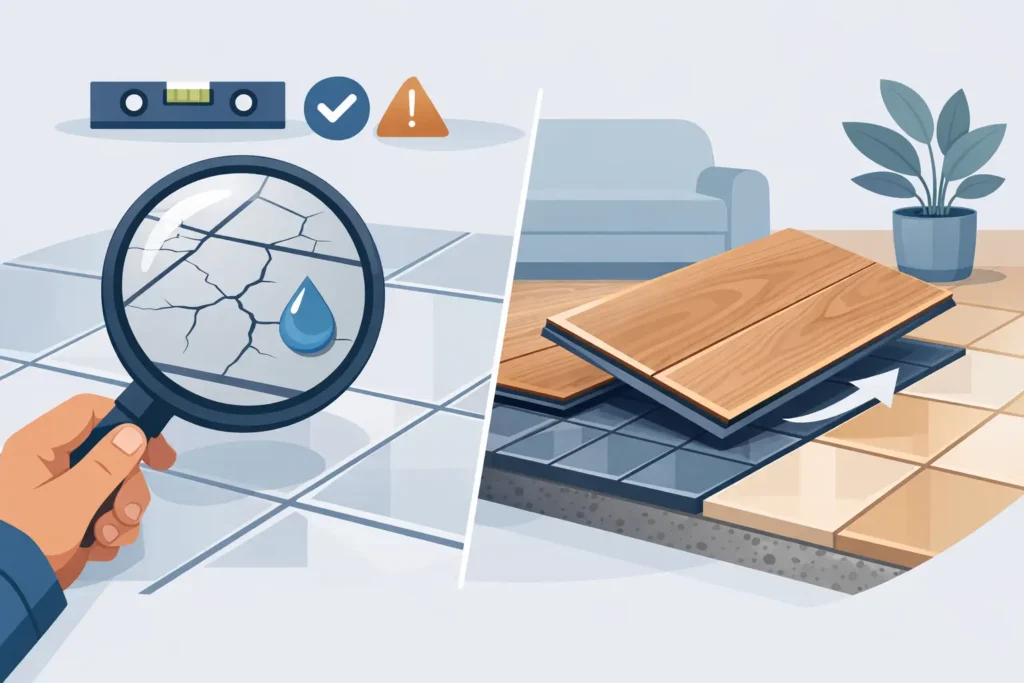
A tile floor can be one of the best surfaces to cover rather than remove. It is already hard, stable, and often firmly bonded to the subfloor. But can vinyl plank go over tile without creating problems at doorways, grout lines, or underfoot? In many homes and commercial spaces, yes. The answer depends on the condition and flatness of the tile, the vinyl product selected, and the preparation completed before installation.
For Los Angeles property owners, installing vinyl plank over tile can avoid the dust, demolition time, and disposal costs that come with tile removal. It can also deliver a warmer, quieter look in kitchens, living areas, offices, and retail spaces. The goal is not to cover a problem floor. It is to create a clean, level foundation that allows the new floor to perform as intended.
Can Vinyl Plank Go Over Tile Successfully?
Vinyl plank can be installed over ceramic, porcelain, and many natural stone tile floors when the existing surface is sound, clean, and reasonably flat. Vinyl plank is thinner and more forgiving than many rigid flooring materials, but it still needs consistent support. If the tile moves, has major height differences, or contains deep grout joints, those imperfections can show through or stress the new planks over time.
A professional installer starts by checking whether the tile is securely attached. A few loose or hollow-sounding tiles do not automatically mean the entire floor must come out, but they do need to be removed and repaired. Cracked tiles also need attention. A crack may be cosmetic, or it may point to movement in the slab or subfloor beneath it. Covering that movement with vinyl is not a lasting fix.
The type of vinyl plank matters, too. Floating click-lock vinyl plank and glue-down vinyl plank have different preparation requirements. A floating floor can bridge minor surface texture, while glue-down vinyl usually demands a smoother substrate because it follows the contours below it more closely. Every manufacturer has installation specifications, and those requirements should guide the project.
The Tile Conditions That Matter Most
Flatness is more important than whether the old tile is perfectly level. A floor can have a gradual slope and still work well for vinyl plank. What causes trouble are abrupt dips, raised tile edges, and uneven transitions that leave parts of the plank unsupported.
Most vinyl plank manufacturers set a maximum flatness tolerance, often around 3/16 inch across 10 feet, though the exact standard varies by product. An installer checks the floor with a long straightedge rather than relying on a quick visual inspection. This step reveals low spots, lippage between tiles, and areas where grout joints are too deep or wide.
Grout lines deserve special attention. Narrow, shallow joints may not need much work, especially under a rigid-core vinyl plank. Wider or recessed grout lines should be filled with a compatible patching compound or floor-leveling material. Without that preparation, the outlines of the tile pattern can eventually become visible through the vinyl, a problem known as telegraphing.
The tile must also be clean and free from wax, grease, soap buildup, and loose residue. This is especially critical with glue-down vinyl. Kitchen floors and commercial spaces may have years of cleaners or cooking oils on the surface, which can interfere with adhesion if they are not properly removed.
When Removing Tile Is the Better Choice
Covering tile is not always the value-minded option. If the tile is extensively loose, badly cracked, or installed over a failing underlayment, removal may prevent a larger repair later. A floor that flexes underfoot needs structural correction before any new finish flooring goes down.
Moisture is another concern, particularly on concrete slabs. Vinyl plank itself is often water-resistant or waterproof, but that does not mean moisture below the floor is irrelevant. Excess moisture can affect adhesives, patching materials, and the long-term condition of the subfloor. A moisture evaluation is smart for slab-on-grade homes, ground-floor units, and commercial properties where moisture history is uncertain.
Removal may also make more sense when added floor height creates clearance issues. Vinyl plank is relatively thin, but the combined height of tile, underlayment if required, and new flooring can interfere with doors, appliances, baseboards, and transitions into adjacent rooms. A refrigerator that barely clears an existing tile floor may not slide back into place once the new floor is installed.
Prepare Tile Before Vinyl Plank Installation
Preparation is where a vinyl-over-tile project succeeds or fails. The process varies by site and product, but it generally includes inspecting the tile, securing or replacing damaged areas, cleaning the surface, and correcting low spots or deep grout joints.
For floating vinyl plank, the installer may use a patching compound to smooth joints and transitions before laying the floor. Not every product permits an added underlayment. Many modern vinyl planks already have an attached pad, and adding another layer can make the locking system unstable or void the product warranty. The right underlayment is the one approved by the flooring manufacturer, not simply the thickest option available.
For glue-down vinyl, a smoother surface is usually necessary. The tile and grout pattern may need to be skim-coated so the new flooring has a uniform surface for bonding. Adhesive selection also matters. It must be compatible with the vinyl product, the tile surface, and the conditions of the room.
Expansion space should not be overlooked. Floating vinyl plank needs room around walls, cabinets, and other fixed objects to expand and contract with temperature changes. Baseboards, shoe molding, and transition strips are then installed to cover those gaps while allowing the floor to move naturally.
Plan for Height at Doors and Transitions
One of the most visible trade-offs of placing vinyl over tile is a higher finished floor. In an open-plan room, that may be barely noticeable. At bathroom doors, hallway entries, closets, and connections to hardwood or carpet, it can require careful planning.
A quality transition creates a safe, finished edge between flooring types. It should not feel like a trip hazard or look like an afterthought. In some cases, doors need to be trimmed or rehung for proper clearance. Baseboards may also need to be removed and reinstalled so the finished room looks intentional rather than layered.
This is why measuring only the room’s square footage is not enough for an accurate flooring estimate. The condition of the tile, number of doorways, prep materials, furniture movement, and transition details all influence labor and cost.
Is Vinyl Plank Over Tile Right for Kitchens and Bathrooms?
Vinyl plank is a practical option for kitchens because it handles everyday spills well, feels more comfortable than tile, and offers a wide range of wood and stone looks. In a bathroom, it can also work well when the perimeter and plumbing areas are properly detailed. However, waterproof planks do not make the entire room waterproof. Water can still reach the edges, walls, or subfloor through gaps if a major leak occurs.
For rental properties and commercial spaces, vinyl plank over tile can be especially appealing when downtime matters. It can refresh a dated floor without the noise and debris of full demolition. Still, busy offices, restaurants, and retail locations may need more durable wear layers, stronger adhesives, and scheduling that accounts for foot traffic and business operations.
Choose the Right Installation Method
Click-lock vinyl plank is popular for residential projects because it installs efficiently and can offer a comfortable, floating-floor feel. It is often a good choice over properly prepared tile, provided the floor is flat enough and the product’s instructions allow the installation.
Glue-down vinyl plank can be a strong option for commercial settings, large open rooms, and areas with rolling loads. It offers a lower profile and less movement underfoot, but it requires more intensive substrate preparation. Neither method is automatically better. The right one depends on the existing tile, expected use, budget, and the look you want to achieve.
Before covering tile, have an experienced flooring professional inspect the surface in person. A straightforward evaluation can identify whether targeted repairs and leveling will deliver the result you want, or whether tile removal is the smarter investment. Magnet Flooring helps homeowners, property managers, and business owners make that call with practical recommendations based on the actual floor, not a one-size-fits-all answer.