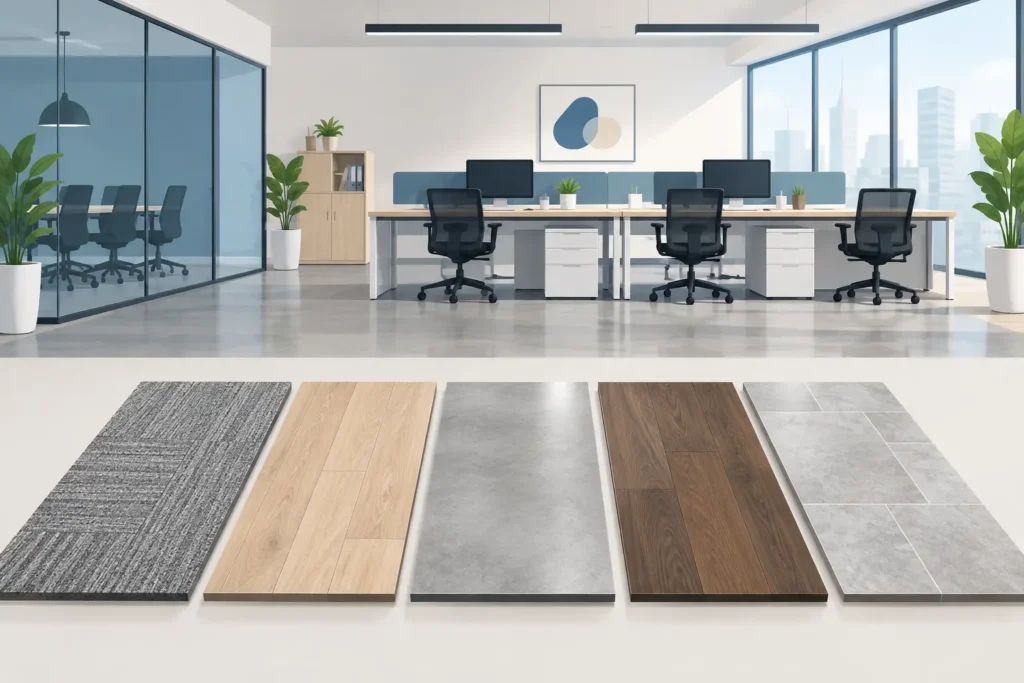
A worn office floor changes how people experience a business before anyone says a word. Scuffs at the entry, noisy walkways, stained carpet, or lifting seams can make even a well-run workplace feel neglected. The top office flooring materials solve different problems, from handling rolling chairs and heavy foot traffic to improving acoustics and creating a more polished brand image.
The right choice is not simply the most expensive material or the one that looks best in a sample. It should fit the way your team works, the condition of the subfloor, maintenance expectations, and the budget for both installation and long-term upkeep. For offices in Los Angeles, sunlight, dry conditions, busy entrances, and multi-tenant building requirements can also affect the best option.
What Office Flooring Needs to Handle
Commercial spaces place different demands on flooring than most homes. Reception areas and hallways may see constant foot traffic, while private offices need a professional appearance and conference rooms need better sound control. Break rooms and copy areas need surfaces that can withstand spills, while open-plan workspaces need flooring that holds up under desk chairs.
Before choosing a material, consider where it will be installed. A single flooring type can work throughout a small office, but larger spaces often benefit from a combination. For example, waterproof vinyl plank may be practical in the reception area and break room, while carpet tiles can reduce noise in meeting rooms and work zones.
Also look beyond the visible surface. Uneven concrete, moisture concerns, old adhesive, and transitions between rooms all affect installation quality. A professional site evaluation helps prevent issues such as gaps, buckling, premature wear, or flooring that feels uneven underfoot.
Top Office Flooring Materials to Compare
Luxury Vinyl Plank: Practical, Durable, and Design-Flexible
Luxury vinyl plank, often called LVP, is one of the strongest all-around choices for modern offices. It can create the look of hardwood or stone while offering a more affordable and water-resistant surface. Quality commercial-grade vinyl plank is durable enough for day-to-day traffic, office chairs, and routine cleaning.
This material works especially well in lobbies, hallways, private offices, break rooms, and medical or service-oriented workplaces. It is also more forgiving than real wood when employees track in moisture or when coffee spills happen. Many options include a wear layer designed to resist scratches and scuffs, although no flooring is completely damage-proof.
Vinyl plank has trade-offs. It does not provide the same natural character or potential refinishing life as hardwood. Cheap products can also dent, fade, or show joint failures over time, particularly when installed over an unprepared subfloor. Choosing the right thickness, wear layer, and installation method matters as much as choosing the color.
Commercial Carpet Tile: Better Acoustics and Easy Repairs
Carpet tile remains a smart choice for offices where noise control matters. It absorbs sound from footsteps, conversations, rolling chairs, and dropped items, making it especially useful in open offices, conference rooms, call centers, and shared workspaces. It also adds warmth and comfort underfoot.
Unlike broadloom carpet, carpet tiles make repairs more manageable. If one area becomes stained or damaged, a flooring professional can replace individual tiles rather than removing an entire room of carpet. This is a practical advantage in offices with frequent food service, customer traffic, or occasional spills.
The downside is maintenance. Carpet requires regular vacuuming and periodic deep cleaning to stay presentable. It can retain dust and odors if neglected, and it is usually not the best standalone choice for entryways or break rooms. Many businesses use carpet tile in quieter work zones and a hard surface floor near entrances and wet areas.
Hardwood: Premium Appearance for Client-Facing Offices
Hardwood flooring gives an office a distinctive, established look. It is a strong fit for executive offices, professional firms, design studios, boutiques, and reception spaces where visual impact carries real value. Natural wood brings depth and character that manufactured materials can imitate but not fully duplicate.
When properly installed and maintained, hardwood can last for decades. One major advantage is that solid hardwood may be refinished, allowing the surface to be renewed after years of use. For offices aiming to make a long-term investment in their space, that lifecycle can justify the higher upfront cost.
However, hardwood needs thoughtful placement. It is more vulnerable to moisture, deep scratches, and dents than vinyl plank. Heavy rolling loads and constant chair movement may require floor protectors or mats. Direct sunlight can also alter wood color over time, a consideration for sunny Los Angeles offices with large windows. Engineered hardwood can be a more stable choice in some commercial environments, depending on the subfloor and moisture conditions.
Bamboo: A Sustainable Option With Modern Style
Bamboo flooring is an appealing option for businesses that want a renewable material without sacrificing a clean, contemporary look. It can complement wellness-focused offices, creative studios, eco-conscious companies, and professional spaces that want to communicate a commitment to responsible material choices.
High-quality strand-woven bamboo can be very durable, but quality varies widely between products. Lower-grade bamboo may be more prone to scratches, dents, or adhesive-related problems. The finish, construction, and installation conditions should be reviewed carefully before selecting it for a high-traffic commercial area.
Bamboo is not the automatic answer for every office, but it can be an excellent choice where sustainability, warmth, and modern design are priorities. It needs proper acclimation and professional installation to perform well, especially in spaces where indoor temperature and humidity fluctuate.
Laminate: Budget-Friendly Style for Low-to-Moderate Traffic
Laminate flooring offers a cost-conscious way to achieve a wood-look floor in private offices, small businesses, and leased commercial spaces. It is available in a wide range of colors and plank styles, and many products provide good resistance to everyday scratches.
For an office with moderate traffic and a limited renovation budget, laminate can deliver a clean upgrade without the cost of hardwood. It is often a sensible choice when a business wants a refreshed look before opening, relocating, or leasing a space.
Its limitations are important. Traditional laminate does not tolerate standing water as well as waterproof vinyl plank, and damaged boards are generally replaced rather than refinished. It is also less suitable for areas exposed to frequent spills or moisture. Product selection matters here, since commercial-rated laminate will perform differently from entry-level residential options.
How to Choose the Right Material for Each Area
Start with traffic, not color. A busy entry and corridor need a harder, easier-to-clean surface, while a conference room may benefit more from sound absorption. Next, consider maintenance. If your staff does not have the time or budget for frequent deep cleaning, a resilient hard surface may be the better fit.
Then consider the life of the space. A company planning to occupy its office for many years may see value in hardwood or premium vinyl plank. A tenant preparing a space for a shorter lease term may prioritize laminate or carpet tile for cost control and simpler replacement.
Appearance still matters, especially in customer-facing spaces. Flooring should support the business rather than compete with it. Warm wood tones can make a legal office, salon, or wellness practice feel inviting. Clean vinyl or polished neutral carpet tiles can suit tech, medical, and professional offices that need a modern, organized look.
Installation Quality Protects the Investment
Even the best flooring can fail early when installed over an unprepared surface. Commercial installation may require moisture testing, floor leveling, removal of old flooring, adhesive selection, transitions, baseboards, and coordination with furniture or business hours. These details are where shortcuts become expensive.
A professional installer can help match the product to the space, identify subfloor concerns before work begins, and plan the project around your operational needs. For offices in Burbank, Glendale, North Hollywood, and surrounding Los Angeles communities, an on-site consultation provides a clearer picture than choosing from samples alone.
The best office floor is the one that keeps working after the first impression. Choose a material that fits your traffic, your maintenance routine, and the way you want clients and employees to feel when they walk through the door.