A dining chair dragged across the floor, a dog racing through the hallway, grit tracked in from the driveway – these are the real tests of any floor. So, does bamboo flooring scratch easily? Not necessarily. Quality bamboo can be highly scratch-resistant, but its performance depends on the product type, finish, installation, and how the space is used.
Bamboo is often chosen for its clean, modern look and renewable sourcing. It can be an excellent fit for Los Angeles homes, apartments, offices, and rental properties, but it is not a maintenance-free material. Understanding where it performs well and where it needs extra protection helps you make a decision that looks good now and continues to work for your budget years from now.
Does Bamboo Flooring Scratch Easily Compared With Other Floors?
Bamboo flooring is generally more resistant to everyday scratches than many softer hardwoods, such as pine or some grades of traditional oak. However, not all bamboo flooring is made the same. A low-quality bamboo floor with a thin finish may show marks quickly, while a premium strand-woven bamboo product can handle active households and commercial foot traffic surprisingly well.
The key difference is density. Bamboo fibers are compressed and bonded into planks, and the manufacturing method determines how tightly those fibers are packed. Denser bamboo is harder to dent and more capable of resisting surface wear.
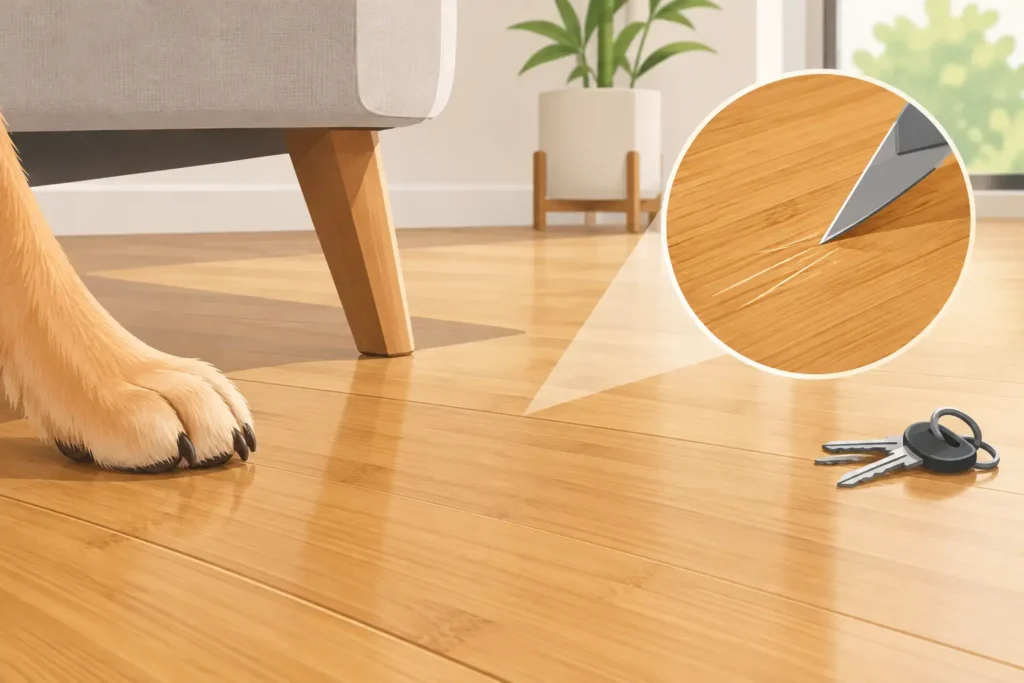
That said, scratch resistance is not scratch proof. Pet nails, moving furniture, high heels, rolling office chairs, and abrasive dirt can mark virtually any finished flooring. The finish may scratch before the bamboo itself is damaged, which is why product quality and proper care matter as much as the material.
The Type of Bamboo Makes a Major Difference
When clients ask whether bamboo will hold up in a busy room, we look beyond the word “bamboo.” There are several construction styles, and their durability varies significantly.
Strand-Woven Bamboo Is the Most Durable Option
Strand-woven bamboo is made by shredding bamboo into fibers, saturating those fibers with adhesive, and compressing them under intense heat and pressure. This process creates a dense plank that is typically harder than traditional horizontal or vertical bamboo.
For homes with children, pets, or frequent entertaining, strand-woven bamboo is usually the strongest choice. It is also worth considering for offices, retail spaces, and rental properties where consistent foot traffic is expected. A quality factory-applied finish adds another layer of daily protection.
Horizontal and Vertical Bamboo Can Be More Vulnerable
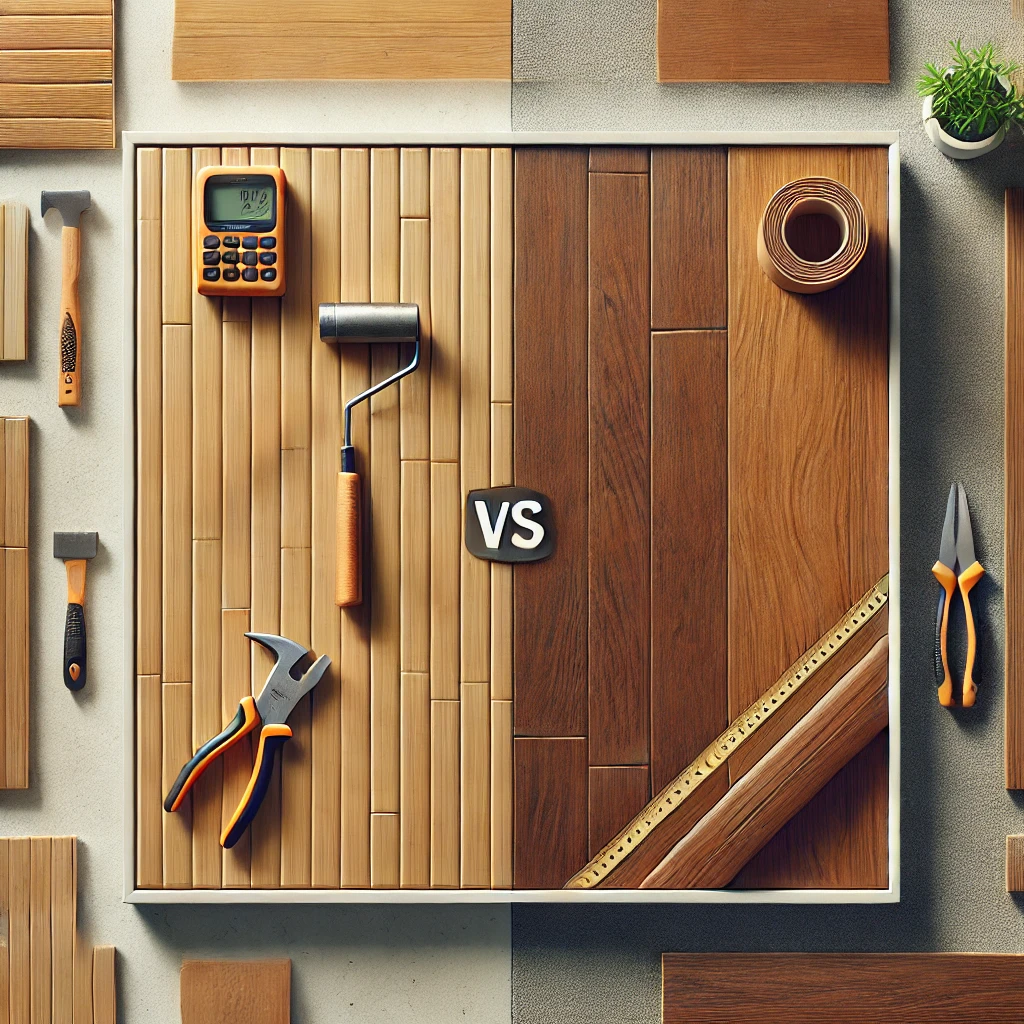
Horizontal bamboo displays wider bamboo nodes for a more natural, traditional appearance. Vertical bamboo uses narrower strips for a cleaner grain pattern. Both can look attractive, but they are usually less dense than strand-woven bamboo.
These options can work well in bedrooms, low-traffic living areas, or spaces where design is the main priority. In a busy kitchen, entryway, or office, they may show scratches sooner than strand-woven products.
The Finish Is Part of the Durability Equation
A bamboo floor with a high-quality aluminum oxide or multi-layer polyurethane finish will generally resist surface scratching better than a basic finish. The finish is the first line of defense against minor scuffs, pet claws, and everyday wear.
Darker colors can make light scratches, dust, and pet hair more visible. Very glossy finishes can also highlight scuffs because they reflect more light. For a practical balance, many homeowners choose a matte or low-sheen finish in a medium natural tone. It hides routine wear better without sacrificing a polished look.
What Actually Causes Scratches on Bamboo Floors?
Most scratch damage comes from friction and abrasive debris, not from normal walking. Fine sand and small rocks act like sandpaper under shoes, especially around entrances. This is a common issue in Southern California, where dry conditions can make it easy to track dust indoors.
Furniture is another frequent source of damage. Chairs pulled away from a table, sofas shifted during cleaning, and metal legs on barstools can leave visible marks. Rolling chairs can wear a concentrated path into flooring over time if they are used without a protective mat.
Pets are not automatically a reason to avoid bamboo, but their nails should be trimmed. A large dog running, turning sharply, or jumping off furniture can leave marks on any wood-based floor, including bamboo. Water bowls should also sit on a waterproof mat to prevent moisture exposure around feeding areas.
Finally, poor installation can make a durable floor perform poorly. Gaps, uneven subfloors, improper expansion spacing, or using a product in a room with unsuitable moisture conditions can lead to movement, edge damage, or premature finish wear.
How to Keep Bamboo Flooring Looking New
Protecting bamboo flooring does not require complicated routines. It comes down to reducing grit, preventing hard contact, and cleaning with products that will not dull the finish.
Place durable mats outside and inside exterior doors, particularly at high-use entrances. Use felt pads beneath furniture legs and replace them when they collect dirt or become worn. If you have a dining area with frequently moved chairs, wider felt protectors work better than small adhesive dots.
Sweep, dust mop, or vacuum using a hard-floor setting regularly. Avoid vacuum attachments with stiff rotating brushes, which can scuff the finish. Clean spills promptly with a lightly damp microfiber mop and a flooring cleaner approved for the manufacturer’s finish.
Do not use steam mops, excessive water, oil soaps, waxes, or harsh abrasive cleaners. Bamboo is more moisture-stable than some hardwoods, but it is still a natural, wood-based flooring material. Standing water and repeated oversaturation can damage planks, weaken joints, and affect the finish.
For home offices, use a chair mat designed for hard flooring. For commercial spaces, entry mats and protective pads under movable furniture are a low-cost way to reduce maintenance needs in busy areas.
Can Scratched Bamboo Flooring Be Repaired?
Minor scuffs are often manageable. Light marks in the finish may improve with a manufacturer-approved touch-up product or a professional cleaning and recoating service. The right solution depends on whether the damage is limited to the protective finish or reaches the bamboo beneath it.
Deep scratches, gouges, or damaged board edges may require plank replacement. This is one reason professional installation matters: installers can plan the layout carefully, keep appropriate material on hand when possible, and avoid unnecessary damage during the project.
Whether a bamboo floor can be sanded and refinished depends on its construction and wear layer. Some solid and thicker strand-woven products can be refinished under the right conditions. Many engineered bamboo floors have a thinner top layer and should not be aggressively sanded. Refinishing the wrong product can cause more damage, so it is best to have the flooring assessed before any work begins.
Is Bamboo the Right Choice for Your Space?
Bamboo is a strong option when you want the warmth of a natural floor, a contemporary look, and a more eco-conscious material choice. It is especially appealing in living rooms, bedrooms, offices, and well-maintained common areas. High-quality strand-woven bamboo can also perform well in active households when it is protected from grit and excess moisture.
It may not be the best fit for every situation. If you expect frequent water exposure, such as in a full bathroom, waterproof vinyl plank may offer more peace of mind. If you want a floor that can be repeatedly refinished over decades, certain solid hardwood options may be a better match. The right answer depends on traffic, pets, moisture, design goals, and how much maintenance you are comfortable handling.
A professional flooring consultation can help you compare samples, finishes, and plank constructions before committing to a product. Magnet Flooring helps homeowners and business owners select and install flooring that fits the room, the budget, and the way the space is actually used. Choose quality bamboo, protect it from the daily sources of abrasion, and it can remain a durable, attractive part of your property for years.