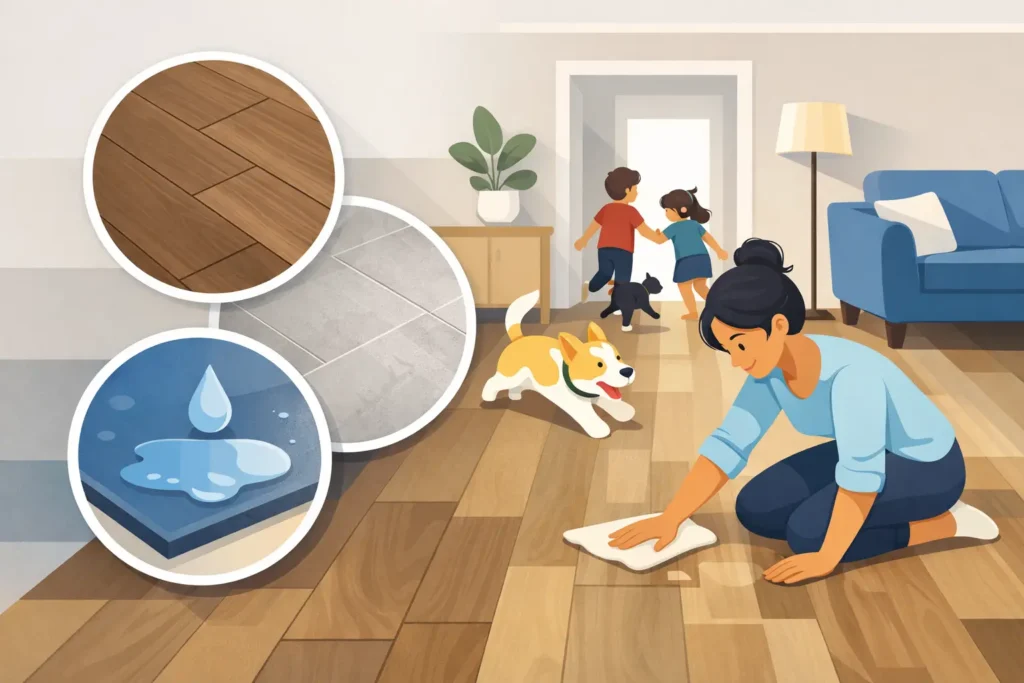
The real test of a floor is not how it looks right after installation. It is how it handles wet shoes at the door, pets cutting across the room, chairs scraping back from the table, and the kind of daily traffic that never really stops. If you are trying to choose the best flooring for busy households, you need more than a pretty finish. You need a surface that can take pressure, clean up easily, and still look good a year from now.
That is where many homeowners get stuck. A floor can be affordable but too easy to damage. It can be beautiful but high maintenance. It can be durable but not the right fit for the room. The right choice depends on how your household actually lives, not just what looks good in a showroom.
What makes the best flooring for busy households?
In high-traffic homes, performance comes first. Durability matters, but so does water resistance, scratch resistance, comfort underfoot, and how much time you want to spend maintaining it. Families with kids may care most about spill resistance. Pet owners usually focus on scratches and cleanup. Property managers often want a balance of cost, longevity, and fast installation.
The biggest mistake is treating every room the same. A flooring material that works well in a bedroom may not hold up in a kitchen, hallway, or office entry. Busy households usually do best with a practical mix of priorities: easy maintenance, strong wear layers, stable installation, and a look that still supports the design of the space.
Luxury vinyl plank is often the safest all-around choice
If a customer asks for one material that checks the most boxes, luxury vinyl plank usually leads the conversation. It is one of the most reliable options for active homes because it combines durability with water resistance and relatively simple maintenance. For kitchens, living areas, entryways, and even many bathrooms, it solves several problems at once.
A quality vinyl plank floor handles spills better than hardwood and usually stands up well to everyday wear. It is also softer and quieter underfoot than tile, which matters in homes with children, pets, or long days on your feet. For many households, that comfort factor gets overlooked until after installation.
Not all vinyl plank is the same, though. The wear layer makes a major difference. A thinner, low-grade product may save money upfront but show wear sooner in high-use areas. A better product costs more initially, but it tends to hold its appearance longer and gives you more value over time.
For Los Angeles homeowners who want a modern wood-look floor without the upkeep of natural wood, vinyl plank is often the most practical fit.
Laminate flooring works well when scratch resistance is the priority
Laminate has improved significantly over the years. In many busy homes, it performs well because it resists scratches, dents, and general wear better than some people expect. If you have kids dragging toys across the floor or a dog that does laps through the hallway, laminate deserves a serious look.
Where laminate gets more complicated is moisture. Some newer products offer much better water resistance than older versions, but laminate is still not the first choice for rooms with frequent standing water unless you select a product specifically built for that environment. That means it can be a strong option for living rooms, bedrooms, hallways, and some dining areas, while kitchens and bathrooms require more caution.
Laminate also gives you a wide range of styles at a competitive price point. For homeowners balancing durability and budget, it often lands in a very attractive middle ground.
Hardwood is beautiful, but it asks more from you
Hardwood remains one of the most desirable flooring materials for a reason. It adds warmth, character, and long-term value to a home. In the right setting, it can last for decades. But when the question is strictly about the best flooring for busy households, hardwood is not always the easiest answer.
A busy home can be hard on wood floors. Heavy foot traffic, pet nails, dropped objects, and moisture can all leave a mark. Some species are tougher than others, and certain finishes perform better in active homes, but hardwood still requires a higher level of care than vinyl plank or laminate.
That does not mean it should be ruled out. If design is a top priority and you are willing to maintain it properly, hardwood can still be the right investment. It is especially appealing in living rooms, bedrooms, and spaces where appearance carries as much weight as toughness. The key is going in with realistic expectations.
Bamboo flooring is a smart option for homeowners who want durability and sustainability
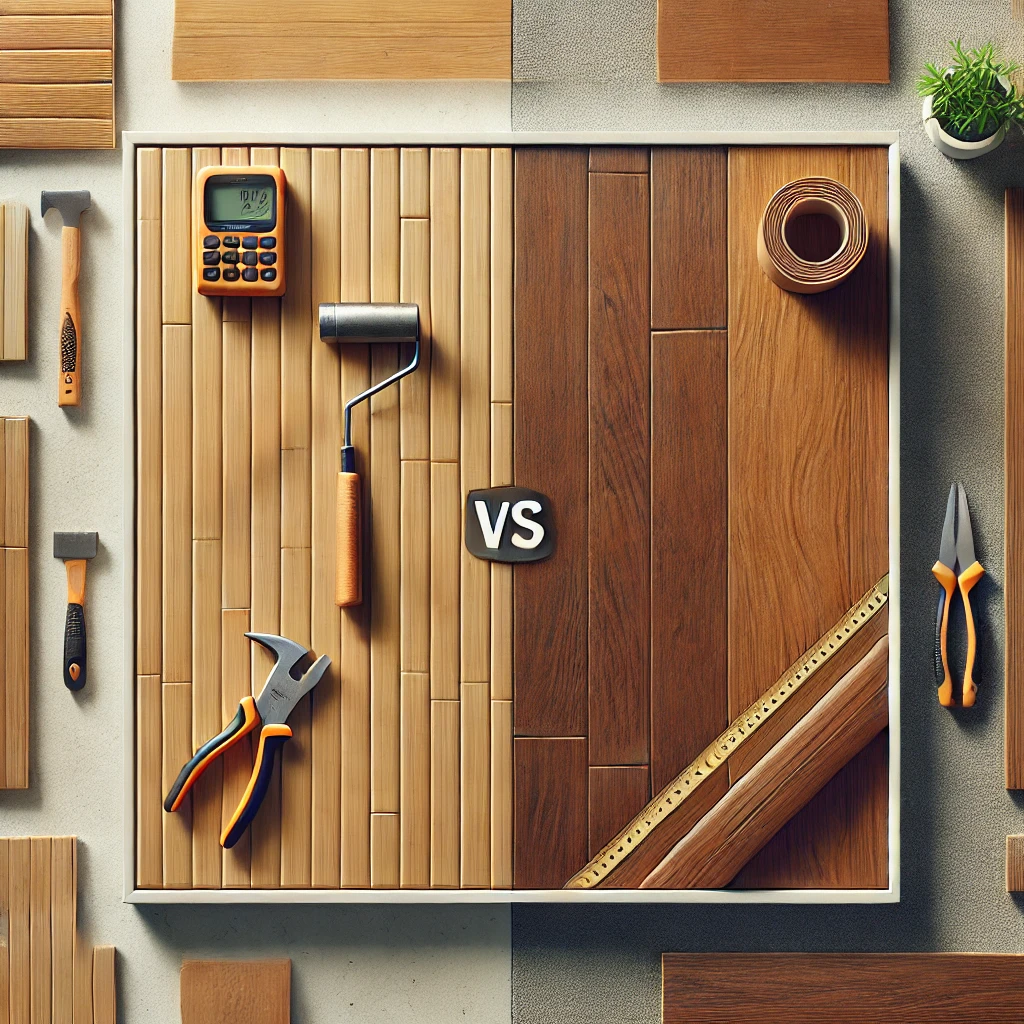
Bamboo stands out for households that want an eco-conscious material without giving up performance. A high-quality bamboo floor can be durable, attractive, and a strong fit for modern interiors. It brings a clean, natural look while supporting a more sustainable approach to renovation.
Like hardwood, though, product quality matters a lot. Strand-woven bamboo is usually the better performer in busy spaces because it is denser and more resistant to wear. Lower-grade bamboo may not deliver the same long-term results.
Bamboo can be a good match for homeowners who want something different from traditional hardwood but still prefer a natural surface. It works best when selected carefully and installed properly. That last part matters more than many people realize. Even a strong material can fail early if the subfloor, moisture conditions, or installation methods are not handled correctly.
The best flooring by room, not just by material
The smartest way to choose flooring is to match it to the demands of each space. Kitchens need strong water resistance and easy cleanup. Entryways need durability and dirt tolerance. Living rooms need a balance of comfort, style, and wear resistance. Bedrooms usually allow more flexibility because traffic is lighter and moisture is less of a concern.
That is why a whole-home flooring plan does not always mean one product everywhere. In many projects, the best result comes from using one durable material across the main traffic areas and a different option in rooms with different needs. A professional consultation helps sort out where continuity matters most and where performance should lead the decision.
Cost matters, but replacement costs more
Budget is always part of the conversation, and it should be. The lowest upfront price is not always the most affordable choice once you factor in lifespan, repair risk, and maintenance. A floor that needs early replacement or constant attention usually costs more in the long run.
Busy households should focus on value instead of sticker price alone. That means looking at product quality, installation quality, and how well the floor fits the space. A solid vinyl plank or laminate floor often gives homeowners the best combination of price and performance. Hardwood and bamboo may cost more, but in the right project they can still make financial sense if longevity and appearance are top priorities.
Installation quality is part of durability
Homeowners often compare materials while underestimating the installation itself. A durable product installed poorly can shift, gap, trap moisture, or wear unevenly. That is especially true in high-traffic homes where floors face constant stress.
Professional installation protects the investment. Proper leveling, subfloor preparation, moisture checks, and clean finishing details all affect how a floor performs over time. It also saves time and reduces the risk of expensive fixes later. For property owners trying to avoid disruption, that reliability matters.
This is one reason many customers prefer to work with experienced flooring professionals instead of trying to piece together a solution on their own. Good advice up front prevents bad outcomes later.
So what is the best flooring for busy households?
For most homes, luxury vinyl plank is the strongest all-around answer because it handles traffic, moisture, and maintenance demands better than most alternatives at a practical price. Laminate is a close contender when scratch resistance and budget are major priorities. Hardwood is still a premium option for households willing to trade some convenience for long-term beauty. Bamboo works well for homeowners who want sustainable style with solid performance, especially when product quality is high.
There is no single floor that wins every category. The right choice depends on your rooms, your traffic levels, your budget, and how much upkeep you are willing to take on. That is why the best flooring decisions start with real usage, not just samples.
If your floors need to keep up with family life, pets, tenants, or constant foot traffic, choose the material that works hard after the installers leave. A good-looking floor gets attention on day one. The right floor keeps earning its place every day after that.