A floor can look great in a showroom and still be the wrong choice for your space. That is usually where the real question starts with bamboo flooring vs hardwood. Homeowners, property managers, and business owners are not just choosing a color or plank width. They are choosing how that floor will handle foot traffic, moisture, sunlight, maintenance, and budget over the next several years.
If you are deciding between these two materials, the best option depends on where the floor is going, how much wear it will take, and what matters most to you – price, appearance, sustainability, or long-term resale appeal. Both can be excellent. Both also come with trade-offs that are easy to miss if you only compare samples.
Bamboo flooring vs hardwood at a glance
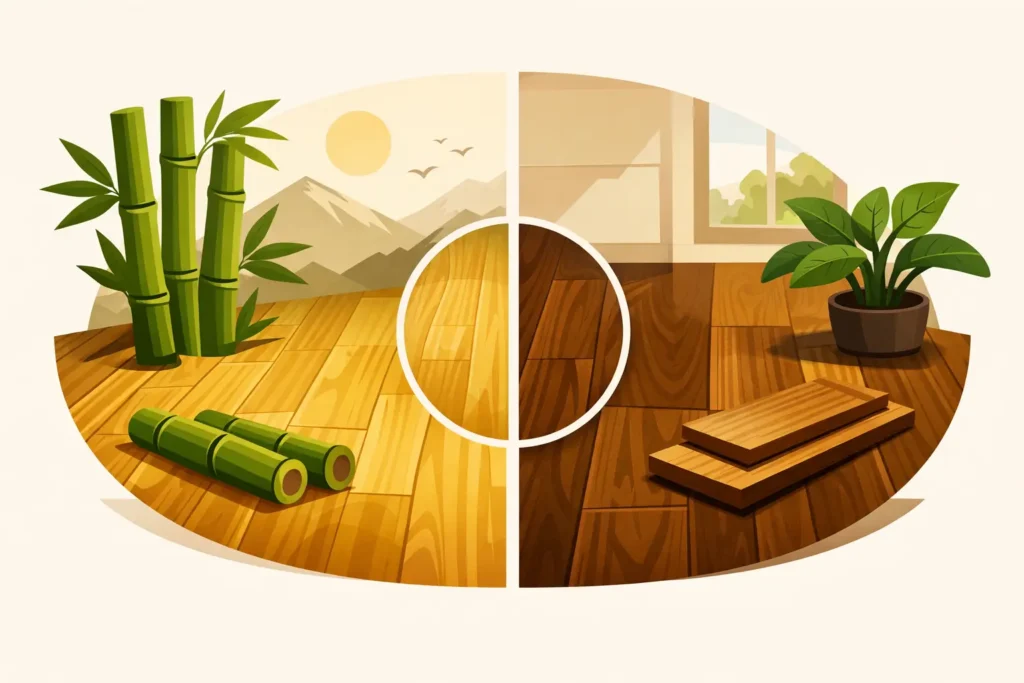
Bamboo flooring is made from a fast-growing grass that is processed into planks. Hardwood flooring comes from solid timber species such as oak, maple, walnut, or hickory. On the surface, they can look surprisingly similar, especially with modern finishes. Under daily use, though, they behave differently.
Bamboo usually attracts buyers who want a clean, modern look, a more eco-conscious material, and pricing that can be more approachable than premium hardwood. Hardwood appeals to buyers who want classic character, broad style options, and the proven reputation that comes with traditional wood flooring.
The right call is not about which material is better in every situation. It is about which one fits the room and the property better.
Cost and value
For many projects, price narrows the field quickly. Bamboo flooring is often less expensive than high-end hardwood, but not always cheaper than every hardwood option. Entry-level oak or other common wood species can come in close, while premium strand-woven bamboo can cost more than some standard hardwood products.
Installation costs also matter. The subfloor condition, plank format, room layout, and prep work all affect the final number. A floor that looks affordable upfront can become more expensive if the job needs extra leveling, moisture control, or trim adjustments.
From a value standpoint, hardwood still has the stronger long-term reputation. Many buyers recognize hardwood immediately, and that can help with resale in some markets. Bamboo can still add strong visual appeal and practical value, especially when installed well, but it does not always carry the same perceived prestige.
If your goal is to balance appearance and budget, bamboo can make a lot of sense. If resale and traditional appeal are higher priorities, hardwood often holds the edge.
Durability and daily wear
This is where the conversation gets more specific. Not all bamboo is equally durable, and not all hardwood performs the same way either.
Strand-woven bamboo is usually much harder than traditional horizontal or vertical bamboo. It is compressed under intense pressure, which makes it more resistant to dents and wear. That can be a strong advantage in busy households, rental properties, or commercial spaces with steady foot traffic.
Hardwood durability depends heavily on the wood species. Oak is a common choice because it balances strength, cost, and appearance. Softer woods can dent more easily, while harder species can stand up better to daily use. Finish quality also plays a major role. A good finish can protect either floor better against scratches, scuffs, and surface wear.
For offices, family homes, and common areas, it is smart to look beyond the label and ask about actual hardness, finish type, and expected traffic level. A well-selected hardwood can outperform low-quality bamboo. High-quality strand-woven bamboo can outperform some softer hardwoods. Product quality matters as much as the category.
Moisture and climate performance
Moisture is one of the biggest reasons a flooring decision goes wrong. Neither bamboo nor hardwood should be treated like a waterproof floor, but bamboo often handles minor humidity changes better than traditional solid hardwood.
That said, bamboo can still swell, shrink, or warp if it is exposed to excess moisture or installed over a problem subfloor. Hardwood has the same risk, and in some cases a greater one, especially in areas with fluctuating indoor conditions.
In parts of Los Angeles, flooring may deal less with heavy seasonal humidity and more with sun exposure, interior cooling, occasional leaks, and lifestyle use. Kitchens, ground-level rooms, and commercial spaces need careful evaluation before either material is installed. Moisture testing and correct acclimation are not optional steps. They are part of getting a floor that lasts.
If the room has a higher moisture risk, you may want to consider whether a different material is actually the smarter choice. Sometimes the best professional advice is not bamboo or hardwood – it is something more moisture-resistant altogether.
Appearance and design flexibility
Hardwood gives you more variety. That is one of its biggest strengths. You can choose from different species, grain patterns, stains, finishes, plank widths, and surface textures. Whether the property leans classic, rustic, upscale, or contemporary, hardwood usually offers a match.
Bamboo has a more consistent visual style. It tends to suit clean, modern interiors and works well in spaces where you want a sleek, streamlined look. Some bamboo products mimic the warmth of traditional wood better than others, but in general, bamboo does not offer the same range of natural variation as hardwood.
For homeowners who want timeless design, hardwood often feels safer. For clients who want a fresh look with a more eco-conscious story behind it, bamboo can be the better fit.
This is also where professional guidance helps. The same material can look completely different depending on plank direction, finish sheen, and how it works with the room’s lighting.
Maintenance and repair
Both flooring types need regular care, but neither is high-maintenance if installed and finished properly. Sweeping, vacuuming with a hard-floor setting, and prompt cleanup of spills go a long way.
Hardwood has one major long-term advantage: many solid hardwood floors can be sanded and refinished multiple times. That can extend the life of the floor significantly and allow you to update the finish later.
Bamboo is less predictable here. Some engineered or thinner bamboo products cannot be refinished much, if at all. Certain solid bamboo products may allow limited refinishing, but it depends on construction and thickness. This is worth asking before you buy, not after the floor shows wear.
If long-term restoration is important to you, hardwood is usually the stronger choice. If you are focused on upfront appearance, practical performance, and cost control, bamboo may still be the better overall value.
Sustainability and environmental appeal
Bamboo often wins this category, at least on paper. It grows much faster than hardwood trees and can be harvested more frequently, which makes it appealing to buyers who want a renewable flooring option.
The catch is manufacturing quality. Some bamboo products are made with adhesives and production methods that affect indoor air quality and overall environmental benefit. Hardwood can also be sourced responsibly, but it depends on the supplier and forestry practices.
So if sustainability is a major priority, the better question is not simply bamboo or hardwood. It is where the material came from, how it was made, and whether the product meets recognized standards for low emissions and responsible sourcing.
Which one is better for homes and commercial spaces?
For homes, hardwood is often the better fit when you want resale value, design flexibility, and a floor that can be refinished over time. It works especially well in living rooms, bedrooms, dining areas, and higher-end renovations.
Bamboo can be a strong option for households that want a stylish surface with good durability and a more budget-conscious path to a wood-look floor. It also appeals to clients who want a sustainable material without stepping into premium hardwood pricing.
For commercial settings, the answer depends on traffic, maintenance expectations, and appearance goals. High-quality strand-woven bamboo can perform very well in offices and light commercial interiors. Hardwood can create a more upscale impression, but it may require a more careful maintenance plan in busy environments.
How to make the right choice
When clients ask us about bamboo flooring vs hardwood, the best answer usually starts with the room, not the sample. A beautiful plank is only part of the decision. You also need to think about subfloor condition, sun exposure, moisture risk, traffic, pets, furniture movement, and how long you plan to keep the property.
If you want a classic investment with broad design options and strong resale appeal, hardwood is hard to beat. If you want durability, modern style, eco-friendly appeal, and potentially lower material cost, bamboo deserves serious consideration.
The smartest flooring decision is the one that fits your space in real life, not just in a display rack. If you are weighing both options for a home or business, get the room evaluated first. The right material should work as hard as it looks good.