A hardwood floor should feel flat underfoot. When the board edges start to rise while the center dips, the problem is called cupping. So, what causes hardwood cupping? In nearly every case, it is an imbalance in moisture. The key is finding where that moisture came from and addressing it before a repair turns into a replacement.
Cupping can appear slowly after a humid season or suddenly after a plumbing leak, appliance overflow, or water intrusion. For Los Angeles homeowners and property managers, the cause is not always obvious. Dry outdoor weather does not eliminate moisture risks inside a home, especially over concrete slabs, in kitchens, near exterior doors, or in buildings with inconsistent air conditioning.
What Causes Hardwood Cupping?
Hardwood is a natural material that expands as it absorbs moisture and contracts as it dries. Each plank has a moisture level, and the flooring performs best when that level stays reasonably close to the moisture conditions in the room and subfloor.
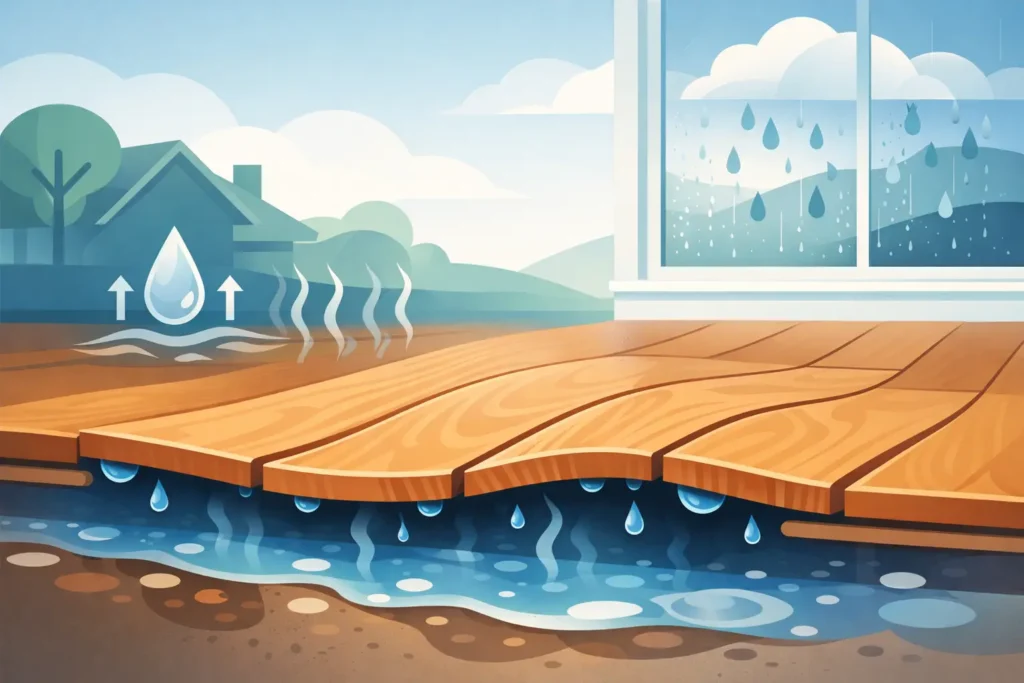
Cupping happens when the bottom of a hardwood board holds more moisture than the top. The lower side expands more than the finished surface, forcing both edges upward into a shallow U shape. It may be minor at first, but pronounced cupping can affect the floor’s appearance, make cleaning harder, and create gaps or finish damage over time.
The visible board shape is a symptom, not the source of the issue. Sanding the edges flat before the moisture problem is resolved can cause a second problem later: crowning. Crowning occurs when the board center becomes higher than its edges after the wood dries and returns toward its normal shape. That is why a careful moisture assessment should come before cosmetic repairs.
The Most Common Sources of Excess Moisture
Moisture coming up from below
Subfloor moisture is one of the most frequent reasons for cupping. Wood flooring installed over a crawl space, basement, or concrete slab can absorb moisture from beneath if the area lacks proper protection or ventilation.
Concrete is especially relevant in Southern California homes, condos, and commercial spaces. A slab can release moisture vapor even when it looks dry on the surface. If installers do not test the slab and use the right moisture-control system for the flooring product, hardwood may cup months after installation. A new slab or a recently repaired slab may need additional drying time as well.
Crawl spaces present a different version of the same problem. Ground moisture, poor drainage, missing vapor barriers, or blocked vents can raise the humidity below the floor. The hardwood above responds to that hidden moisture first, often before property owners notice a problem elsewhere.
Plumbing leaks and appliance failures
A slow leak can cause major flooring damage without creating a dramatic puddle. Leaking refrigerator supply lines, dishwashers, sinks, toilets, water heaters, and HVAC condensate lines can introduce moisture under or beside hardwood planks. Water may travel below the surface, so the cupped area is not always directly next to the appliance or fixture.
Fast water events matter too. Overflowing tubs, broken pipes, storm-related intrusion, and wet mopping can all force water into board seams. The sooner standing water is removed and the affected area is dried professionally, the better the chance of limiting permanent movement and finish damage.
High indoor humidity or poor climate control
Hardwood needs stable indoor conditions. Extended high humidity can raise the wood’s moisture content throughout a room, particularly when a property is closed up, air conditioning is off, or ventilation is poor.
This can happen in vacant rentals, second homes, offices closed for a holiday period, or rooms with poor airflow. In Los Angeles, moisture swings can also occur when marine air reaches coastal areas, during rainy weather, or when indoor cooling systems are not maintained. One humid day rarely causes serious cupping. A sustained imbalance is the bigger concern.
Water entering from outside
Exterior doors, windows, patio openings, roof leaks, and poor grading can all bring water close to hardwood flooring. If boards cup near a sliding door, exterior wall, or window, look beyond the floor itself. Damaged weatherstripping, failed caulking, clogged drainage, or a leak in the building envelope may be allowing water in.
This type of damage is often localized. You may see cupping in a strip near one wall while the rest of the room remains flat. That pattern gives a flooring professional useful clues about where to investigate.
Installation mistakes that leave no room for movement
Moisture is still the driver, but installation conditions can make cupping worse. Hardwood should be acclimated according to the flooring manufacturer’s requirements and installed only after the subfloor passes moisture testing. The correct underlayment, vapor retarder, adhesive, fasteners, and expansion space around the room are also part of a durable installation.
When planks are installed too tightly against walls, cabinets, or fixed objects, normal seasonal movement has nowhere to go. The floor can press against itself, lift, cup, or buckle. Using the wrong adhesive or installing material that was stored in a damp environment can create similar problems.
Not every cupped floor is proof of poor workmanship. A properly installed floor can still be damaged by a later leak or moisture change. However, testing and preparation give the floor a much better chance of handling normal changes in indoor conditions.
How to Tell Whether Your Floor Is Cupping
Run your hand across several boards. A cupped plank feels lower in the middle and higher along both long edges. In angled sunlight, the edge lift may create visible shadow lines. You may also notice a rougher feel under bare feet, boards that seem wider than before, or finish wear along raised edges.
Do not confuse cupping with gaps between boards. Gaps usually point to shrinkage from dry conditions, while cupping points to excess moisture. A floor can show both at different times of year if the indoor environment changes significantly.
Location matters. Cupping near a kitchen, bathroom, laundry room, exterior door, or one section of wall often suggests a local water source. Cupping across multiple rooms may indicate broader humidity, subfloor, or HVAC conditions. A moisture meter reading from the hardwood and subfloor can help separate a surface issue from a deeper one.
What to Do Before Repairing a Cupped Hardwood Floor
Start by stopping the moisture source. Repair leaks, remove wet materials, improve drainage, or correct humidity conditions. If water is present beneath the flooring, drying may require equipment and, in some cases, removal of affected planks or sections of baseboard so moisture can escape.
Avoid aggressive sanding right away. Hardwood needs time to dry gradually and stabilize. Depending on the severity, wood species, thickness, and source of moisture, that process can take weeks or longer. Some light cupping may reduce once the underlying conditions are corrected. Severe cupping, warped boards, loose boards, mold concerns, or finish failure may require targeted replacement.
A flooring inspection should consider the whole assembly: the hardwood, subfloor, moisture readings, room humidity, nearby plumbing, and the condition of the space below the floor. This approach prevents a costly surface-level fix that does not solve the reason the boards moved.
Preventing Hardwood Cupping in Homes and Businesses
Prevention begins before installation and continues through everyday maintenance. Keep indoor humidity reasonably stable, address spills promptly, and use doormats at exterior entries to limit tracked-in water. Avoid soaking a hardwood floor with a mop. A lightly damp microfiber mop and a hardwood-safe cleaner are usually the better choice.
Before new flooring is installed, make sure the subfloor is tested, the material is properly acclimated, and the chosen product fits the room. Solid hardwood can be an excellent choice for many spaces, but engineered hardwood may offer better dimensional stability in certain locations, especially over concrete or where humidity control is less predictable. The right recommendation depends on the site, not just the look you want.
For rental properties and commercial spaces, regular inspections near plumbing fixtures, entryways, and HVAC equipment can catch water problems early. Small maintenance repairs are far more affordable than replacing a large section of hardwood.
If your floor has started to cup, treat it as an early warning rather than a purely cosmetic flaw. A professional evaluation can identify the moisture source, protect the flooring that can be saved, and help you choose a repair plan that makes sense for your property and budget.