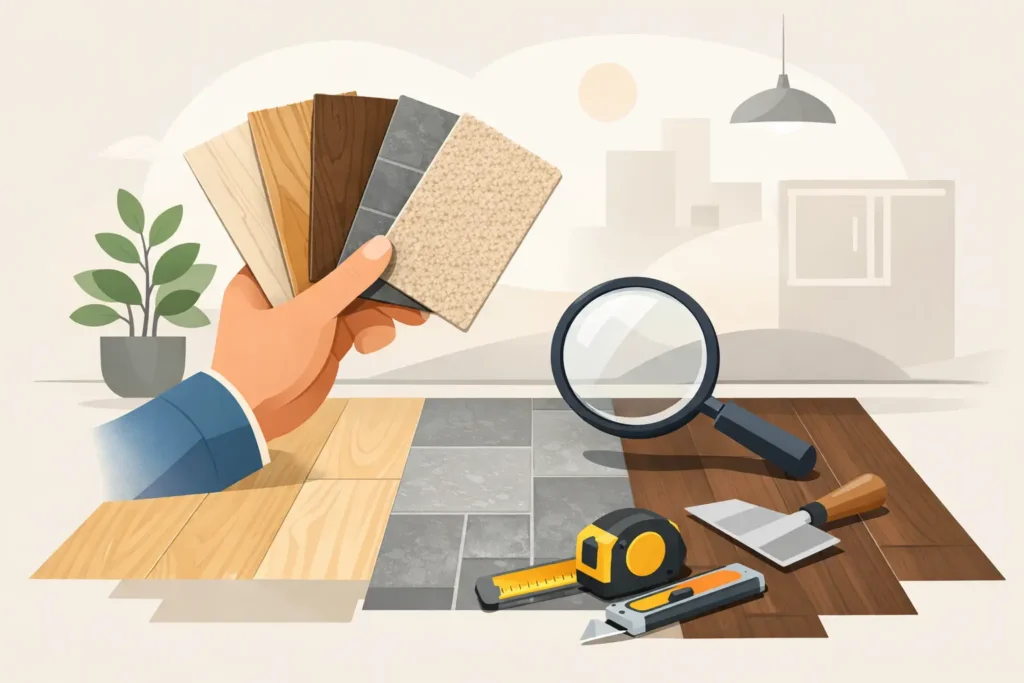
A floor can look perfect in a showroom and still be the wrong choice once real life starts. Kids run through the hallway, office chairs roll all day, pets track in dirt, and sunlight hits the same spot every afternoon. That is why knowing how to choose flooring material starts with where it will be used, how hard it will be used, and what you need it to handle over time.
The best flooring choice is rarely about looks alone. It is about balancing design, durability, moisture resistance, maintenance, installation conditions, and budget. If you get those factors right, the floor does its job for years and still looks good. If you get them wrong, even a lower-priced option can become expensive fast.
How to choose flooring material by room use
Start with function before color, plank width, or finish. A bedroom has very different demands than a kitchen, retail space, or rental unit. The more honest you are about daily wear, the easier the decision becomes.
In living rooms, bedrooms, and offices, comfort and appearance usually matter most. Hardwood, laminate, bamboo, and vinyl plank can all work well here, but they perform differently. Hardwood brings long-term value and a premium look. Laminate is budget-friendly and can handle moderate traffic well. Bamboo appeals to buyers who want a cleaner, more sustainable option. Vinyl plank is often the easiest fit when you want durability without constant upkeep.
Kitchens, bathrooms, laundry rooms, and entryways need more protection from spills and moisture. In these spaces, water resistance moves from a nice feature to a must-have. Vinyl plank is often a strong choice because it handles moisture well and stands up to daily wear. Hardwood can work in some kitchens, but it is less forgiving around standing water and repeated spills.
For commercial settings, priorities usually shift again. Durability, maintenance, installation speed, and cost per square foot matter more when a floor has to support employees, customers, rolling equipment, or frequent cleanings. A beautiful floor that needs too much care is not always a smart business decision.
Budget matters, but so does long-term cost
A lot of property owners focus on material price first. That makes sense, but it only tells part of the story. Real flooring cost includes subfloor preparation, removal of existing flooring, labor, trim work, transitions, and the likelihood of repairs or replacement down the line.
Hardwood usually costs more upfront, but it can add value and last for decades when properly maintained. Laminate is often more affordable at the start, which makes it attractive for budget-conscious upgrades or rental properties. Vinyl plank sits in a practical middle ground for many buyers because it combines durability, modern design, and lower maintenance. Bamboo can vary depending on quality, but it is often chosen by customers who want an eco-conscious option without sacrificing style.
The cheapest material is not always the most affordable floor over ten years. If a lower-cost product scratches easily, swells from moisture, or wears out in a high-traffic area, replacement costs can erase the savings. A smarter approach is to compare upfront cost with expected lifespan and maintenance demands.
Compare the most common flooring materials
Hardwood flooring
Hardwood is a strong option when appearance, resale value, and longevity are top priorities. It gives a natural, high-end look that many homeowners still prefer over any imitation. It can also be refinished, which helps extend its life.
The trade-off is that hardwood asks for more care. It is less tolerant of moisture, can scratch, and usually costs more to install than laminate or vinyl plank. For living areas, dining rooms, and bedrooms, it remains a solid investment. For bathrooms or spaces with frequent spills, it is a more cautious decision.
Vinyl plank flooring
Vinyl plank has become one of the most practical choices for both homes and businesses. It is durable, easier to maintain, and available in styles that closely resemble wood. Waterproof options make it especially useful in kitchens, bathrooms, and busy households.
Its biggest advantage is versatility. It fits a wide range of budgets and performs well in spaces where hardwood would be risky. The main downside is that not all vinyl products are equal. Lower-quality options can show wear faster, so product selection matters.
Bamboo flooring
Bamboo is often chosen for its clean look and eco-friendly appeal. For customers who want a sustainable flooring option, it deserves serious consideration. It can deliver a modern appearance and good durability, especially in higher-quality products.
Still, bamboo is not one-size-fits-all. Performance varies by manufacturer and construction quality. Some products are harder and more durable than others, while lower-grade bamboo may be more vulnerable to dents or moisture issues. It is a good fit when sustainability matters, but it should still be evaluated like any other flooring product.
Laminate flooring
Laminate remains popular because it offers a lot of visual value for the price. It can mimic wood well, installs efficiently in many settings, and works nicely in bedrooms, living rooms, and some commercial spaces.
Its weakness is moisture. While some newer laminate options perform better than older ones, it is still generally less forgiving than vinyl plank in wet or spill-prone areas. If your top priorities are low cost and good appearance in a dry space, laminate can be a smart choice.
Style should match the property, not just the trend
A floor should look good on day one, but it also needs to make sense with the rest of the property. That means considering wall color, cabinet finish, lighting, room size, and how formal or casual the space feels.
Lighter floors can open up smaller rooms and make them feel cleaner and brighter. Darker floors can look rich and dramatic, but they may show dust and scratches more easily. Wide planks often create a more modern look, while narrower planks can feel more traditional.
For commercial properties, design should also support the brand and use of the space. A law office, retail store, and rental unit do not need the same visual effect. In Los Angeles-area homes and businesses, many owners want flooring that looks current without becoming dated too quickly. That usually means choosing a clean, versatile finish over something overly trendy.
Do not ignore maintenance and repair reality
Some floors ask very little from you. Others look excellent but require regular attention to stay that way. Before choosing a material, think honestly about how much maintenance you are willing to handle.
Vinyl plank is easy for busy households and high-traffic business settings because cleaning is simple and moisture is less of a concern. Laminate is also fairly easy to maintain, but it needs more caution around water. Hardwood requires more care to protect the finish and avoid damage from spills, furniture movement, and pet nails. Bamboo maintenance depends on the product, but it generally benefits from the same common-sense care you would give other hard-surface floors.
Repair expectations matter too. Scratched hardwood can often be refinished. Damaged laminate or vinyl planks may require replacing specific sections. The right answer depends on whether you want easy daily upkeep, long-term renewability, or the lowest hassle overall.
Installation conditions can change the best choice
Even the right-looking material may not be right for your subfloor or site conditions. Uneven subfloors, moisture issues, existing flooring height, and room transitions can all affect what should be installed.
This is one reason professional guidance matters. Flooring is not just a design purchase. It is a performance system. The condition of the surface underneath, the quality of installation, and the way the material is finished at edges and doorways all affect how well it lasts.
A well-installed mid-range floor will usually outperform a premium material installed poorly. That is why many homeowners, property managers, and business owners prefer working with experienced installers who can flag problems before the project starts instead of after the floor is down.
How to choose flooring material without second-guessing it later
If you want to make a confident decision, narrow your options using four questions. First, how much traffic will the floor handle? Second, how likely is moisture exposure? Third, what is your real budget including installation? Fourth, how much maintenance are you willing to live with?
Those answers usually eliminate the wrong materials quickly. From there, you can compare style, color, and finish among the options that actually fit your space. That approach saves time and helps prevent expensive mistakes.
For many residential and commercial projects, the best result comes from balancing performance with appearance instead of chasing one at the expense of the other. A good-looking floor that cannot handle your space is not a good value. A durable floor that makes the room feel cold or out of date is not the right fit either.
At Magnet Flooring, that is exactly how we guide customers – practical recommendations first, design decisions second, and no guessing where performance matters. The right flooring material should make your space easier to live in, easier to maintain, and better to look at every day.
The smartest flooring choice is the one that still feels right after the furniture is back in place and normal life starts again.