Luxury vinyl flooring is built for real life: wet shoes at the entry, kitchen spills, pet traffic, rolling office chairs, and busy family routines. Still, knowing how to clean luxury vinyl floors correctly makes a noticeable difference in how long they retain their color, finish, and clean appearance. The right routine is simple, but the wrong cleaner or tool can leave a dull film, loosen edges, or wear down the protective surface over time.
For most homes and commercial spaces, luxury vinyl plank and luxury vinyl tile need less maintenance than hardwood, but they are not maintenance-free. A few practical habits protect the investment and prevent small messes from becoming stubborn stains.
How to Clean Luxury Vinyl Floors Day to Day
The best cleaning method starts with dry debris removal. Sand, grit, and small stones are more damaging than a light spill because they act like sandpaper beneath shoes, furniture feet, and rolling chairs. Sweep with a soft-bristle broom, use a dry microfiber mop, or vacuum using a hard-floor setting with the beater bar turned off.
In Los Angeles, dust can collect quickly, especially near doors, patios, and open windows. High-traffic areas such as kitchens, hallways, reception areas, and storefront entrances may need a quick dry clean every day. Lower-traffic rooms usually need attention two or three times a week.
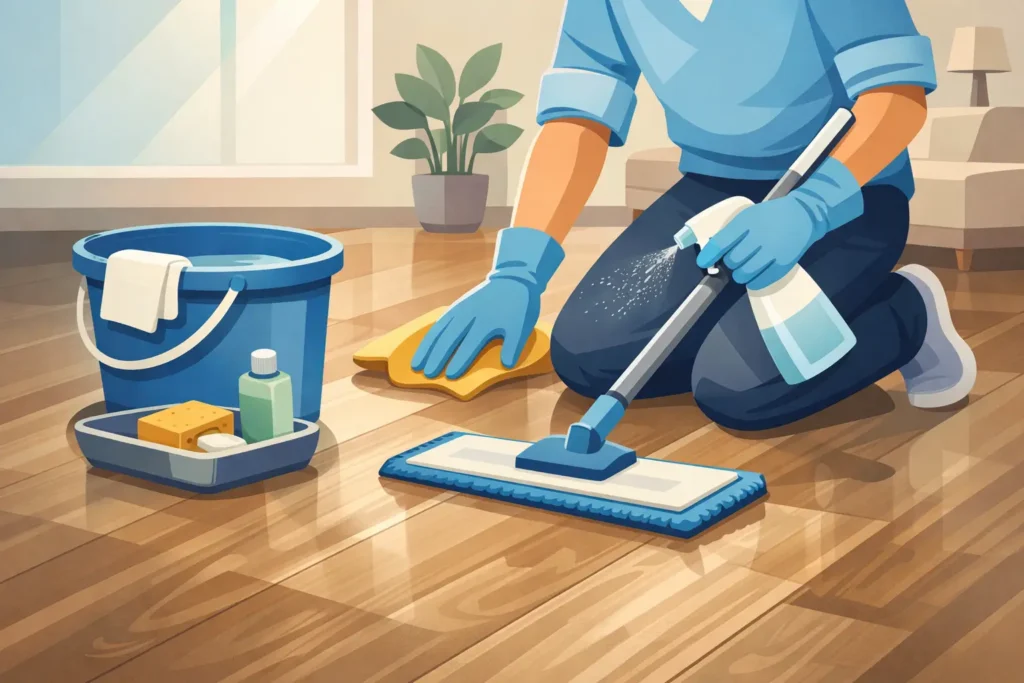
After removing loose dirt, damp mop the floor as needed. Use a microfiber mop that is well wrung out, not dripping wet. Luxury vinyl is often marketed as waterproof, and many products handle surface moisture very well. That does not mean water should sit along seams, baseboards, or transitions for long periods. Wipe up standing water promptly, particularly if the flooring was installed over a wood subfloor or in a space with older perimeter sealing.
For routine mopping, use warm water and a cleaner specifically approved for luxury vinyl flooring. Follow the product dilution instructions. More cleaner is not better. Overusing even a vinyl-safe cleaner can leave residue that attracts dirt and makes the floor look cloudy.
A simple weekly cleaning routine
For most residential floors, sweep or vacuum first, then damp mop in manageable sections. Rinse the mop pad when it becomes visibly dirty and change the water rather than spreading grime across the room. Let the floor air-dry, or buff it lightly with a clean, dry microfiber cloth if you need the area ready quickly.
Commercial spaces may need this process more frequently. A busy office, rental property common area, or retail setting benefits from scheduled cleaning that matches foot traffic. Consistent light cleaning is safer and more cost-effective than waiting until the floor requires aggressive scrubbing.
What Cleaners Are Safe for Luxury Vinyl?
The safest option is a pH-neutral cleaner made for vinyl or resilient flooring. Check the flooring manufacturer’s care instructions when available, since wear layers and finishes vary by product. If you do not have the original documentation, choose a gentle, residue-free vinyl floor cleaner and test it in a hidden spot first.
A mild solution of warm water with a very small amount of gentle dish soap can work for occasional cleaning, but it should not become the default method. Soap residue is a common reason luxury vinyl begins to look hazy or feels slightly tacky underfoot. If you use soap, follow with a separate damp mop using clean water to remove any film.
Avoid cleaners that promise shine, polish, wax, or heavy conditioning. Luxury vinyl has its own factory finish, and products designed to add gloss can build up unevenly. What looks better for a day or two may later require extra work to remove.
Do not use abrasive powders, scouring pads, steel wool, ammonia-heavy formulas, or highly alkaline degreasers unless the flooring manufacturer specifically approves them. These products can damage the wear layer or change the sheen. Strong chemicals are especially risky on lighter-colored vinyl, where dull patches and residue are easier to see.
Steam mops are another tool to skip. Although some vinyl floors tolerate moisture, concentrated heat and steam can stress seams, adhesives, and edge joints. The risk increases with gluedown installations, older flooring, or floors exposed to regular temperature changes.
Remove Spills and Stains Before They Set
Fast cleanup is one of the biggest advantages of luxury vinyl flooring. Most food and drink spills come up easily with a damp microfiber cloth and a vinyl-safe cleaner. Blot rather than scrub hard, then dry the spot so moisture does not remain around the edges of planks or tiles.
For grease, use a small amount of approved cleaner on a cloth rather than pouring product directly onto the floor. Work from the outside of the spill toward the center, then rinse the area with a clean damp cloth. This helps prevent a greasy film from spreading.
For scuff marks from shoes, try rubbing gently with a clean microfiber cloth. If needed, use a small amount of vinyl-safe cleaner. Avoid using rough eraser pads or abrasive sponges, which can create a noticeably dull spot in the protective finish.
Ink, makeup, hair dye, paint, and adhesive residue require more caution. Start with the mildest recommended cleaner and a soft cloth. If the stain remains, check your flooring manufacturer’s instructions before trying rubbing alcohol or a specialty spot remover. A product that works on one luxury vinyl floor may affect another, particularly if the finish has a matte, textured, or low-gloss appearance.
If a stain is widespread, recurring, or seems to be coming from beneath the floor, cleaning may not solve the real problem. Discoloration near a toilet, exterior door, appliance, or window can indicate moisture intrusion. In that situation, a professional inspection can prevent more extensive flooring damage.
Protect the Finish Between Cleanings
Cleaning works best when the floor is protected from the dirt and pressure that cause wear. Use non-staining mats at exterior entrances and encourage people to wipe their shoes before walking across the floor. Avoid rubber-backed mats unless the flooring manufacturer confirms they are safe, since certain rubber and latex materials can discolor vinyl over time.
Place felt pads beneath chairs, tables, sofas, and other furniture that moves occasionally. Check those pads every few months. A pad that has picked up grit can scratch more than an unprotected furniture leg. For heavy furniture, use wide furniture glides when moving items and never drag appliances or cabinets across the surface.
Office chairs deserve special attention. If chairs roll directly on luxury vinyl all day, use a floor-safe chair mat or soft casters designed for resilient flooring. This is particularly useful in home offices, property management offices, and commercial workspaces where concentrated rolling traffic can wear one small area faster than the rest of the room.
Direct sunlight can also affect flooring over time. Quality luxury vinyl is more resistant to fading than many natural materials, but intense sun through large windows can still change its appearance gradually. Blinds, curtains, window film, or area rugs placed thoughtfully can reduce exposure without sacrificing the room’s light.
Common Mistakes That Shorten Vinyl Floor Life
The most common mistake is treating luxury vinyl like ceramic tile. Tile can tolerate harsh scrubbing, high heat, and heavy amounts of water in ways vinyl usually cannot. A wet mop left soaking, a steam cleaner, or a strong degreaser may not cause immediate failure, but repeated use can compromise the finish and edges.
Another mistake is using too much cleaning product. When a floor looks dull, many people assume it needs a stronger cleaner. Often, it needs the opposite: a thorough rinse with clean water and a microfiber pad to remove old residue. If the haze does not improve, the flooring may have a buildup issue or surface wear that needs professional evaluation.
Finally, do not ignore damaged planks, lifted corners, gaps, or soft spots. Dirt and moisture can enter through small openings and make repairs more complicated. Addressing a single damaged plank early is usually more affordable than waiting for the issue to spread across a larger area.
Luxury vinyl is a practical choice for homes, rentals, and business spaces because it delivers attractive design with manageable upkeep. Keep the routine gentle, clean spills quickly, and avoid tools that rely on heat or abrasion. If your floor is showing wear, separating at seams, or no longer cleaning up as it should, Magnet Flooring can help evaluate whether a targeted repair or replacement is the most sensible next step.