
A flooring quote can look straightforward until the old carpet comes up and reveals an uneven subfloor, moisture damage, or a transition that needs rebuilding. That is why learning how to budget for new flooring means looking beyond the price per square foot. A reliable budget accounts for the material you see, the preparation work underneath it, and the details that make the finished floor look and perform as it should.
For Los Angeles homeowners, property managers, and business owners, the goal is not simply to find the lowest number. It is to choose a floor that fits the room, holds up to daily use, and avoids expensive corrections later.
Start Your New Flooring Budget With the Real Scope
Before comparing materials, define what the project actually includes. Measure each room, but do not assume the square footage of the room is the exact amount of flooring you will purchase. Installers typically add material for cuts, pattern matching, irregular room shapes, and future repairs. A simple rectangular room may need less extra material than a hallway with closets, stairs, or angled walls.
Also decide where the project begins and ends. Are you replacing flooring in one bedroom, an entire home, or a commercial suite? Will the new floor continue into closets and adjacent rooms? Are you keeping existing baseboards, replacing them, or adding shoe molding? These choices affect both material and labor costs.
A useful starting point is to separate your budget into three buckets: flooring materials, installation labor, and a contingency reserve. That reserve is not wasted money. It protects your project if removal work or subfloor conditions reveal something that was not visible during the first walkthrough.
Understand What Drives Flooring Costs
The material price is often the first figure people notice, but it is only one part of the investment. The total cost depends on the floor you select, the condition of the space, and the level of finish you expect.
Material Selection Changes the Budget Most
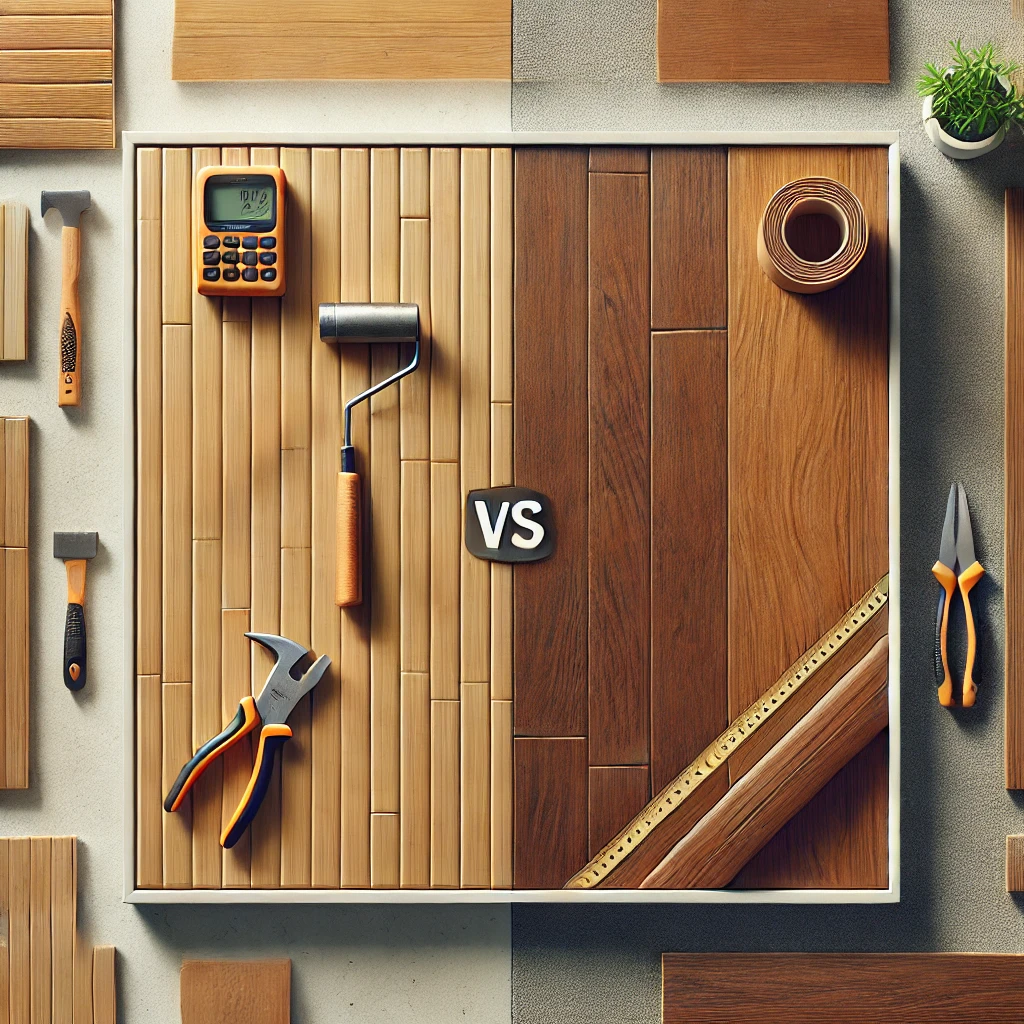
Vinyl plank, laminate, bamboo, and hardwood can all deliver an attractive finish, but they solve different problems.
Vinyl plank is often a practical value choice for busy households, rentals, offices, and areas where spills are likely. Waterproof options can be especially useful in kitchens, entryways, and spaces with pets. The price range varies by thickness, wear layer, texture, and locking system, so two planks that look similar at first glance may not offer the same long-term performance.
Laminate can provide the appearance of wood at an approachable price point. It works well in dry areas when you want a durable, easy-care surface, but water resistance varies by product. Choosing a lower-cost laminate for a moisture-prone room can create a replacement expense sooner than expected.
Bamboo gives customers an eco-conscious flooring option with a distinctive, clean look. Quality matters here. A professionally selected and installed bamboo floor can offer excellent value, while poorly made material may not perform consistently in changing conditions.
Hardwood usually carries a higher upfront material and installation cost, but it can bring natural character and lasting appeal. The species, plank width, grade, finish, and installation method all influence the final price. Hardwood may be a smart long-term choice for living areas and higher-end properties, though it is not automatically the best answer for every room.
Installation Is More Than Putting Planks Down
Professional installation covers the work that makes a floor stable, level, properly aligned, and finished around walls, doors, and transitions. Labor costs can rise when rooms are crowded, layouts are complex, furniture must be moved, or the flooring needs to be installed around cabinets, islands, or built-ins.
Different products also require different installation methods. Some floors float over an underlayment, while others need adhesive, nails, or more involved preparation. A professional quote should explain what installation method is planned and why it fits the chosen material and space.
The Existing Floor Can Add Hidden Costs
Removing old carpet is generally different from removing glued-down vinyl, ceramic tile, multiple layers of old flooring, or hardwood fastened to the subfloor. Disposal fees, adhesive removal, and extra labor may apply. If there is asbestos risk in older materials, do not treat removal as a routine DIY task. Proper assessment and handling should come first.
Subfloor repairs are another common budget variable. Flooring needs a clean, dry, and reasonably level base. Small imperfections may be manageable, but significant dips, cracks, loose areas, moisture issues, or damaged plywood should be corrected before the new floor is installed. Covering a problem does not solve it. It can lead to movement, gaps, squeaks, premature wear, or manufacturer warranty concerns.
How to Budget for New Flooring Room by Room
Room function should guide the amount you spend. A guest bedroom with light foot traffic does not have the same demands as a busy family room, office lobby, or rental unit with frequent turnover.
In high-traffic areas, prioritize wear resistance, stable construction, and a finish that is easy to maintain. In kitchens and entryways, consider moisture protection and slip resistance along with appearance. For bedrooms, comfort and visual warmth may matter more than maximum water resistance. Commercial settings often need durable materials that can handle rolling chairs, steady foot traffic, and easier cleaning.
This approach helps prevent overbuying where premium performance is unnecessary and underbuying where a cheaper product will not hold up. The best value is not always the least expensive flooring. It is the option that meets the demands of the room without asking you to pay for features you will not use.
Include the Details That Complete the Project
A complete flooring budget should include the accessories and finishing work that are easy to overlook. These items are often modest individually but meaningful together:
- Underlayment, moisture barriers, adhesives, fasteners, or leveling compounds
- Baseboards, shoe molding, reducers, T-moldings, stair noses, and other transitions
- Removal and disposal of existing flooring and debris
- Furniture moving, appliance handling, or temporary access adjustments
- Door trimming, threshold work, and repainting or touch-up after baseboard changes
Ask whether these items are included in the estimate or listed separately. A lower quote can look appealing until the necessary finishing components are added later. Clear scope protects your budget and makes it easier to compare estimates fairly.
Set Aside a Practical Contingency
For a straightforward replacement over a clean, level surface, the contingency can be smaller. For older homes, remodels, moisture-prone areas, or projects involving tile removal, plan for more flexibility. A reserve of roughly 10% to 15% is a sensible planning range for many projects, though the right amount depends on what can be confirmed before work starts.
This is also where a professional site evaluation helps. An experienced flooring contractor can identify likely issues with floor height, transitions, moisture, and subfloor condition before installation day. Not every surprise can be predicted, but fewer surprises are better than a budget based on optimistic assumptions.
Compare Estimates by Scope, Not Just the Bottom Line
When reviewing flooring estimates, compare the same work from one proposal to another. Confirm the product name, thickness or construction, underlayment, removal, preparation, trim, transitions, disposal, and warranty expectations. If one estimate is significantly lower, ask what is excluded rather than assuming it is the same project for less money.
A good contractor should be direct about trade-offs. For example, a waterproof vinyl plank may be a stronger fit than hardwood for a ground-level rental with pets, while hardwood may better support the design goals of a formal living room. The right recommendation is based on your space and priorities, not on forcing every project into one material.
Spend Where It Protects Performance
If your budget requires compromises, avoid cutting corners on the foundation of the project. Proper subfloor preparation, quality installation, and suitable materials for moisture and traffic matter more than a slightly wider plank or a trend-driven color. A beautiful floor that shifts, gaps, or fails early is not a bargain.
You can often manage costs by keeping the layout simple, using one flooring type across connected spaces, scheduling work before move-in, and selecting a strong mid-range product instead of the most premium collection. For commercial properties, choosing a durable, maintainable floor may also reduce disruption and replacement costs over time.
A detailed consultation gives you the clearest path forward. Magnet Flooring helps homeowners and businesses weigh material options, site conditions, and installation requirements so the final quote reflects the real project, not just a tempting starting price. Build your budget around lasting performance, then choose the finish that makes the space feel right.