
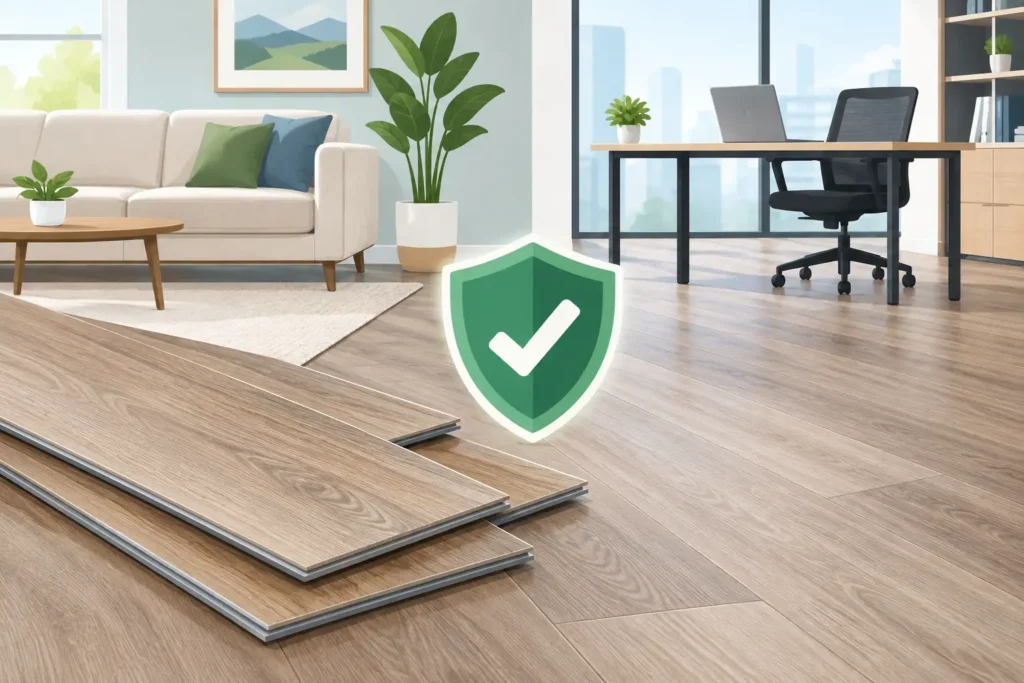
A new floor changes more than the look of a room. It covers a large surface area, affects how a space is cleaned, and can influence indoor air quality during and after installation. So, is vinyl plank safe for your home or office? For most properties, quality vinyl plank is a safe and practical flooring choice when you select a low-emission product and have it installed correctly.
The key is not treating every vinyl plank product as identical. Material quality, third-party certifications, adhesives, subfloor conditions, and cleaning practices all affect the result. A lower upfront price is only a value if the flooring performs well and supports a comfortable indoor environment for years.
Is Vinyl Plank Safe for Indoor Use?
Vinyl plank flooring is made primarily from PVC, along with stabilizers, pigments, a printed design layer, and a protective wear layer. It is widely used in homes, apartments, offices, retail spaces, and healthcare-adjacent settings because it is durable, water-resistant, easy to maintain, and available in many realistic wood looks.
Modern vinyl flooring is generally designed for indoor residential and commercial use. However, some people are concerned about volatile organic compounds, or VOCs. VOCs are gases released from certain building materials, finishes, adhesives, and cleaning products. They can contribute to odors and, for sensitive individuals, temporary irritation or discomfort.
That does not mean vinyl plank should automatically be avoided. It means the product should be chosen carefully. Reputable manufacturers offer low-VOC options that have been evaluated for indoor air emissions. A professional installer can also help limit avoidable exposure by using the right preparation methods and allowing appropriate ventilation during installation.
For a busy Los Angeles home, rental unit, or office, vinyl plank can be a sensible balance of durability, appearance, and maintenance. The safest choice is typically a well-made product with clear documentation, rather than the cheapest box available.
What Makes One Vinyl Plank Product Safer Than Another?
Indoor air quality is the main safety question, but it is not the only one. Look at the full flooring system: the planks, underlayment, adhesive if used, and the condition of the subfloor.
Low VOC Certifications Matter
Third-party indoor-air certifications provide more useful guidance than broad marketing claims. Products certified by programs such as FloorScore or GREENGUARD Gold have been tested against standards for chemical emissions. These labels do not mean a floor contains no chemicals at all. They indicate that emissions meet established low-emission criteria for indoor spaces.
Ask for product specifications before making a final selection. A qualified flooring contractor should be able to explain what certification a product carries and whether it is appropriate for your room, budget, and use level.
Consider the Core and Installation Method
Vinyl plank comes in several constructions, including flexible luxury vinyl plank, rigid core SPC, and WPC products. Each can perform well, but quality varies by manufacturer and price point.
Click-lock floating floors often require little or no adhesive, which can reduce one potential source of odor and VOCs. Glue-down vinyl plank can be an excellent choice for commercial settings and high-traffic areas, but the adhesive should be low-VOC and applied according to the manufacturer’s instructions. Using too much adhesive, installing over a damp subfloor, or rushing the curing process can create problems that have nothing to do with the plank itself.
Look Beyond “Phthalate-Free” Claims
Many homeowners ask whether vinyl flooring contains phthalates, a group of chemicals historically used to make some plastics more flexible. Many current flooring lines are marketed as phthalate-free or made without certain ortho-phthalates. That can be a positive feature, but the claim should be specific and supported by the manufacturer.
Avoid making a decision based on one label alone. Low emissions, a durable wear layer, reliable warranty coverage, and proper installation are all part of a safer long-term investment.
Is Vinyl Plank Safe for Kids and Pets?
For most households, vinyl plank is a practical option for children and pets. Its smooth, nonporous surface does not trap dust, pet hair, or allergens the way carpet can. Spills are easier to clean, and a quality wear layer resists many everyday scratches and stains.
The biggest advantage is maintenance. Food spills, muddy paws, and everyday messes can usually be handled with prompt cleaning and a manufacturer-approved neutral cleaner. That helps prevent moisture from sitting at seams and keeps the floor looking better over time.
There are trade-offs. Vinyl plank can be slippery when wet, especially in kitchens, entryways, or commercial areas where people may track in rain. Use appropriate mats near exterior doors, clean spills quickly, and consider rugs with non-staining backing in areas where traction matters. Avoid rubber-backed mats unless the flooring manufacturer confirms they are safe, since some rubber materials can discolor vinyl.
For families with severe chemical sensitivities, asthma concerns, or a recent renovation schedule, product selection and timing deserve extra attention. Choose a certified low-emission floor, request low-VOC installation materials, and ventilate the space well during and after the work. If someone in the household has a diagnosed medical condition, their healthcare provider can offer guidance tailored to their situation.
The Installation Can Affect Safety as Much as the Floor
A professionally installed vinyl floor is more likely to remain stable, cleanable, and comfortable. Poor installation can lead to lifted edges, gaps, trapped moisture, mold risk below the flooring, or damage that forces an early replacement.
Before installation, the subfloor should be clean, level, dry, and structurally sound. Vinyl plank is often called waterproof, but that description applies to the surface of the plank. It does not mean moisture beneath the floor is harmless. A concrete slab with excessive moisture or a plumbing leak can still create odor, adhesive failure, and conditions for microbial growth under the flooring.
This matters in Southern California properties where flooring is often installed over concrete slabs. Moisture testing and proper subfloor preparation are not optional details. They protect the flooring investment and help prevent hidden issues that can affect indoor comfort.
Professional installers also plan expansion space, transitions, trims, and door clearances correctly. These details make a floor safer to walk on and more durable in daily use. In offices and retail settings, a secure installation also reduces trip hazards from loose edges or damaged planks.
How to Keep Vinyl Plank a Healthy, Long-Lasting Choice
Once the floor is installed, simple care supports both appearance and indoor comfort. Sweep or vacuum regularly using a hard-floor setting without a beater bar. Wipe up spills promptly and use a damp mop rather than soaking the floor with water.
Avoid harsh solvents, waxes, abrasive scrubbers, and steam cleaners unless the flooring manufacturer specifically approves them. These products can damage the wear layer, leave residue, or force moisture into seams. A neutral, low-residue cleaner is usually enough for routine cleaning.
Furniture pads are also worth using. They protect the wear layer from scratches and reduce the chance of gouges that may collect dirt or moisture. In commercial spaces, entry mats and regular cleaning schedules make a noticeable difference in how the floor holds up.
When Another Flooring Material May Be a Better Fit
Vinyl plank is not the only good flooring option. If your top priority is a natural material, solid hardwood, engineered wood, or bamboo may better match your goals. Bamboo can be an appealing eco-conscious choice when it is responsibly sourced and finished with low-emission materials.
Vinyl plank may also be less suitable in spaces exposed to direct, intense sunlight without window protection. Prolonged heat and UV exposure can affect some products, particularly lower-quality planks. A flooring professional can recommend products rated for your specific room conditions or help you compare vinyl against laminate, bamboo, and hardwood.
For many homeowners and property managers, the decision comes down to how the space is used. A busy kitchen, pet-friendly living area, rental property, or office may benefit from vinyl plank’s water resistance and easy upkeep. A formal room or design-focused renovation may call for a different material.
The right floor should feel good underfoot, stand up to real life, and fit your budget without creating unnecessary concerns. Choose a certified low-emission vinyl plank, address subfloor moisture before installation, and rely on experienced workmanship. That approach gives you a floor that looks polished, performs reliably, and supports a more comfortable space from day one.