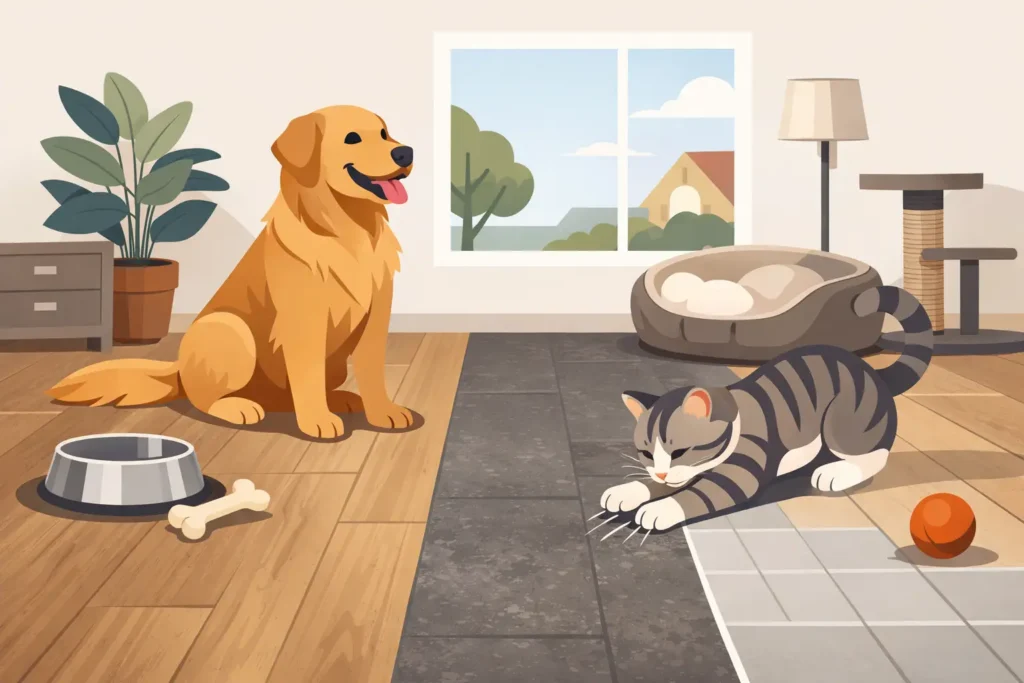
The problem usually shows up before the warranty papers ever come out. A dog charges in from the yard, a cat takes off across the hallway, and a floor that looked perfect at install starts showing light scratches, dull traffic paths, or chipped edges. If you are shopping for scratch resistant flooring for pets, the goal is not just finding the hardest surface on paper. It is choosing a floor that can handle claws, spills, cleanup, and real daily use without making your home feel cold or your budget feel stretched.
For most homeowners and property managers, there is no single perfect option. The right choice depends on the type of pet, the amount of traffic, how much moisture the space sees, and how long you plan to keep the flooring. A material that works well in a low-traffic condo may not hold up the same way in a busy family home with two large dogs.
What scratch resistant flooring for pets really means
A lot of people hear “scratch resistant” and assume “scratch proof.” That is where disappointment starts. No floor is completely immune to damage. Large dogs with untrimmed nails, grit tracked in from outside, and heavy furniture movement can wear down almost any surface over time.
What you want is a floor that resists visible wear, does not absorb accidents, and is easy to maintain. Surface hardness matters, but so do finish quality, plank construction, texture, and installation method. In pet-friendly homes, those details often matter more than marketing claims.
A floor can also be highly scratch resistant and still be the wrong fit if it is slippery, loud, or uncomfortable. Good flooring should perform well and work with the way you live.
The best flooring types for homes with pets
Luxury vinyl plank is the most practical choice for many homes
If a customer wants a strong balance of durability, water resistance, appearance, and price, luxury vinyl plank usually ends up near the top of the list. It is one of the most reliable answers for scratch resistant flooring for pets because the wear layer helps protect against everyday claw marks, and the waterproof construction is a major advantage when accidents happen.
Vinyl plank also tends to be quieter and softer underfoot than tile. That matters in homes where pets run from room to room and where owners do not want every set of paws echoing through the house. Better products with thicker wear layers perform much better than entry-level vinyl, so this is not the category to shop by price alone.
The trade-off is that lower-quality vinyl can dent, and very cheap products may show wear faster than expected. Professional installation also makes a difference because weak seams and uneven subfloors shorten the life of the floor.
Laminate can work well if you choose the right product
Modern laminate has improved a lot. Higher-quality laminate flooring with a strong AC rating can resist scratching surprisingly well, which makes it a smart option for active homes with dogs and cats. It also gives you a clean wood-look finish at a more affordable price point than many hardwood products.
Where laminate needs more caution is moisture. Some newer laminate lines offer improved water resistance, but laminate is still generally less forgiving than vinyl when spills or pet accidents sit too long. If you are considering laminate for a pet-friendly home, product selection and room placement matter.
In bedrooms, living rooms, and offices, laminate can be a solid value. In laundry areas, kitchens, or entryways where moisture and dirt are constant, vinyl usually has the edge.
Tile is extremely durable, but not always the most comfortable
Porcelain and ceramic tile are among the toughest flooring options available. When it comes to scratch resistance, tile performs very well. Claws are unlikely to damage it the way they can mark wood finishes or softer surfaces.
Still, durability is only part of the story. Tile is hard, cool, and sometimes slippery, especially for older pets. It can also be louder than other flooring types. For some homes, especially in warmer parts of Los Angeles, that cooler surface is actually a benefit. For others, it makes the space feel less comfortable.
Grout maintenance is another factor. The tile itself may hold up beautifully, but grout lines can stain if they are not properly sealed and maintained.
Bamboo can be a smart eco-friendly option
For homeowners who want a more sustainable floor, bamboo deserves a serious look. Strand-woven bamboo in particular can be harder than many traditional wood options and can hold up well in pet-friendly environments.
That said, not all bamboo flooring performs the same. Quality varies, and the finish matters just as much as the core material. A well-made bamboo floor installed by experienced professionals can offer a strong mix of durability, style, and eco-conscious value. A low-grade product may not deliver the same result.
For customers who want natural materials without giving up too much durability, bamboo can be an excellent middle ground.
Hardwood is beautiful, but it needs realistic expectations
Hardwood remains one of the most requested flooring options because it adds warmth, long-term value, and a high-end look. But if your top priority is scratch resistant flooring for pets, hardwood requires more caution than vinyl, tile, or high-performance laminate.
Some harder species perform better than softer ones, and certain finishes can help reduce visible wear. Matte finishes and textured surfaces tend to hide minor scratching better than glossy ones. Even so, pet nails can mark hardwood over time, especially in hallways, living spaces, and entry points.
This does not mean hardwood is off the table. It means you should choose it because you love the material and understand the maintenance that comes with it, not because you expect it to behave like vinyl or tile.
What matters more than the material alone
The wear layer, finish, and surface texture play a major role in how a floor looks after years of pet traffic. A lightly textured floor often hides dust, paw prints, and small scratches better than a smooth, glossy surface. That can make a huge difference in daily appearance.
Color matters too. Very dark floors and very glossy floors tend to show more hair, dust, and surface marks. Medium tones usually give homeowners the most forgiving finish for everyday life.
Installation quality is another piece people underestimate. A durable material installed poorly will not deliver durable results. Gaps, movement, uneven transitions, and weak edge support all make floors wear faster. That is one reason professional installation saves money over time.
Choosing the right floor by room
A pet-friendly flooring decision should be made room by room, not just by sample board. In entryways, mudrooms, kitchens, and other spill-prone spaces, waterproof vinyl plank and tile are usually the strongest performers. They handle moisture, dirt, and repeated cleanup better than most alternatives.
In living rooms and bedrooms, the choice often comes down to comfort, appearance, and budget. Laminate, vinyl plank, bamboo, and some hardwood options can all work depending on the pet activity level and the homeowner’s priorities.
For rental properties or commercial spaces with frequent traffic, durability and maintenance often outweigh everything else. In those settings, practical performance usually matters more than chasing a premium material that requires more upkeep.
How to make any pet-friendly floor last longer
Even the best floor will wear faster if basic maintenance gets ignored. Keeping pet nails trimmed helps more than most people realize. Placing mats at exterior doors reduces the grit that causes surface scratching. Cleaning accidents quickly protects seams, edges, and finishes.
Routine sweeping also matters because dirt and sand are often more damaging than claws. In active households, those tiny abrasive particles are what slowly dull and wear the floor.
If you have large dogs, older pets, or high-energy animals, traction is worth thinking about as well. A floor that is durable but too slick can create another problem. In many cases, a textured vinyl plank or matte-finish laminate offers a better balance than a polished surface.
When professional guidance makes the difference
A lot of flooring mistakes happen because people shop by appearance first and performance second. That usually leads to regret after the first few months of real use. The better approach is to match the floor to your traffic level, moisture exposure, subfloor condition, design goals, and budget from the start.
That is especially true in busy homes and income properties, where the wrong choice can mean repairs, replacement, or tenant complaints sooner than expected. An experienced flooring contractor can explain where a product will perform well, where it will struggle, and which upgrades are actually worth paying for.
At Magnet Flooring, we see this often with customers who want the look of wood but need something more forgiving for pets and daily wear. In many cases, the best result is not the most expensive floor. It is the one that fits the space, the lifestyle, and the long-term plan.
If you are choosing flooring for a home with pets, think beyond the sample. The best floor is the one you can live on comfortably, clean easily, and trust to keep looking good after the excitement of move-in day wears off.