
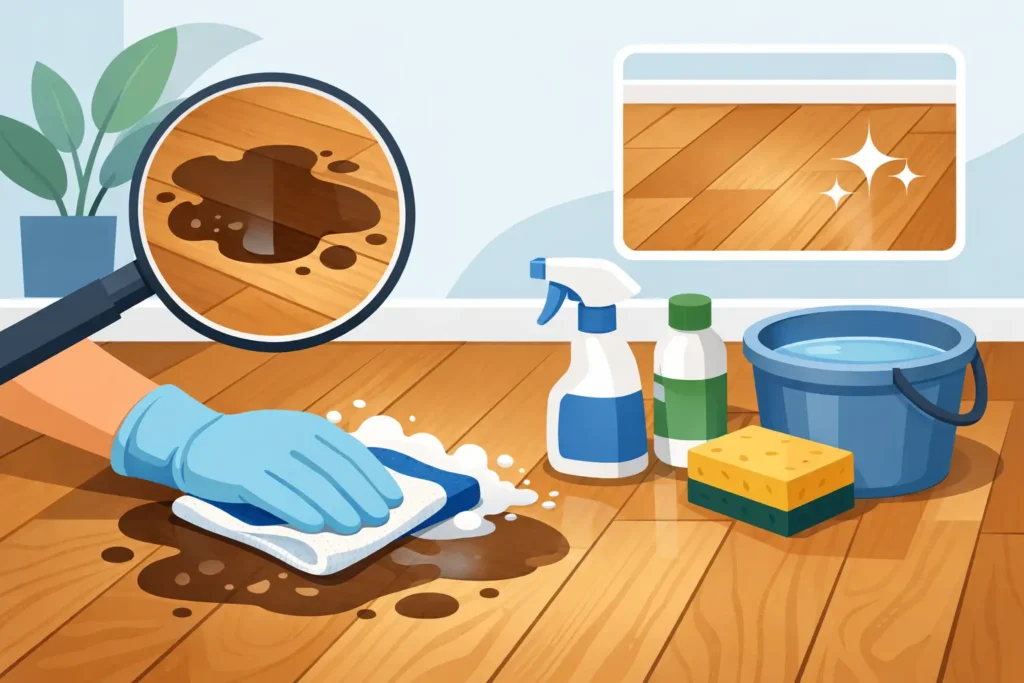
A dark ring under a houseplant, a pet accident near the hallway, or a mystery spot beneath an old rug can make an otherwise beautiful wood floor look neglected. Knowing how to remove hardwood stains starts with one rule: treat the stain and the floor finish as two separate problems. A cleaner that lifts a mark from one floor can strip sheen, cloud polyurethane, or push moisture deeper into another.
The goal is not to use the strongest product available. It is to use the least aggressive method that can solve the problem, then stop before the finish is damaged. That approach protects both the appearance and service life of your hardwood flooring.
Identify the Stain Before You Clean It
Hardwood stains fall into two broad categories. Surface stains sit in wax, polish, grime, or the topcoat. They are usually lighter in color and may feel slightly raised or sticky. Penetrating stains have traveled through worn or damaged finish into the wood itself. They often look gray, black, dark brown, or discolored around board seams.
Start by looking closely at the affected area in natural light. If a few drops of water bead on the surrounding floor, the finish is still providing some protection. If water quickly darkens the wood, the coating may be worn, and liquid cleaners need to be used sparingly.
You should also identify the floor finish if possible. Most newer hardwood floors have polyurethane, aluminum oxide, or another durable surface finish. Older floors may have shellac, lacquer, penetrating oil, or wax. Never assume a product is safe because it is labeled for wood. Test every method in a hidden corner, such as inside a closet or under furniture, before applying it to a visible area.
How to Remove Hardwood Stains From the Surface
For most fresh spills, dirt buildup, and light marks, begin with a clean microfiber cloth lightly dampened with water. Wring it out thoroughly first. Hardwood should never be soaked, because standing moisture can seep into seams and cause cupping, swelling, or a darker stain.
Wipe in the direction of the wood grain, then immediately dry the area with a separate cloth. If the mark remains, use a hardwood-floor cleaner that is compatible with your finish. Apply it to the cloth rather than directly onto the boards. This gives you better control and prevents excess liquid from collecting between planks.
Avoid steam mops, abrasive scrub pads, all-purpose cleaners, and oil soaps unless the floor manufacturer specifically approves them. Steam can force moisture into joints, while harsh cleaners can dull a protective finish or leave residue that attracts dirt. A shiny floor is not always a clean floor – excessive polish can create a cloudy, uneven appearance that requires professional removal.
White or Cloudy Heat and Water Marks
White rings and cloudy patches usually mean moisture is trapped in the finish rather than deep in the wood. These marks are common under cold drink glasses, wet shoes, and damp furniture legs.
First, let the area dry fully for at least 24 hours while improving air circulation in the room. If the white mark remains, place a clean cotton cloth over it and use a hair dryer on low heat for short intervals. Keep the dryer moving and check the area frequently. The idea is to gently encourage trapped moisture to evaporate, not to heat the finish until it softens.
If low heat does not improve the spot, it may be a finish issue rather than a moisture issue. At that point, stop experimenting with household remedies. Sanding or refinishing a small area without blending it correctly can leave a more visible patch than the original stain.
Treat Dark Water Stains Carefully
Black or dark gray stains are more serious. They often develop when water reaches raw wood and reacts with tannins in the flooring. Leaks, overflowing planters, wet pet beds, and long-standing spills are common causes. On oak floors, these marks can turn nearly black.
Before treating the stain, make sure the source of moisture is fixed. Cleaning a dark mark while a plumbing leak, slab moisture issue, or window leak continues will not solve the underlying problem.
A shallow dark stain may lighten after the finish is carefully removed from the affected board and the wood is treated with an appropriate wood bleach. This is detailed work. Bleach can change the natural color of surrounding boards, raise the grain, and create a visible boundary if it is not neutralized and refinished correctly. It is usually a better job for a flooring professional, particularly on engineered hardwood, where the wear layer may be too thin for repeated sanding.
If the stain is localized to one or two boards, board replacement may provide a cleaner and more predictable result than trying to bleach it out. The best option depends on the floor species, age, finish, and availability of matching material.
Remove Pet Urine and Food Stains Without Spreading Them
Pet stains need quick action because urine can penetrate through finish gaps and leave both odor and discoloration. Blot fresh accidents immediately with dry towels. Do not rub, as rubbing spreads moisture across the grain and into adjacent boards.
Once dry, clean the surface with a hardwood-safe product. If odor remains, the contamination may be below the finish. Many enzyme cleaners are designed for hard surfaces, but they still add moisture and may not be suitable for every hardwood finish. Use them only according to the manufacturer’s directions and test first.
Old pet stains that have turned black, orange, or dark brown often require sanding, bleaching, sealing, or replacement of affected boards. Trying to cover them with stain alone can leave the discoloration visible and may not address the odor. For rental properties and busy households, addressing the damaged boards properly can prevent the same problem from returning after a cosmetic repair.
Grease, cooking oil, makeup, and food stains are usually surface-level if cleaned promptly. Start with a soft cloth and a finish-safe cleaner. Do not use ammonia, acetone, mineral spirits, or vinegar unless you know the finish can tolerate them. Vinegar is frequently recommended online, but its acidity can gradually reduce shine and damage certain finishes when used repeatedly.
When DIY Stain Removal Is Not the Right Call
A hardwood floor can often be cleaned successfully at home, but there is a point where more effort creates more damage. Call a flooring professional when the stain is black or spreading, boards are warped or soft, there is a persistent odor, the finish is peeling, or the affected area is larger than a small isolated spot.
This is especially true for engineered hardwood. Its top veneer can vary widely in thickness. An aggressive sanding attempt may cut through the wood layer and expose the core, turning a repairable stain into a replacement project.
Commercial spaces also need a practical repair plan. In an office, retail space, or rental unit, a mismatched patch repair can look unprofessional and disrupt normal operations. A professional can assess whether a screen-and-recoat, selective board repair, full refinishing, or replacement will deliver the best value with the least downtime.
At Magnet Flooring, we often find that homeowners save money by getting an assessment before using strong chemicals or renting sanding equipment. A targeted repair may be all that is needed, but the right recommendation depends on what is in the wood, how far it has spread, and the condition of the surrounding finish.
Prevent the Next Hardwood Stain
Prevention is simpler than stain removal. Use mats at exterior doors, felt pads under furniture, trays under indoor plants, and washable runners in high-traffic areas. Wipe spills as soon as they happen, especially around kitchens, pet bowls, and entryways.
Maintain the finish as well. A worn topcoat gives moisture a direct path into the wood. If your floor is beginning to look dull but does not have deep damage, a professional screen-and-recoat can restore protection before stains become a larger refinishing project.
A stain does not automatically mean your hardwood floor is beyond saving. The safest next step is a careful diagnosis, a small test area, and a repair method that respects the floor’s finish, species, and age. When the mark is deep or the cause is ongoing moisture, timely professional help can preserve the boards you already have and keep a small problem from becoming a costly replacement.