A floor rarely fails all at once. More often, it starts with a board that shifts underfoot, a new squeak in the hallway, or a small gap that seems to get wider every month. Knowing the top signs your floor needs repair helps you address a manageable issue before it spreads into a larger, more expensive project.
For homeowners, property managers, and business owners, flooring damage affects more than appearance. It can create trip hazards, allow moisture into the subfloor, reduce property appeal, and shorten the useful life of otherwise good material. The right repair depends on the flooring type, the cause of the damage, and how far the problem has traveled beneath the surface.
Top Signs Your Floor Needs Repair
Boards that move, lift, or feel uneven
A stable floor should feel solid when you walk across it. If hardwood planks, laminate boards, or vinyl planks shift, lift at the edges, or feel noticeably uneven, the installation or subfloor may need attention. A loose board can result from worn adhesive, failed fasteners, improper expansion spacing, or movement in the material below.
Buckling is a more urgent version of the same problem. When flooring rises in a ridge or tent shape, it is often reacting to excess moisture or insufficient room to expand. This is common near kitchens, entryways, bathrooms, and exterior doors. Replacing only the raised boards without correcting the moisture source can lead to the same failure again.
Gaps that are growing between planks
Small seasonal gaps can occur in natural hardwood, especially when indoor humidity changes. In Los Angeles, dry indoor air and strong air conditioning can cause wood to contract. But wide, uneven, or expanding gaps deserve a closer look.
Gaps may point to installation issues, flooring that was not properly acclimated before installation, or subfloor movement. They can also collect dirt and moisture, making a clean floor look worn even after mopping. If you can see the subfloor through several gaps or notice the boards separating at the ends, a professional inspection is the practical next step.
Persistent squeaks, popping, or cracking sounds
An occasional creak in an older home is not always a repair emergency. A persistent squeak, pop, or cracking sound in the same area can mean the flooring has loosened from the subfloor or the subfloor itself is moving. This is especially worth checking when the noise is paired with a soft spot or visible movement.
Laminate and vinyl plank floors may click or pop when locking edges are under stress. Hardwood can squeak when nails have loosened or when wood rubs against the subfloor. The repair may be minor, but guessing at the cause can damage surrounding boards. A flooring professional can identify whether the issue is in the finish floor, underlayment, or structure below.
Water stains, swelling, or cupped boards
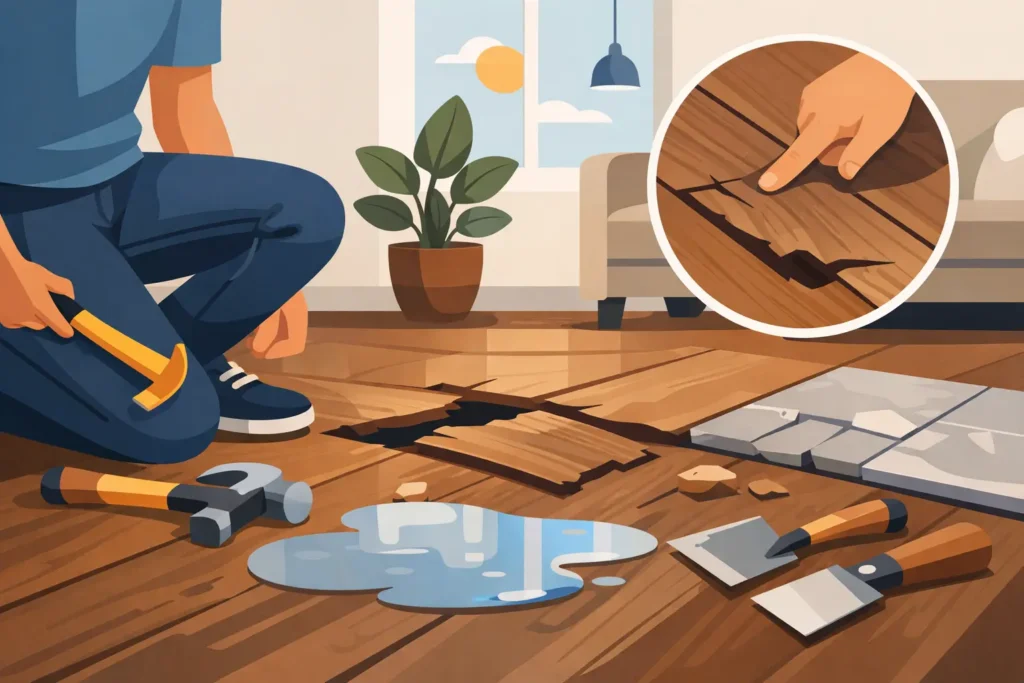
Water damage is one of the clearest signs that a floor needs repair. Watch for dark stains, cloudy finish, swollen edges, cupping, or planks that curl upward along the sides. With laminate flooring, water exposure can cause the core to swell permanently. Vinyl plank is more water-resistant, but water can still travel beneath the planks and affect adhesive, underlayment, or the subfloor.
The source matters as much as the visible damage. A one-time spill may affect a few boards, while a slow dishwasher leak, plumbing issue, or window leak can damage a much larger area without obvious warning. In commercial spaces, repeated wet mopping near entry areas can also contribute to failures over time.
Do not cover water damage with a rug or wait for it to dry on its own. Drying may stop additional damage, but it will not always restore warped materials or remove moisture trapped underneath. Fast action gives you the best chance of limiting repairs.
Scratches, dents, and finish wear that expose the material
Surface scratches are normal in busy homes, rental properties, and offices. The concern begins when damage cuts through the protective finish or removes the top layer of the flooring. Deep scratches in hardwood can allow moisture into the wood. Dents can weaken a plank, while worn traffic paths can leave the floor looking dull and unprotected.
Hardwood often offers the most repair flexibility. Depending on the depth and extent of damage, individual boards can be repaired or replaced, and some floors can be refinished. Laminate cannot usually be sanded, so damaged planks often need replacement. Vinyl plank repairs may involve replacing a single plank, although the method depends on whether the floor is click-lock, glue-down, or loose-lay.
Soft, spongy, or sagging areas
A floor should not feel soft or springy under normal foot traffic. Soft spots can indicate moisture-damaged subflooring, deteriorated plywood, pest damage, or an issue with the floor framing. In a commercial property, heavy traffic and rolling equipment can make weak areas more noticeable and more dangerous.
This is not a cosmetic concern. A soft area can worsen quickly, especially if the moisture source is ongoing. It can also become a safety liability for tenants, employees, customers, or guests. Avoid placing heavy furniture over the area until the cause has been evaluated.
Loose transitions and damaged edges
Transition strips at doorways, stair noses, and floor edges take more wear than most people realize. When they become loose, cracked, or separated, they can catch shoes, expose unfinished edges, and allow flooring to shift. These repairs are often straightforward when handled early.
Stair repairs deserve particular attention. A loose tread, damaged stair nose, or peeling surface is a fall risk, not just an appearance issue. For rental and commercial properties, addressing these areas quickly helps protect occupants and keeps the space looking properly maintained.
When Repair Makes More Sense Than Replacement
Repair is often the smart value choice when damage is contained, matching materials are available, and the subfloor remains sound. Replacing a few scratched hardwood boards, correcting a loose vinyl plank section, or repairing a failed transition can extend the life of the entire floor without the cost of a full replacement.
Replacement may be more cost-effective when damage is widespread, moisture has affected the subfloor, or the flooring is near the end of its expected service life. It can also make sense when discontinued material makes a patch obvious or when multiple repairs have already been attempted. A good recommendation should consider the condition of the whole floor, not just the most visible damaged spot.
For a property refresh, replacement also creates an opportunity to choose a material that better fits the room. Waterproof vinyl plank can be a practical choice for active households, offices, and areas exposed to spills. Bamboo offers a durable, eco-conscious option with a distinct look. Hardwood remains a strong long-term investment where refinishing potential and natural character matter most.
What to Do When You Notice Floor Damage
Start by documenting the problem. Take clear photos, note when you first noticed it, and check nearby areas for leaks, dampness, or changes in the floor level. If water is involved, stop the source if possible and remove standing water promptly.
Avoid using extra nails, glue, or filler as a quick fix unless you know what caused the damage. Those shortcuts can make a professional repair harder, conceal active moisture, or void a flooring product warranty. The best repair begins with an accurate diagnosis.
A flooring consultation is especially useful when you are deciding between repair and replacement, preparing a rental unit, updating a business interior, or planning to sell a home. An experienced installer can assess the flooring, subfloor, transitions, and moisture conditions together, then recommend a solution that fits the space and budget.
Small floor problems rarely stay small under daily foot traffic. If your flooring is lifting, separating, staining, or feeling unstable, a timely inspection can protect your investment and help your home or business stay safe, attractive, and ready for everyday use.