A floor can look nearly identical on day one and perform very differently five years later. The deciding factor is often not just the material you choose, but how it is installed. In the glue down vs floating floor decision, the right answer depends on your subfloor, room use, moisture conditions, budget, and expectations for long-term stability.
For homeowners, property managers, and business owners, installation method deserves as much attention as plank color or surface texture. A professional assessment helps prevent common problems such as movement, gaps, hollow spots, moisture damage, and premature wear.
Glue Down vs Floating Floor: The Core Difference
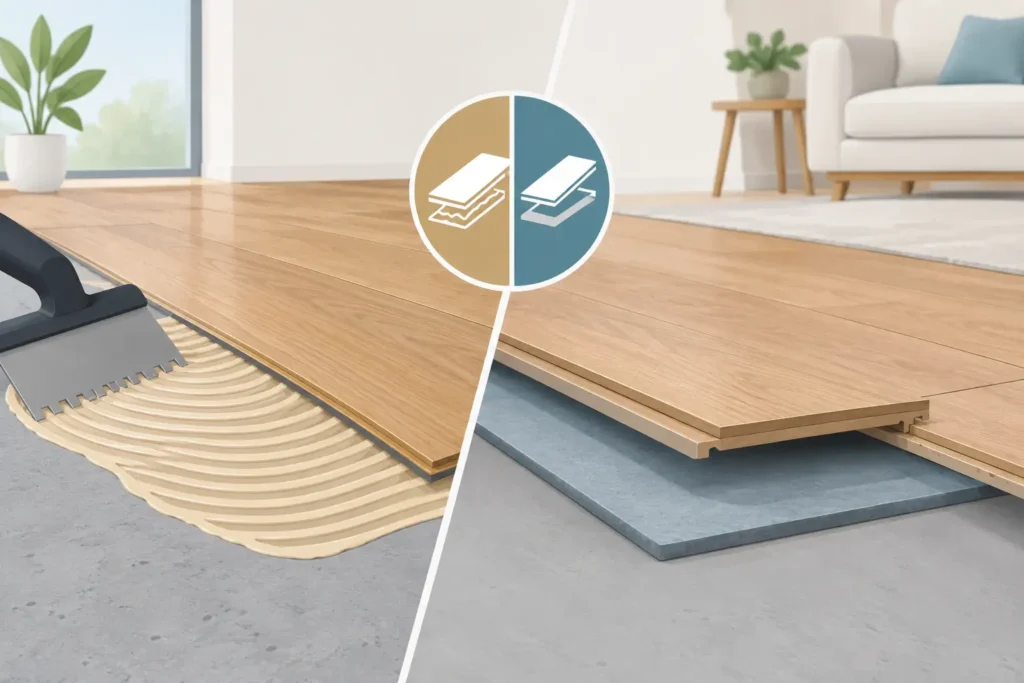
A glue-down floor is bonded directly to the prepared subfloor with a flooring adhesive. The adhesive holds each plank or tile firmly in place, creating a solid, stable surface. Glue-down installation is common for luxury vinyl plank, vinyl tile, engineered hardwood, and some bamboo flooring products.
A floating floor is not attached directly to the subfloor. Instead, the planks lock or fit together and rest over an underlayment or approved existing surface. Laminate flooring, click-lock vinyl plank, and certain engineered wood floors are frequently installed as floating systems.
Neither method is automatically better. The product manufacturer, the condition of the existing floor, traffic levels, and the room itself should guide the choice.
When a Glue-Down Floor Makes Sense
Glue-down flooring is often the stronger choice where stability matters most. Because the material is secured across the entire floor, it feels firm underfoot and is less likely to shift when heavy furniture, rolling chairs, or frequent foot traffic are involved.
This makes glue-down vinyl plank especially practical for commercial interiors, busy hallways, kitchens, retail spaces, and rental properties. In a Los Angeles office or storefront, rolling desk chairs and steady daily traffic can put extra stress on a floating floor. A properly installed glue-down surface handles that activity well.
Glue-down installation can also be useful in larger, open rooms. Floating floors expand and contract as temperatures and humidity change, so they need expansion gaps around walls and fixed objects. Large continuous spaces may require transition strips or careful planning. A glue-down floor has less movement and can create a cleaner look across broad areas.
Another advantage is sound and feel. A quality glue-down installation usually feels more substantial than a floating floor because there is no air space beneath the planks. It can also reduce the clicking or slightly hollow sound some floating products produce when walked on.
There are trade-offs. Glue-down flooring requires a very clean, smooth, dry, and level subfloor. Adhesives must be chosen correctly and applied at the right coverage rate. Installation takes more prep work, can involve adhesive cure time, and is less forgiving if a mistake is made. Removing a glued floor later is also more labor-intensive.
When a Floating Floor Is the Better Fit
A floating floor is often the practical choice for residential upgrades, especially when speed and budget are high priorities. Click-lock laminate and luxury vinyl plank can be installed efficiently over many properly prepared surfaces, including some existing hard flooring.
For homeowners replacing worn carpet or updating a guest room, bedroom, living area, or low-to-moderate traffic space, floating flooring offers a clean, attractive result without the added adhesive process. It is also a smart option when future replacement is likely, such as in a rental unit or a room where design preferences may change.
Floating systems can work well over minor subfloor imperfections, but that does not mean they can cover a bad subfloor. Significant dips, high spots, loose boards, or moisture problems still need correction. A floating floor follows the surface below it. If the base is uneven, the planks can flex, separate, squeak, or develop damaged locking edges.
Underlayment is another consideration. Depending on the product, it may provide cushioning, sound control, and moisture protection. This is valuable in upstairs bedrooms, condos, and multi-unit properties where reducing footfall noise matters. However, using the wrong underlayment or adding one where it is not approved can void a manufacturer warranty or cause locking joints to fail.
Compare Performance in Real Rooms
The best installation method often becomes clear when you consider how the room is actually used.
In a busy kitchen, glue-down vinyl plank can offer a stable, water-resistant surface that holds up well to daily activity. A floating waterproof vinyl plank may also work, but the edges and perimeter details must be installed carefully so spills do not reach the subfloor.
For bedrooms and living rooms, either option can be successful. Floating laminate or vinyl plank is typically more budget-friendly and faster to install. Glue-down flooring may be worth the added investment if you prefer a firmer feel, have heavy furniture, or want fewer transitions in a larger layout.
In commercial spaces, the decision leans more often toward glue-down vinyl. It performs well under rolling loads, frequent cleaning, heavy foot traffic, and furniture movement. That said, some commercial-grade floating products are designed for specific office applications. The product specifications matter as much as the installation category.
For condos, upstairs rooms, and multi-family properties, sound transmission should be reviewed before choosing either system. Building rules may require a specific acoustic underlayment, and a floor that looks great can still create problems if it does not meet HOA or property management requirements.
Moisture and Subfloor Conditions Matter More Than Most People Expect
Moisture is one of the main reasons flooring installations fail. Concrete slabs can release moisture even when they appear dry. Wood subfloors can hold moisture from leaks, crawl spaces, or humidity changes. Installing over an untested surface can lead to adhesive failure, cupping, mold concerns, plank movement, or damaged locking joints.
Glue-down flooring requires compatible adhesive and moisture-control products when moisture readings call for them. Floating flooring may require a vapor barrier, particularly over concrete. Neither method should be used to hide an active moisture issue.
Subfloor flatness is equally important. Glue-down floors need a smooth surface so the adhesive makes full contact. Floating floors need a flat surface so the locking system is not stressed with every step. A professional installer checks for both before installation begins, then handles leveling, patching, or repairs as needed.
Cost: Look Beyond the Price Per Square Foot
Floating floors can have a lower initial installation cost because they usually require less adhesive work and may go down more quickly. This can make them appealing for a budget-conscious renovation or a fast turnover project.
Glue-down installation can cost more upfront due to subfloor preparation, adhesive, labor, and moisture mitigation when required. Still, it can deliver better value in demanding spaces because of its stability and long-term performance. A low initial price is not a bargain if the floor moves, opens at the seams, or needs early replacement.
Material choice also affects the total. Laminate, vinyl plank, engineered hardwood, and bamboo all have specific installation requirements. For example, some bamboo products are designed for glue-down installation, while others can float. Following the manufacturer’s instructions protects the floor, its warranty, and your investment.
Common Mistakes to Avoid
The most expensive flooring mistakes usually happen before the first plank is installed. Choosing a method based only on a quick online comparison, skipping moisture testing, or installing over an uneven surface can create avoidable repair costs.
It is also risky to assume all vinyl plank or engineered hardwood installs the same way. Some products are glue-down only. Others are floating only. A few offer more than one approved installation method, but the correct choice still depends on the jobsite.
Professional installation also matters at the edges. Expansion space, transitions, door jamb cuts, baseboards, adhesive spread, plank layout, and final cleanup all affect how the finished floor looks and performs. These details are especially important in older Los Angeles homes, where subfloors and room dimensions may not be perfectly uniform.
Get the Installation Method Right Before You Buy
The glue down vs floating floor choice should start with an on-site evaluation, not a guess. A flooring professional can inspect the subfloor, measure moisture, review traffic demands, and recommend a material and installation method that fit your property and budget.
Magnet Flooring helps homeowners and commercial clients make practical flooring decisions without overspending on the wrong solution. The best floor is the one that fits your space, performs reliably, and still looks right after years of real life happen on it.