Flooring color trends are moving away from stark, one-note finishes and toward colors that feel natural, flexible, and easy to live with. For Los Angeles homeowners, property managers, and business owners, the right floor color has to do more than look current. It needs to handle bright sunlight, daily traffic, furniture changes, and the practical demands of the room.
A trend can be a useful starting point, but it should not force a choice that will feel dated or high-maintenance in two years. The strongest flooring decisions balance visual appeal with durability, cleaning needs, lighting, and budget. That is especially true when you are choosing flooring for a rental property, a busy family home, a retail space, or an office that needs to make a polished first impression.
Flooring Color Trends Lean Natural and Grounded
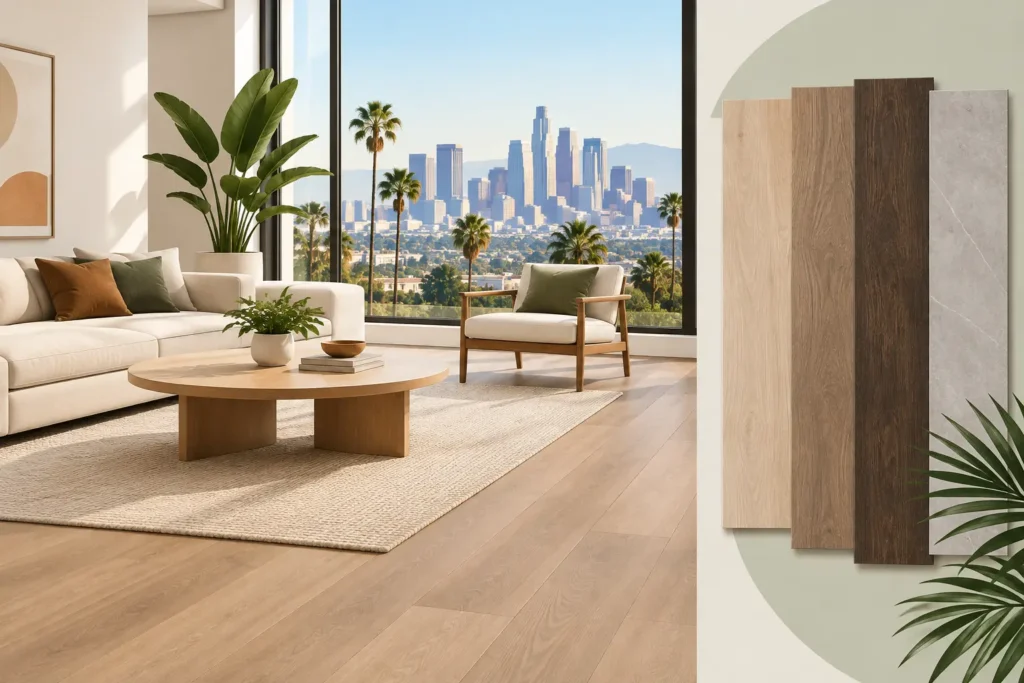
The most reliable color direction is warm, natural-looking flooring. Think oak-inspired browns, soft greige, sandy beige, muted honey, and medium neutral tones with visible grain variation. These colors add warmth without making a room feel dark, and they work with a wide range of wall colors, cabinetry, and furnishings.
Cool gray floors have not disappeared, but the flat blue-gray finishes that dominated many remodels are becoming less popular. Homeowners are generally choosing warmer grays with brown or taupe undertones instead. This shift makes rooms feel more comfortable and gives owners more freedom when decorating with wood furniture, cream textiles, black hardware, or earthy accents.
Natural variation matters, too. A floor with subtle knots, grain, and shade changes often looks more convincing and stays visually interesting over time. That does not mean every project needs a distressed or heavily textured floor. In a clean, modern home or office, a controlled natural pattern can deliver warmth while still looking refined.
Light Oak and Soft Blonde Tones
Light oak and blonde flooring remain popular because they make rooms feel open and bright. They are a practical fit for smaller condos, darker hallways, and spaces that need a relaxed California look without becoming overly beachy or casual.
These tones pair well with white, warm gray, olive, charcoal, and natural wood finishes. They also reflect light effectively, which is useful in homes with limited windows. The trade-off is that very pale floors can show dark debris, scuffs, and pet hair more clearly than medium-tone options. Choosing a finish with grain movement and a low-sheen surface can make everyday dust less noticeable.
Warm Mid-Tones for Long-Term Flexibility
For many properties, medium brown and warm greige floors offer the best balance of style and maintenance. They conceal small marks better than very light or very dark flooring, work across traditional and contemporary interiors, and tend to appeal to a broad range of buyers or tenants.
A warm mid-tone is an especially smart choice for rental homes, multi-use commercial spaces, and family rooms. It provides enough contrast to define the floor without competing with cabinets, area rugs, or furnishings. When long-term resale value matters, this is usually a safer investment than an extreme color choice.
Rich Browns Are Returning With Restraint
Deeper brown floors are gaining attention again, particularly in homes that use warm whites, natural stone, brass, walnut furniture, or classic architectural details. The updated look is less about red-toned espresso floors and more about balanced chestnut, cocoa, smoked oak, and medium-dark walnut shades.
Dark flooring can create a dramatic, high-end appearance, but it requires an honest discussion about maintenance. High-gloss dark floors reveal scratches, footprints, and dust quickly. A matte or satin finish, along with a floor color that has natural variation, is a more forgiving way to achieve depth without constant cleaning.
Why Finish and Texture Matter as Much as Color
Flooring samples can be misleading when viewed only under showroom lighting. The same plank may look warmer, cooler, lighter, or darker once it is installed beside your walls and exposed to afternoon sun. Before committing, view samples in the actual room at several times of day.
Finish also changes how color performs. Matte and low-luster finishes are a major part of current flooring color trends because they reduce glare and make minor wear less obvious. They suit busy households and commercial interiors where the floor needs to look clean and professional without daily polishing.
Wire-brushed, lightly textured, and embossed surfaces can add visual depth while helping disguise small scratches. However, heavy texture is not right for every setting. In an office, clinic, or property that needs frequent detailed cleaning, a smoother surface may be easier to maintain. The right choice depends on how the space is used, not simply what is popular online.
Matching Color to Flooring Material
Color options should be considered alongside the material itself. Hardwood, vinyl plank, bamboo, and laminate can all create the look of warm oak, clean blondes, or rich browns, but they perform differently under moisture, impact, sunlight, and daily foot traffic.
Hardwood for Authentic Character
Hardwood is a strong choice when you want genuine grain, lasting value, and the ability to refinish the floor later. White oak and oak-inspired finishes are particularly versatile because they can range from pale natural tones to deeper, warmer stains without losing their classic appeal.
Hardwood is not always the best choice for areas with frequent moisture or heavy commercial wear. It also requires professional installation and proper acclimation to protect the investment. When selected and installed correctly, it brings a level of character that printed surfaces cannot fully duplicate.
Vinyl Plank for Busy Homes and Businesses
Luxury vinyl plank is a practical solution for customers who want current colors with waterproof performance and manageable pricing. It is available in a wide range of blonde oak, warm gray, natural brown, and low-variation styles. For kitchens, laundry areas, rentals, offices, and homes with pets, vinyl plank often makes sense because it is designed for real daily use.
Avoid choosing a vinyl color based only on the largest display board. Look at individual plank repetition, edge detailing, texture, and how the product transitions into adjacent rooms. A professionally planned layout makes the floor look more natural and helps the color flow through the property.
Bamboo and Laminate for Value-Conscious Projects
Bamboo offers a distinctive, eco-conscious option for homeowners who want a renewable material and a clean, modern finish. Natural and medium bamboo tones can brighten a space, while carbonized options add more warmth. The quality of the product and the installation method are critical, especially in areas with changing humidity.
Laminate remains a cost-effective choice for projects that need a durable wood-look surface without the price of hardwood. Today’s better laminate products offer more realistic color variation and texture than older versions. For both bamboo and laminate, the key is choosing a shade that fits the room and a product rated for the expected traffic.
Choose Color by Room Function, Not Just Inspiration Photos
A floor should support the job of the room. In a bright living room, warmer light oak or natural beige can keep the space airy without looking sterile. In a high-traffic entry, hallway, or office, a medium tone with varied grain is often easier to maintain than a solid pale or dark floor.
For kitchens, bathrooms, and spaces with a higher risk of spills, color should be paired with the right water-resistant or waterproof material. A beautiful hardwood look may be achievable with vinyl plank where moisture makes real wood less practical. In commercial settings, choose a color that supports your brand and will still look presentable after busy workdays.
Transitions deserve attention as well. If several rooms connect visually, using one consistent flooring color can make the property feel larger and more organized. If you need different materials in different areas, select tones with compatible undertones. A warm beige vinyl beside a cool gray laminate can make both floors look accidental rather than intentional.
Get the Trend Without Chasing It
The best flooring color is not necessarily the boldest or newest one. It is the color that works with your lighting, your furnishings, your maintenance expectations, and the life of the property. Warm neutrals, natural wood looks, and low-sheen finishes are popular because they solve real design problems while staying flexible as styles change.
Before ordering material, bring samples into the space and compare them against cabinets, paint, counters, and doors. A professional flooring consultation can help you narrow the choices, account for subfloor conditions, and avoid expensive mismatches. At Magnet Flooring, the goal is simple: install a floor that looks right on day one and continues to perform well long after the trend cycle moves on.