
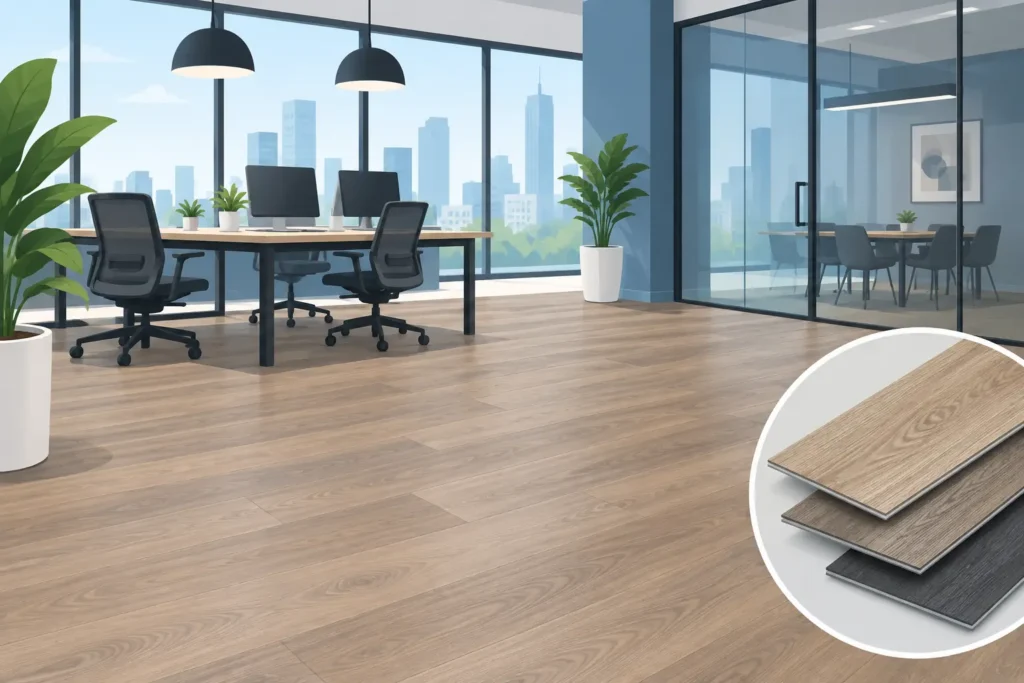
A scratched, noisy, hard-to-clean office floor sends the wrong message before a client reaches the reception desk. So, is vinyl plank good for offices? For many Los Angeles workplaces, yes. Quality luxury vinyl plank can deliver the wood-look design businesses want with the durability, water resistance, and manageable cost a commercial space needs. The key is choosing a product rated for the traffic your office actually receives and installing it correctly.
Vinyl plank is not the right answer for every commercial setting. A quiet accounting office has different flooring demands than a busy medical practice, retail showroom, or shared workspace with rolling chairs moving all day. A practical decision starts with how the space is used, not just with a sample board under showroom lighting.
Why vinyl plank works well in many offices
Luxury vinyl plank, often called LVP, is made in layers. The visible design layer gives it the appearance of wood or stone, while its protective wear layer helps it stand up to scuffs, spills, and everyday foot traffic. Many modern products also have a rigid core that adds stability and helps hide minor subfloor imperfections.
For office owners and property managers, the biggest advantage is balance. Vinyl plank can look polished and professional without carrying the material and installation cost of premium hardwood. It is also generally warmer and quieter underfoot than ceramic tile, a real benefit in offices where employees stand at reception counters, move between workstations, or meet clients in private rooms.
Water resistance is another strong point. Coffee spills, wet umbrellas, tracked-in rain, and routine cleaning are part of office life. Vinyl plank handles these situations better than many laminate and wood floors, provided moisture is cleaned up in a reasonable time and the product is suitable for the conditions.
It supports a professional design without high maintenance
Office flooring needs to look intentional, not merely survive. Vinyl plank comes in a wide range of wood tones, plank widths, textures, and stone-inspired visuals. A light oak look can make a compact office feel more open, while warmer medium tones can create a comfortable, established feel in a law office, studio, or client-facing workspace.
Daily care is simple. Regular sweeping or vacuuming with a hard-floor setting, followed by damp mopping with a manufacturer-approved cleaner, is usually enough. There is no refinishing schedule like hardwood and no grout lines to maintain as there are with tile. That can reduce disruption and ongoing maintenance costs for a leased office or a building with several suites.
It is comfortable for employees and visitors
Compared with concrete, tile, or natural stone, vinyl plank has a little more give. That does not replace anti-fatigue mats for employees who stand for long periods, but it can make the workspace feel less harsh. It also produces less footfall noise than hard tile, especially when installed with the right underlayment where the product allows it.
For second-floor offices, sound transfer deserves extra attention. Vinyl plank can improve acoustics, but it is not automatically a soundproof floor. If noise control is a priority, the flooring system should be selected around the building’s sound requirements, including the subfloor, underlayment, and any requirements set by the property owner.
Is vinyl plank good for offices with heavy traffic?
Vinyl plank can perform well in high-traffic offices, but only when the specification matches the environment. This is where many low-cost flooring decisions fail. A residential-grade plank may look great on day one, yet wear early at entryways, hallways, break rooms, and reception areas.
For active commercial spaces, choose commercial-rated vinyl plank with a substantial wear layer and a warranty intended for business use. The wear layer is the clear protective surface above the printed design. A thicker wear layer usually offers better protection against scuffs and surface wear, although the full product construction and warranty matter too.
Rolling office chairs are another consideration. A good vinyl plank floor can handle office chairs, but chair mats are still smart in workstations used for long hours. They limit concentrated wear, reduce the chance of grit being ground into the surface, and help chairs move more easily. Use mats designed for hard floors, not mats with aggressive spikes that can damage vinyl.
Entry protection matters just as much as the plank itself. Commercial walk-off mats near exterior doors catch sand, moisture, and small debris before they become abrasives. In Southern California, dust and grit can be a bigger day-to-day threat than dramatic weather. A simple cleaning routine protects the floor’s appearance far more effectively than waiting for visible damage.
Where vinyl plank may not be the best choice
Vinyl plank has limits, and a dependable flooring recommendation should be honest about them. Areas with frequent standing water or drainage issues need a closer review. While many vinyl products are waterproof at the surface, water can still reach the subfloor through gaps at walls, transitions, plumbing penetrations, or an improperly prepared installation.
It may also be a weaker choice for industrial spaces where forklifts, heavy machinery, sharp tools, or extreme point loads are common. Those settings often need specialized commercial flooring such as polished concrete, epoxy, rubber, or a heavy-duty tile system. Vinyl plank can dent under concentrated weight, so furniture layouts, filing cabinets, equipment, and movable partitions should be considered before installation.
Direct sunlight is another factor in glass-heavy offices. High-quality vinyl plank is designed to resist fading, but intense sun exposure can heat the floor and affect long-term appearance or expansion in some installations. Window treatments, product selection, and proper expansion space around the perimeter help manage this risk.
Choosing the right vinyl plank for an office
The right product is not always the most expensive one. It is the one built for the room, installed over a properly prepared subfloor, and supported by a warranty that applies to your use. Before selecting a color, confirm whether the manufacturer approves the product for commercial applications and review its wear-layer rating, core construction, water-resistance claims, and installation requirements.
Glue-down vinyl plank is often a strong option for busy offices because it creates a firm, stable surface and can perform well with rolling loads. It may require more intensive subfloor preparation, but that preparation is often worth it in corridors, reception areas, and larger commercial layouts.
Click-lock floating vinyl plank can be efficient and attractive in smaller offices or spaces where a floating installation is appropriate. It is important to follow the product’s requirements for flatness, moisture testing, expansion gaps, and underlayment. Skipping these steps can lead to shifting, gaps, joint failure, or a floor that feels uneven underfoot.
Color and texture should work for maintenance as well as style. Very dark floors can show dust, while very light smooth finishes may reveal marks in high-use areas. Mid-tone planks with realistic texture often provide the most forgiving look for a busy office. Samples should be viewed in the actual room, under daylight and the office’s installed lighting.
Professional installation protects the investment
Even excellent vinyl plank can fail when installed over an uneven, damp, or poorly prepared subfloor. Commercial installations require moisture testing, careful layout planning, clean transitions, and attention to doorways, baseboards, and furniture loads. These details affect both appearance and warranty coverage.
A professional installer can also help evaluate whether existing flooring should be removed, whether the subfloor needs leveling, and which installation method makes the most sense for the schedule and budget. For occupied offices, planning the work in phases can reduce downtime and keep business operations moving.
Cost and long-term value for office owners
Vinyl plank is often chosen because it gives offices a high-end visual at a more accessible price point than hardwood or premium tile. Total cost depends on the product grade, square footage, subfloor condition, removal of existing flooring, furniture moving, moisture mitigation, and installation method.
The least expensive plank is not necessarily the best value. Replacing a worn floor early, repairing failed seams, or dealing with downtime can cost more than selecting a commercial-ready product from the beginning. A realistic estimate should account for preparation and installation, not simply the price per square foot of material.
For offices in Burbank, Glendale, North Hollywood, and surrounding Los Angeles areas, a site evaluation is especially useful when the building is older, the slab condition is unknown, or the space has seen multiple tenant improvements. The floor beneath the floor often determines how smoothly the project goes.
Vinyl plank gives many offices a practical path to a clean, durable, client-ready space without overextending the budget. If you are comparing options for a new office, renovation, or tenant turnover, Magnet Flooring can assess the traffic, subfloor, and design goals before recommending a flooring system that will work hard long after installation day.