A basement can become the most useful square footage in your property – a family room, rental suite, office, gym, or finished workspace. But it is also the room most likely to punish the wrong flooring choice. This basement flooring guide explains what works below grade, what can fail, and how professional preparation protects your investment.
The first decision is not color, texture, or plank width. It is moisture. Concrete slabs can release moisture vapor even when they look dry, and a basement that has never flooded can still face seasonal humidity, plumbing leaks, or water intrusion after heavy rain. The best floor is one that fits the room’s conditions, not simply the look you saw in a showroom.
Start With Moisture, Not Material
Before selecting basement flooring, inspect the space carefully. Look for stains along walls, musty odors, peeling paint, cracks in the slab, or a powdery white residue called efflorescence. These can indicate moisture moving through the concrete or foundation.
A moisture test is a smart step before any finished floor is installed. Professional installers can evaluate slab moisture and determine whether a vapor barrier, moisture-mitigation system, or other preparation is necessary. If there is active water entry, flooring should wait until the drainage, grading, foundation, or plumbing issue is corrected.
Los Angeles basements are not always exposed to the same ground-water conditions as colder or wetter regions, but they are not automatically moisture-free. Older homes, hillside properties, and spaces with limited ventilation can present their own risks. Treating the basement like a ground-level living room is a costly mistake.
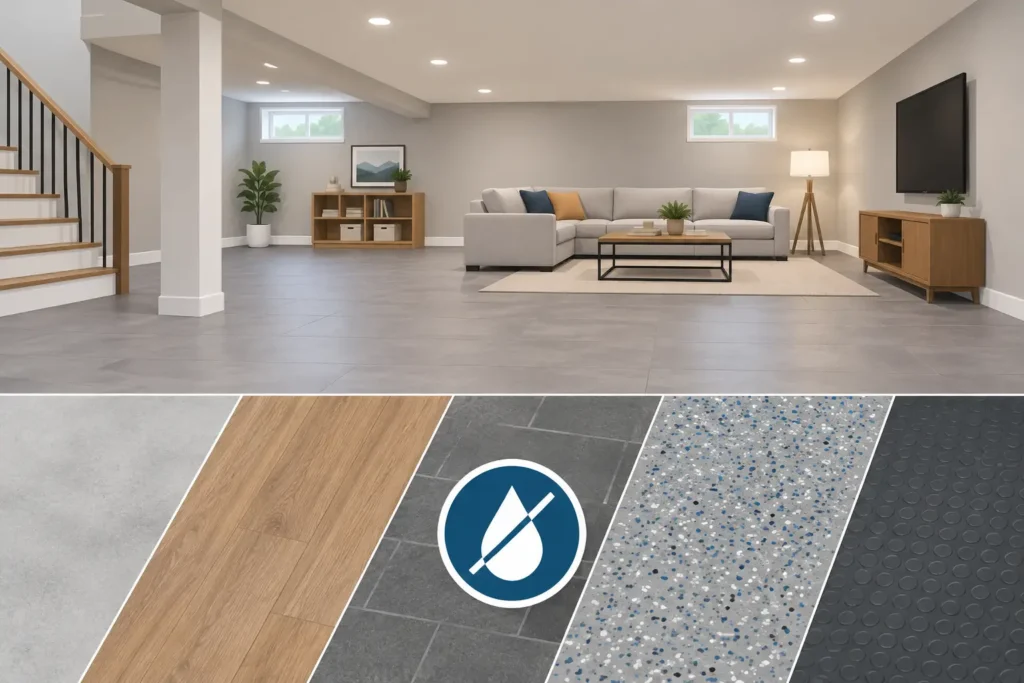
Best Basement Flooring Options
No single product is right for every basement. The right choice depends on the condition of the concrete, how the room will be used, your budget, and how much moisture protection you need.
Waterproof Vinyl Plank
Luxury vinyl plank is often the strongest all-around choice for a finished basement. Quality vinyl flooring is waterproof, comfortable underfoot, durable enough for active households, and available in wood-look designs that work with modern, traditional, and commercial interiors.
For a basement playroom, rental unit, home office, or media room, vinyl plank offers an especially practical balance of appearance and performance. Many products use click-lock installation, while others are glued down depending on the floor condition and manufacturer requirements. A floating floor can work well over properly prepared concrete, but it still needs a flat, clean surface and the right underlayment when specified.
Waterproof does not mean flood-proof in every situation. If standing water reaches the edges of the floor or gets beneath a floating installation, materials may need to be removed so the slab can dry. Still, vinyl plank is far more forgiving than most wood-based flooring options.
Laminate Flooring
Laminate flooring can deliver a polished wood-look floor at a budget-conscious price. It is a good option for a basement that is consistently dry, well-prepared, and used as a low-risk living space. Modern laminate is more attractive and more durable than older products, with realistic textures and strong wear layers.
The trade-off is water exposure. Water-resistant laminate can handle small spills when cleaned promptly, but moisture that enters seams or sits beneath the floor can cause swelling and edge damage. For that reason, laminate is best for basements with verified moisture control rather than areas with a history of leaks or dampness.
A proper vapor barrier and underlayment are not optional details. They are part of the system that helps laminate perform as intended over concrete.
Engineered Hardwood
If real wood is the priority, engineered hardwood is generally a better basement candidate than solid hardwood. Its layered construction is more dimensionally stable, and it can provide the warmth and value of a genuine wood surface in a controlled below-grade environment.
That said, engineered hardwood is not waterproof. It is better suited to a dry basement with reliable climate control, no active moisture concerns, and a professionally tested and prepared slab. Homeowners who want an upscale finish may find it worthwhile, but they should be realistic about the maintenance and environmental control it requires.
Solid hardwood is usually not recommended directly over a below-grade concrete slab. Wood naturally expands and contracts as humidity changes, and basement moisture can lead to cupping, gaps, warping, or long-term damage.
Bamboo Flooring
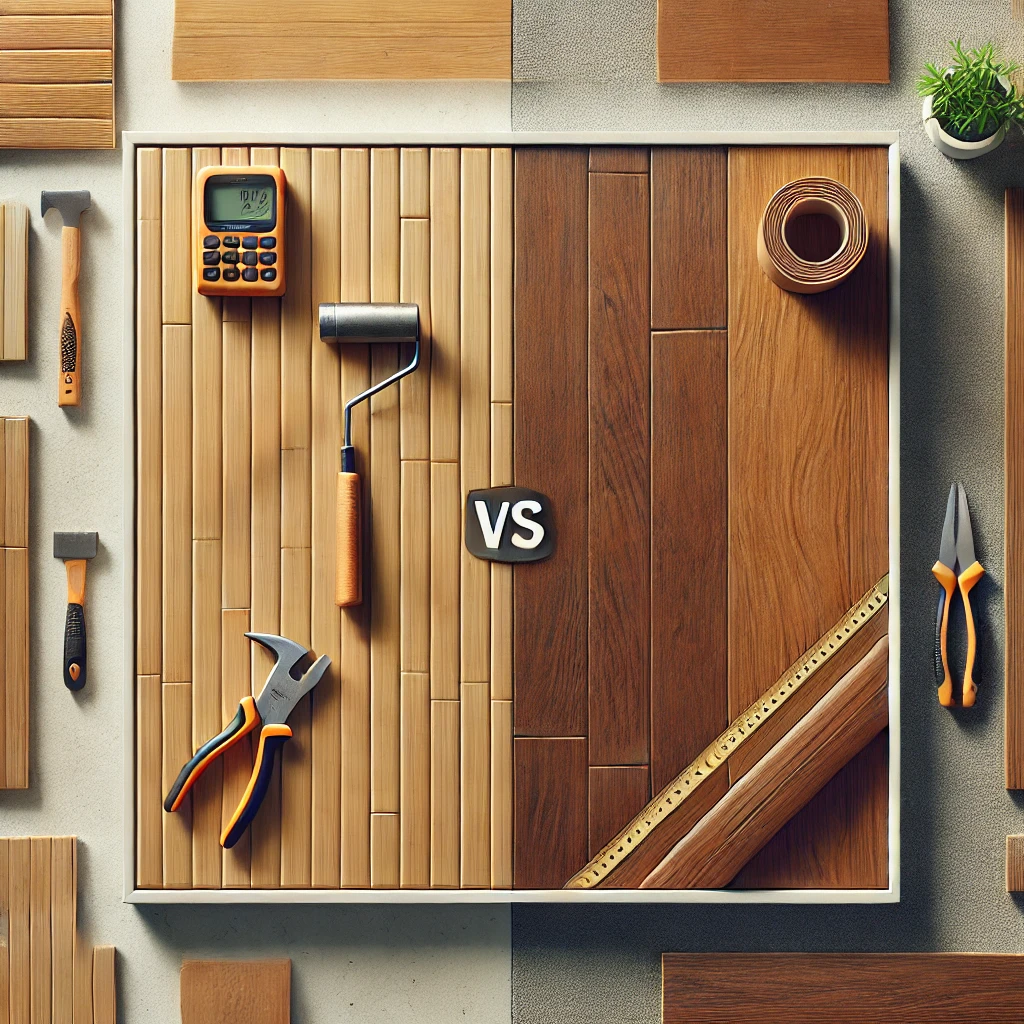
Bamboo is a compelling choice for homeowners who want a more eco-conscious floor with a clean, contemporary look. It can be durable and visually distinctive, particularly in upstairs rooms and main living areas. In a basement, however, bamboo needs the same careful moisture planning as other wood-based materials.
If the basement is dry, climate-controlled, and properly prepared, certain engineered bamboo products may be appropriate. It is not the first choice for a space that could experience water intrusion. When sustainability and basement resilience both matter, compare the specific bamboo product with waterproof vinyl options before making a final decision.
The Subfloor and Concrete Prep Matter
Great flooring installed over a poor surface will not perform like great flooring. Concrete must be clean, flat, sound, and dry enough for the flooring system selected. Adhesive, old carpet backing, paint, cracked patches, and uneven areas all need attention before installation begins.
Leveling is especially important with vinyl plank and laminate. Small dips, ridges, or high spots can create movement under the planks, stress locking systems, and leave the finished floor feeling uneven. Professional preparation may include grinding high areas, patching cracks, applying a self-leveling compound, or installing an approved moisture barrier.
Do not assume a vapor barrier solves every problem. It helps manage vapor transmission, but it cannot stop water coming through a foundation crack or a failed drain line. A contractor should identify the source of any moisture before recommending the floor assembly.
Match the Floor to How the Basement Will Be Used
A home gym needs a different approach than a quiet guest room. For a gym or playroom, waterproof vinyl with protective mats in high-impact zones is practical and easy to clean. A basement office may benefit from laminate or engineered wood if moisture conditions are controlled and a more refined appearance is the goal.
Property managers should also consider maintenance and replacement costs. A durable vinyl plank floor can be a sensible choice in rental spaces because it handles daily use well, offers broad tenant appeal, and can be easier to repair in localized areas than a full carpet installation.
For commercial basement spaces, prioritize durability, cleaning requirements, slip resistance, and the expected traffic level. The lowest upfront price is not always the best value if the material needs early replacement or creates ongoing maintenance problems.
Budget for the Full Installation
Basement flooring costs include more than the material itself. Surface preparation, moisture testing, vapor barriers, leveling, removal of existing flooring, trim work, stairs, and furniture moving can all affect the final estimate. These are not unnecessary add-ons. They are often the work that determines whether a floor lasts.
A clear quote should explain the recommended product, preparation steps, and installation method. If one estimate is dramatically lower than another, ask what has been excluded. Skipping moisture preparation may reduce the initial price, but it can turn a flooring project into a replacement project later.
When Professional Installation Makes Sense
Below-grade flooring is rarely a good place to gamble on shortcuts. Product warranties often require specific moisture readings, approved underlayments, expansion gaps, and installation methods. A professional installer can assess the slab, recommend materials that fit the room, and complete the details that keep the floor stable and attractive.
Magnet Flooring helps homeowners, property managers, and businesses make practical flooring decisions based on real site conditions, style goals, and budget. A consultation is an opportunity to compare options before committing to a material that may not suit the basement.
Choose a floor that gives your basement more usable space without creating a new maintenance problem. When moisture is addressed first and the installation is done correctly, the finished room can feel every bit as comfortable and dependable as the rest of the property.