
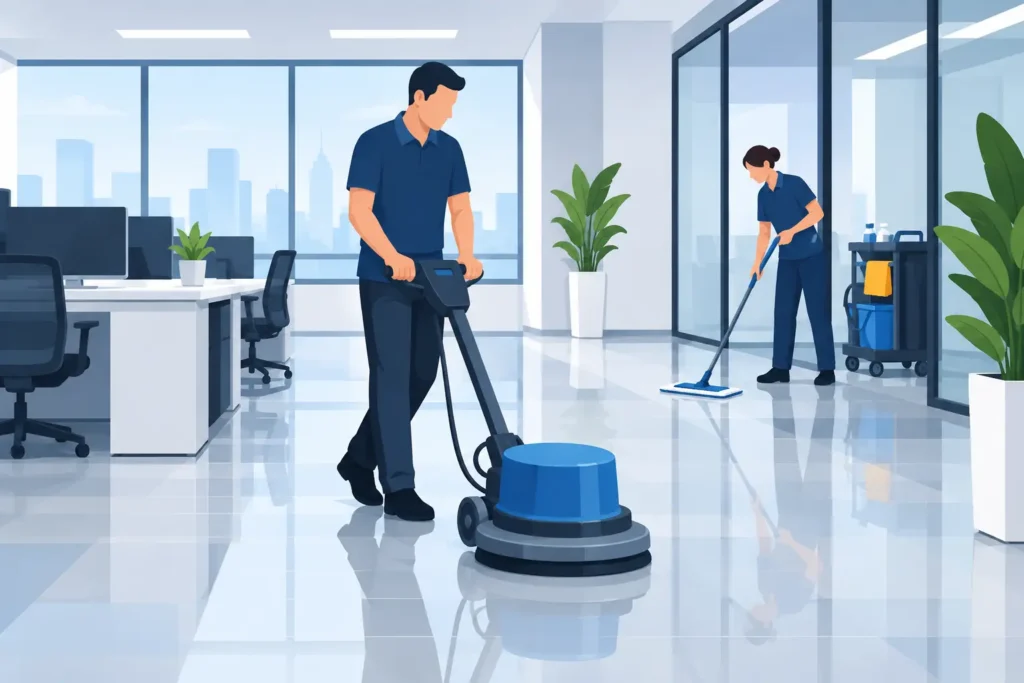
A scuffed entryway, loose vinyl plank, or dull hardwood floor can change how customers and tenants view an otherwise well-run property. This commercial flooring maintenance guide helps Los Angeles business owners and property managers protect their investment before small wear issues turn into disruptive repairs or early replacement.
Commercial floors carry more than foot traffic. They handle rolling chairs, deliveries, spills, dirt from parking lots, cleaning chemicals, sunlight, and the daily pressure of keeping a space presentable. The right maintenance plan is not complicated, but it must match the material, the amount of traffic, and how the space is used.
Start With the Floor You Actually Have
A maintenance plan that works for waterproof vinyl plank can damage a hardwood floor. Before setting a cleaning routine, confirm the flooring material, finish, installation method, and manufacturer care requirements. This is especially important in leased offices, medical suites, retail spaces, and multi-tenant buildings where flooring may have been installed years before the current management team arrived.
Hardwood needs moisture control and careful cleaning. Excess water can work through seams, swell boards, and weaken finishes. Laminate also needs minimal moisture, even when it looks like wood. Bamboo is durable and an eco-conscious choice, but it is still a natural material that benefits from prompt spill cleanup, felt protection under furniture, and humidity awareness.
Vinyl plank is often the practical choice for busy commercial interiors because it resists water and handles daily cleaning well. Still, it is not invincible. Grit can scratch the wear layer, furniture can dent it, and harsh solvents can leave a cloudy or sticky surface. The most durable floor lasts longer when cleaning methods fit the product.
Build a Commercial Flooring Maintenance Schedule
Consistency matters more than aggressive cleaning. A simple schedule gives staff clear expectations and makes it easier to spot changes before they become costly.
Daily care keeps grit from doing the damage
Dry soil is one of the biggest threats to commercial flooring. Fine sand and dirt act like sandpaper under shoes and rolling equipment, slowly dulling finishes and creating scratches. Sweep, dust mop, or vacuum high-traffic areas daily. Use a vacuum setting designed for hard surfaces, without a rotating beater bar that can mark wood, laminate, or vinyl.
Entry mats do a great deal of this work before dirt reaches the floor. Use a scraper-style mat outside and an absorbent mat inside where possible. Clean those mats regularly. A dirty mat eventually becomes another source of grit rather than a barrier against it.
Spills should be addressed as soon as they are noticed. Use a clean cloth or mop, then dry the area rather than allowing water, coffee, cleaning solution, or other liquids to sit along seams. Fast cleanup protects the floor and reduces slip risks for employees and visitors.
Weekly cleaning restores a professional appearance
Once or twice a week, clean the floor with a manufacturer-approved, pH-neutral product and a well-wrung microfiber mop. More water is not better. The goal is to lift soil without leaving residue or forcing moisture into joints.
Avoid oil soaps, waxes, abrasive powders, steam mops, and strong degreasers unless the flooring manufacturer specifically permits them. These products may leave buildup, make floors slippery, strip protective coatings, or affect a warranty. If a cleaning contractor handles the work, give them written care instructions for each flooring type in the building.
Monthly inspections prevent surprise repairs
Walk the space with an eye for movement, gaps, lifted edges, worn finish, discoloration, and water staining. Look under entry mats, near break rooms, around restroom doors, beneath rolling chairs, and at transitions between rooms. These areas show stress first.
Document what you find with photos and dates. A simple record helps property managers track whether an issue is stable or getting worse. It also gives a flooring professional useful context when an inspection or repair is needed.
Match Maintenance to Traffic and Room Use
There is no single cleaning frequency that fits every commercial property. A quiet private office and a retail showroom may use the same vinyl plank, yet require very different care. Traffic patterns, business hours, local weather, and the presence of food, pets, or medical equipment all affect the plan.
For a retail store or busy reception area, daily dry cleaning and frequent spot cleaning are usually necessary. Rotate furniture or displays occasionally so foot traffic does not create a visibly worn path in the same location. In offices, place chair mats designed for hard flooring under rolling desk chairs or use soft casters that will not grind dirt into the surface.
Break rooms require special attention because grease, beverages, and water are common. Restrooms and exterior doors deserve the same level of attention due to moisture. In Southern California, dry dust is a regular concern, while occasional heavy rain can bring in more water and debris than a normal entrance mat can handle. Plan for these seasonal changes instead of reacting after floors have already been affected.
Protect Floors From Furniture and Equipment
Much commercial floor damage comes from stationary objects, not people walking. Use wide, non-staining felt pads on furniture legs and inspect them regularly. Pads collect grit and wear down, so replacing them is part of the maintenance plan.
When moving shelving, desks, appliances, or equipment, lift whenever possible. If an item is too heavy, use proper moving boards or protective panels rated for the load. Dragging equipment across the floor can gouge hardwood, tear vinyl, and separate laminate seams in seconds.
Heavy equipment creates a different concern. Point loads from filing cabinets, gym equipment, display fixtures, or medical devices can dent some flooring materials. Discuss these loads during the flooring selection and installation stage, then keep a record of where equipment sits. A professional can recommend protective bases, transitions, or a more suitable material for that section of the property.
Address Moisture Before It Reaches the Floor
Water damage is rarely just a cleaning problem. A recurring damp area may point to a leaking appliance, plumbing issue, exterior door gap, concrete moisture problem, or failing seal around a restroom. Cleaning the visible water without correcting the source invites repeat damage.
If boards begin to cup, vinyl starts lifting, laminate edges swell, or adhesive failure appears, stop using excessive water in that area and arrange an inspection. Some issues can be corrected with targeted repair if caught early. Waiting can allow moisture to spread under the flooring, affecting more material and increasing downtime.
For commercial properties, keep indoor conditions as stable as practical. Extreme humidity changes can cause natural materials such as hardwood and bamboo to expand or contract. Air conditioning and ventilation are part of floor care, particularly in spaces that sit vacant for periods of time.
Know When Cleaning Is No Longer the Answer
A floor can look dirty because it is dirty, but it can also look dull because its protective layer is worn. Repeated scrubbing will not restore a damaged finish, and applying a random coating can create adhesion problems. A professional assessment can determine whether the floor needs a deep clean, a repair, a refinish, replacement planks, or a larger upgrade.
Call for help when you notice persistent movement underfoot, deep scratches, open seams, recurring stains, warped boards, lifting edges, or damage around transitions. These signs are easier and more affordable to address when limited to one area. They can also become safety concerns in workplaces with employees, customers, or visitors.
Magnet Flooring helps business owners and property managers make practical repair and replacement decisions without pushing a one-size-fits-all solution. In many cases, matching an existing material or replacing damaged sections can extend the usable life of a commercial floor while keeping costs under control.
Make Maintenance Part of Your Operating Plan
Floor care works best when it has an owner. Assign daily cleaning responsibilities, keep approved supplies available, and give staff a clear process for reporting spills or damage. For larger properties, include flooring checks in regular facility walkthroughs rather than waiting for a tenant complaint or customer comment.
The payoff is visible every day: a cleaner workspace, fewer preventable repairs, safer walking surfaces, and flooring that supports the professional standard of your business. A little attention at the entryway, under the desk chairs, and around moisture-prone areas can preserve the value of your floor far longer than emergency repairs ever will.