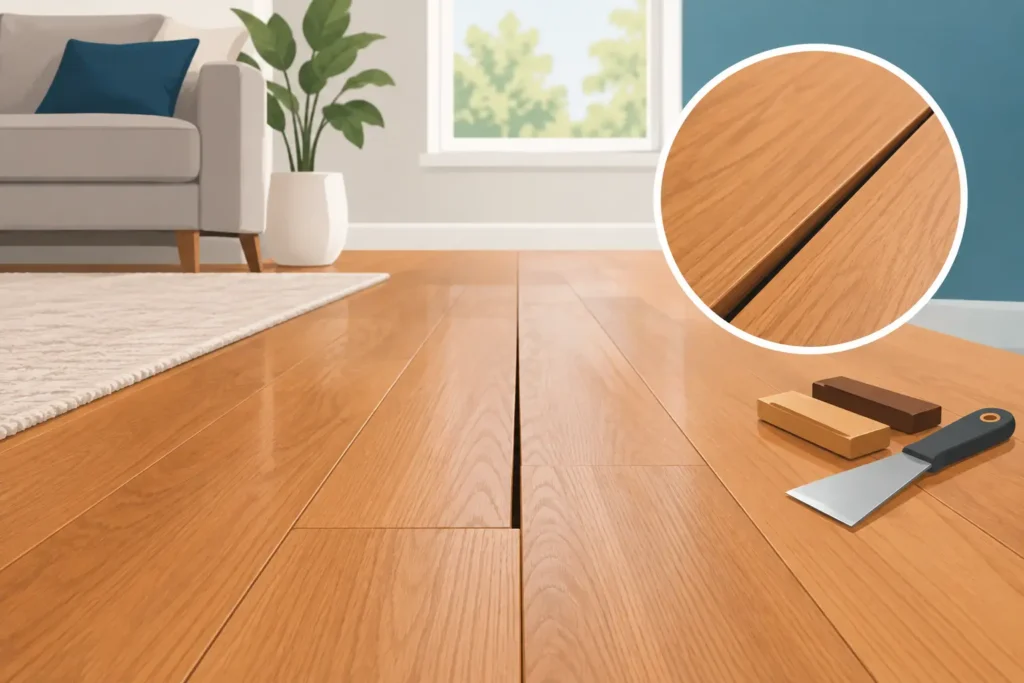
A thin dark line between hardwood boards can be alarming, especially when a floor looked tight and smooth just a few months earlier. Understanding why hardwood floors gap helps you separate normal seasonal movement from a moisture or installation problem that deserves professional repair. In many cases, the boards are responding to changes in indoor humidity. In others, the gaps point to conditions below the floor or mistakes made before installation.
Hardwood is a natural material, not a fixed surface. It continues to react to its environment long after it has been installed. The right response depends on the size of the gap, when it appeared, whether it changes through the year, and the condition of the flooring around it.
Why Hardwood Floors Gap During Dry Conditions
Wood absorbs and releases moisture from the air. When indoor humidity drops, wood gives up some of that moisture and shrinks slightly across its width. That shrinkage creates spaces between boards, most often during dry weather or periods of heavy air-conditioning use.
Los Angeles homes can see this effect even without harsh winter weather. Long stretches of dry air, Santa Ana conditions, and HVAC systems that run consistently can lower indoor humidity enough to make a hardwood floor contract. Wider planks tend to show movement more clearly because each board has more surface area that can expand and contract.
Small, consistent gaps that appear during the driest part of the year and close when humidity returns are often normal. They are part of how real wood behaves. A properly installed floor includes room for this movement around the perimeter, usually covered by baseboards or shoe molding.
The concern starts when gaps become unusually wide, remain open year-round, appear only in isolated areas, or come with cupping, lifting, loose boards, or discoloration. Those signs suggest the issue may be more than seasonal movement.
Common Reasons Hardwood Floor Gaps Become a Problem
Indoor Humidity Is Too Low or Changes Too Fast
A home that stays very dry for extended periods can produce noticeable gaps throughout a room. Rapid shifts are also hard on wood. For example, turning on strong heat or air conditioning after a long period of mild weather can change the moisture level inside the home quickly.
Maintaining relatively stable indoor humidity is more helpful than trying to eliminate every small gap. Many hardwood floors perform best when indoor relative humidity stays roughly between 35% and 55%, although the ideal range can vary by product and manufacturer requirements. A hygrometer is an inexpensive way to check whether the room is unusually dry.
The Wood Was Not Properly Acclimated
Before installation, hardwood needs time to adjust to the moisture conditions inside the property. This process, called acclimation, helps reduce the risk of excessive expansion or shrinkage after the work is complete.
If flooring is brought from a warehouse and installed immediately in a much drier or more humid home, it may move significantly once it adjusts. The result can be widespread gaps, buckling, or uneven board alignment. Professional installers check the material and subfloor conditions rather than relying only on the calendar or a fixed number of acclimation days.
Subfloor Moisture Was Not Controlled
Moisture beneath a hardwood floor can create problems that are easy to misread from the surface. A concrete slab, crawlspace, plumbing leak, or insufficient moisture barrier may expose the underside of the boards to excess moisture. As wood absorbs that moisture, it can expand, cup, or push against adjacent boards.
Later, when the wood dries, gaps may appear. This cycle can leave the floor with movement that looks irregular rather than seasonal. If gaps are concentrated near exterior walls, kitchens, bathrooms, windows, or a suspected leak, the subfloor and surrounding moisture sources should be inspected before any cosmetic repair is attempted.
Improper Installation Left No Room for Movement
Hardwood flooring needs an expansion gap around the room perimeter. Without it, boards can press against walls, cabinets, door frames, or other fixed objects as they expand. That pressure can cause boards to lift or distort. When conditions dry out again, the floor may settle back with uneven spaces between planks.
Installation details also matter. Incorrect fastener placement, improper adhesive coverage, weak subfloor preparation, or using a flooring product not suited to the site can all contribute to board movement. These issues are less likely to resolve on their own as the seasons change.
The Flooring Product Does Not Match the Environment
Solid hardwood offers a classic look and can be refinished multiple times, but it is more sensitive to moisture changes than many engineered hardwood options. Engineered hardwood uses layered construction that generally provides better dimensional stability, making it a practical choice for some concrete-slab homes, offices, and rooms with changing climate conditions.
That does not mean engineered hardwood cannot gap. Every wood floor needs proper installation and moisture management. The best material depends on the room, subfloor, expected traffic, desired appearance, and budget.
Are Gaps in Hardwood Flooring Normal?
A small gap between boards can be normal, particularly if it is uniform across the floor and changes with the seasons. Older strip hardwood floors commonly show fine gaps in dry conditions. If the boards lie flat, feel secure underfoot, and return closer together when humidity rises, immediate repair may not be necessary.
Gaps deserve closer attention when they are wide enough to catch debris, feel sharp at the edges, or expose a dark subfloor line that was not previously visible. The same is true if one section of the room looks different from the rest. A localized issue usually calls for investigation rather than waiting for a humidity change.
Watch for these additional signs: boards that cup at the edges, sections that crown in the center, squeaks or movement underfoot, cracked finishes, staining, and soft spots. A gap combined with any of these symptoms may indicate water exposure, subfloor movement, or an installation problem.
Should You Fill Hardwood Floor Gaps?
Filling every gap is not always the right fix. If the gap is caused by normal dry-season shrinkage, wood filler may crack, loosen, or squeeze upward when the boards expand again. A repair that looks clean in January can look worse when humidity returns.
For stable, persistent gaps that do not close seasonally, a flooring professional may recommend color-matched filler, wood slivers, board replacement, refinishing, or targeted repairs depending on the floor’s condition. The goal is not simply to hide a line. It is to address the reason the gap formed so the repair holds up.
Avoid using caulk, putty, or random wood filler without identifying the cause. Flexible caulk can attract dirt and may not match a finished floor. Hard fillers can fail if the boards continue moving. If a gap is connected to moisture, covering it without correcting the source can trap the real problem below the surface.
How to Protect Hardwood Floors From Excessive Gapping
Start with a consistent indoor environment. Avoid dramatic thermostat changes when possible, and consider a humidifier during exceptionally dry periods if the air in the property consistently falls below the recommended range. Keep in mind that too much humidity creates a different problem, including cupping and expansion.
Clean spills promptly, use mats near exterior doors, and avoid wet mopping. A manufacturer-approved hardwood floor cleaner applied sparingly is safer than soaking the surface. For commercial spaces, entry mats and regular maintenance reduce the grit and moisture that can wear down protective finishes and expose the wood to more stress.
When remodeling, do not assume new cabinetry, wall changes, or built-in features can be installed tightly against the flooring. Hardwood needs its expansion space preserved. If the floor is being replaced or repaired, moisture testing and subfloor preparation should be part of the plan, not an afterthought.
When to Call a Flooring Professional
A professional assessment is worthwhile if the gaps are growing, remain open through changing seasons, appear after a leak, or are paired with warped or loose boards. The inspection should consider the flooring type, board width, installation method, room humidity, subfloor condition, and nearby water sources before recommending a repair.
For homeowners, property managers, and business owners, that approach protects both appearance and budget. Magnet Flooring helps Los Angeles-area clients identify whether a hardwood floor needs humidity control, targeted repair, refinishing, or replacement with a more stable material. A careful diagnosis now can prevent a minor gap from turning into a larger flooring expense later.
Before filling or replacing boards, give the floor a chance to tell you what changed. The timing, location, and pattern of the gaps often provide the clearest path to a repair that lasts.