A chair leg dragged across a vinyl floor, a lifted plank by the dishwasher, or a gouge from moving furniture can make an otherwise attractive room look neglected. So, can vinyl flooring be repaired? In many cases, yes. The right fix depends on the type of vinyl, the size and location of the damage, the condition of the subfloor, and whether replacement material is still available.
Vinyl is valued for being durable, practical, and more affordable than many hard-surface flooring options. But no floor is indestructible. Acting early is often the difference between a small, cost-effective repair and a larger replacement project.
Can Vinyl Flooring Be Repaired Without Replacing It?
Minor surface damage can often be repaired without replacing the entire floor. Small scratches, scuffs, light stains, and isolated lifted edges are usually manageable when the vinyl itself is still structurally sound. A professional can clean the area, make a targeted repair, and help the floor blend back into the rest of the room.
Larger problems require a closer look. A deep tear in sheet vinyl, a cracked luxury vinyl tile, or several warped planks may call for replacing a section rather than patching it. That is still far less disruptive than removing every square foot of flooring, especially when the surrounding material is in good condition.
The key question is not simply whether the visible surface is damaged. It is whether the issue came from the floor covering itself or from a problem below it, such as moisture, an uneven subfloor, or failed adhesive. Covering up the symptom without correcting the cause can lead to the same repair failing again.
The Type of Vinyl Makes a Difference
“Vinyl flooring” covers several products, and each one is repaired differently. Knowing what is installed in your home, office, rental unit, or retail space helps set realistic expectations.
Luxury Vinyl Plank and Luxury Vinyl Tile
Luxury vinyl plank, often called LVP, and luxury vinyl tile, or LVT, are commonly repaired by replacing individual pieces. This is one of their biggest practical advantages. If a plank is deeply scratched, chipped, buckled, or stained beyond repair, a flooring professional may be able to remove that one piece and install a matching replacement.
Click-lock floating floors can be more involved than they appear. If the damaged plank sits in the middle of a room, nearby planks may need to be carefully disengaged to reach it. In some cases, a technician can use a controlled cut-and-replace method, but it must be done precisely to preserve the locking system and avoid creating gaps.
Glue-down LVP and LVT can also be repaired one plank or tile at a time. The old adhesive must be removed, the subfloor prepared correctly, and the replacement set flat and secure. A rushed repair can leave a raised edge that catches shoes, chairs, and rolling office equipment.
Sheet Vinyl Flooring
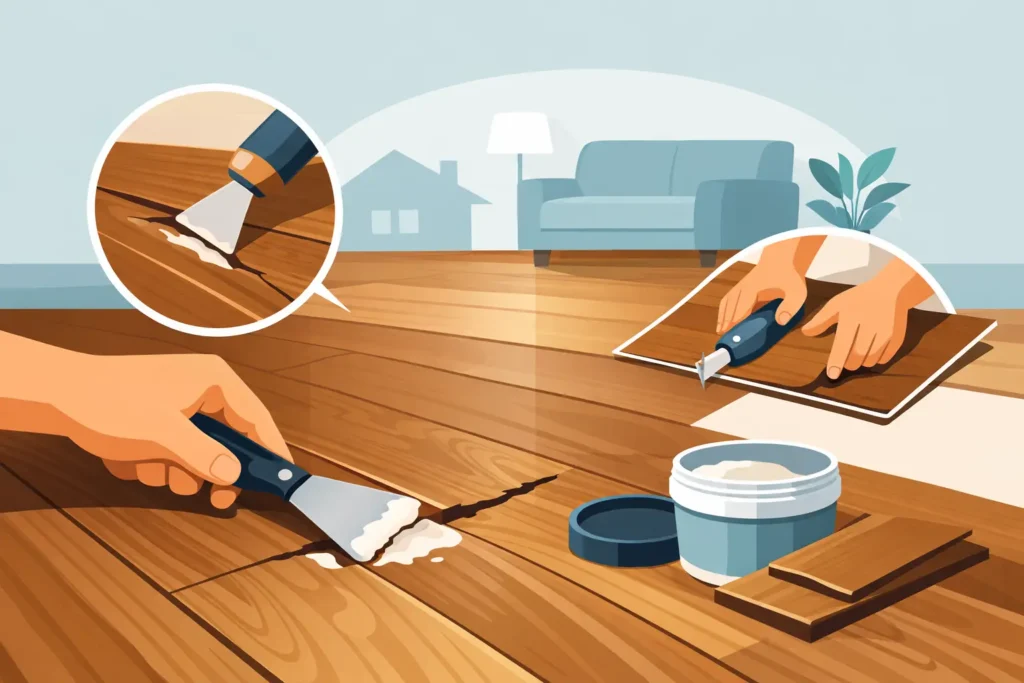
Sheet vinyl is a continuous material, so damage is less straightforward to disguise. Small punctures or tears may be repaired with a vinyl repair kit, color-matched filler, or a carefully cut patch. The goal is to prevent moisture from reaching the subfloor and to make the repair as inconspicuous as possible.
A patch is typically more visible in an open, well-lit area than beneath a vanity, near a closet, or under furniture. Patterned sheet vinyl can be easier to patch because the design helps conceal the seam. Solid colors and heavily textured finishes are less forgiving.
Vinyl Composite Tile
Older commercial spaces may have vinyl composite tile, also known as VCT. Damaged tiles are usually replaced individually, provided matching stock is available. Because VCT often requires waxing and ongoing maintenance, color differences between old and new tiles may show until the floor is cleaned, refinished, or recoated.
Repairs That Usually Make Sense
Surface scratches and scuff marks are often the simplest issues to address. Before using any repair product, the floor should be thoroughly cleaned. Dirt, grit, and residue can make a scratch look worse than it is. Some light marks improve significantly with the manufacturer-approved cleaner and a soft cloth.
Loose or curling edges can often be re-adhered if the vinyl is not stretched, brittle, or contaminated underneath. This is common near doorways, exterior entries, and wet areas where repeated foot traffic or moisture has weakened the bond. Proper adhesive and adequate pressure are essential. Household glue is not a reliable substitute for flooring adhesive.
Single damaged planks or tiles are good candidates for replacement when matching material is available. This is why saving a few extra pieces after installation is worthwhile. Product lines change, dye lots vary, and years of sunlight can alter the color of the existing floor. An exact product match may still look slightly different until it has time to age in place.
Small burns, holes, and tears can sometimes be patched. The repair is most successful when the damaged spot is limited and the surrounding floor is firmly bonded. If the vinyl is damaged across a high-traffic path, however, a patch may remain noticeable and may not be the best long-term value.
When Repair Is Not the Best Investment
Repair has limits. If water has traveled below the flooring, the subfloor may be swollen, soft, moldy, or uneven. Replacing only the visible vinyl in that situation can hide a more expensive problem. Moisture must be identified and corrected first, whether it came from a leaking appliance, plumbing issue, slab moisture, or repeated flooding.
Widespread bubbling, rippling, or separation is another warning sign. In Los Angeles homes and commercial properties, strong sun exposure through large windows can also contribute to fading and heat-related movement, particularly where the floor was not installed with the proper expansion allowance or adhesive system. One isolated bubble may be repairable. A room full of movement often points to an installation or moisture issue that needs broader correction.
Replacement may also make more sense when the floor is heavily worn across multiple areas, the pattern is discontinued, or repairs would be scattered throughout the room. At that point, putting money into several patches can cost nearly as much as installing a new, cohesive floor with better waterproof performance and a current design.
Why the Subfloor Matters as Much as the Vinyl
Vinyl is flexible enough to show what is happening underneath it. A dip in the subfloor, a raised seam, loose concrete, or old adhesive can eventually telegraph through the surface. Planks may separate, sheet vinyl may tear, and tiles can crack under concentrated weight.
A lasting repair starts with evaluating the subfloor. It should be clean, dry, stable, and level within the flooring manufacturer’s requirements. For commercial spaces, this is especially important around rolling chairs, shelving, carts, and frequent foot traffic. For homes, kitchens, bathrooms, entryways, and pet areas deserve extra attention because moisture and impact damage are more common there.
This preparation work may not be as visible as a new floor pattern, but it is what protects the repair. A professional assessment can determine whether the damage is isolated or whether the floor is signaling a deeper condition that should be addressed before new material goes down.
What You Can Do Before Scheduling a Repair
Avoid dragging furniture or appliances across the damaged spot, and do not use harsh solvents, abrasive pads, or excessive heat in an attempt to remove stains or flatten vinyl. Those shortcuts can dull the wear layer, melt the surface, or turn a minor repair into a replacement job.
Take clear photos of the damaged area and note when the problem first appeared. If there has been a leak, water event, or recent appliance installation, include that information. If you have leftover planks, tiles, or the original product box, set them aside. The manufacturer name, color, style, and lot information can make finding a suitable repair piece much easier.
For a small scratch, use only cleaning and repair products approved for your specific vinyl floor. For lifting seams, cracked planks, water damage, or anything affecting several areas, it is smarter to have the floor evaluated. Magnet Flooring can help homeowners, property managers, and business owners determine whether a targeted repair will deliver a clean result or whether replacement will save money over time.
A good vinyl repair should do more than make damage less noticeable. It should leave the floor stable, comfortable underfoot, and ready for the way the space is actually used. When the source of the damage is corrected along with the surface, vinyl can continue delivering years of practical performance.