A laminate floor can look worn long before it is ready to be replaced. A chair leg may leave a scratch, a dropped pan can chip an edge, or Los Angeles humidity and a small leak can cause boards to lift. Knowing how to fix laminate flooring starts with identifying the type of damage and, just as importantly, finding out what caused it. The right repair can restore the appearance of your floor and prevent a small issue from spreading across the room.
Laminate is a floating floor in most installations, meaning the planks lock together and sit over an underlayment rather than being glued directly to the subfloor. That construction makes some repairs straightforward, but it also means forcing, gluing, or nailing a damaged plank in the wrong place can create bigger problems.
Start by Finding the Cause of the Damage
Before reaching for a repair kit, look closely at the affected area. Surface scratches, small chips, open seams, buckled boards, and swelling require different solutions. A repair that hides the visible mark without addressing moisture, movement, or subfloor problems will not last.
Check for signs of water around dishwashers, refrigerators, exterior doors, pet areas, and bathrooms. If boards are separating, confirm whether the floor has enough expansion space along the walls. Laminate naturally expands and contracts with seasonal temperature and humidity changes. When installers leave too little room at the perimeter, the floor can push upward in the middle or along a seam.
For property managers and business owners, also consider traffic patterns. Damage concentrated at entrances, rolling-chair areas, or around furniture often points to a maintenance or protection issue rather than a material failure. Mats, chair pads, felt pads, and prompt spill cleanup can prevent the same repair from becoming an ongoing expense.
How to Fix Laminate Flooring Scratches and Scuffs
Light scuffs are usually the easiest laminate problem to correct. First, clean the area with a laminate-safe cleaner and a soft microfiber cloth. Dirt can make a scuff look deeper than it is, and abrasive cleaners can dull the protective wear layer.
For a shallow scratch that does not expose the core, use a laminate repair marker or wax pencil matched as closely as possible to the plank color. Apply it sparingly, wipe away excess, and allow it to set according to the product directions. A repair marker will not rebuild a damaged surface, but it can make fine scratches far less noticeable.
Deeper scratches and small chips respond better to a laminate repair putty or wax repair kit. These products fill the damaged spot rather than merely coloring it. Choose a shade slightly darker than the surrounding grain if an exact match is unavailable, then test it in a hidden location first. A repair that is a little imperfect is usually preferable to overfilling the area or spreading filler across the plank texture.
Avoid sanding laminate. Unlike solid hardwood, laminate has a printed decorative layer beneath a clear protective coating. Sanding removes that layer permanently and often leaves a larger, more obvious patch.
Repairing Chipped Corners and Damaged Edges
Chips along a plank edge often occur near appliances, doorways, or areas where something heavy was dropped. If the damage is confined to the top surface, a color-matched repair kit may be enough. Clean and dry the chip, apply the filler in thin layers, level it with the provided tool or a plastic putty knife, and let it cure fully before walking on it.
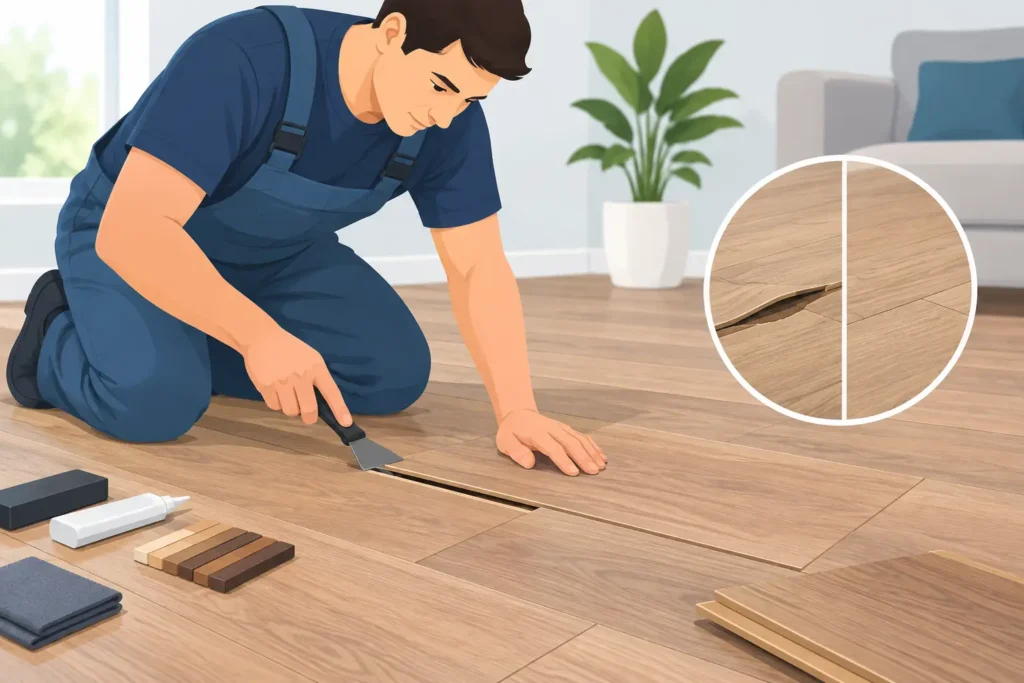
When the chip has broken the locking edge or exposed the fiberboard core, replacement is usually the more dependable option. The core can absorb moisture after it is exposed, causing the plank to swell or crumble. Covering that damage with filler may improve the appearance temporarily, but it will not restore the plank’s structural connection.
Save a few extra planks whenever laminate is installed. A matching replacement board is far easier to source from your original stock than years later, when the color or collection may be discontinued. If no spare material is available, a flooring professional may be able to take a matching plank from a low-visibility closet and place a close replacement there.
Fixing Gaps Between Laminate Boards
Small gaps can appear when planks shift, especially in rooms with heavy foot traffic or furniture movement. Start by removing any furniture weight near the gap. Then inspect the baseboards or shoe molding to see whether the floor is pinched tightly against a wall.
If the affected planks are otherwise flat and undamaged, a flooring pull bar and tapping block can sometimes move the row back into place. Work carefully from the wall side when possible, and protect the board edge from direct hammer strikes. Never hit the locking profile with a hammer, since even a small break can prevent the seam from closing securely.
Do not pour glue into an open laminate seam as a first response. Some specialty products are designed for specific laminate repairs, but common wood glue can lock a floating floor in place and interfere with natural expansion. If gaps keep returning, the underlying cause may be an uneven subfloor, a failed locking edge, or inadequate expansion clearance. Those issues need a closer inspection than a simple tap-and-close repair.
What to Do When Laminate Flooring Is Lifting or Buckling
Raised seams, tenting, and buckled areas are signs that the floor is under pressure or has been exposed to moisture. First, rule out an active leak. If water is present, stop the source, dry the area quickly, and assess whether the boards are swollen. Laminate planks that have absorbed water through their seams rarely return to their original shape once they dry.
If the floor is dry, remove the baseboard or quarter round near the affected wall and check the expansion gap. A professional may need to trim the outer edge of the flooring to create the room it needs to move. In some cases, the repair is relatively contained. In others, especially when the floor was installed tightly around cabinets, door frames, or fixed islands, correcting the pressure may require partial disassembly.
Buckling can also point to a subfloor issue. Concrete moisture, high spots in a wood subfloor, or inadequate underlayment can cause repeated movement. This is where a quick cosmetic fix often costs more later. The visible hump may flatten temporarily, but it can return if the base beneath the laminate is not corrected.
Replacing a Damaged Laminate Plank
Replacing one plank is possible, but the best method depends on its location. If the damaged board is close to a wall, installers can often remove base molding, unlock planks row by row, replace the damaged piece, and reinstall the floor. This preserves the locking system and gives the cleanest long-term result.
A plank in the center of a room is more complicated. It may be possible to cut out the damaged board and install a replacement with modified locking edges, but this is precision work. Cutting too deep can damage the underlayment or subfloor; cutting too shallow can crack nearby planks. The replacement must also sit level and remain stable under normal traffic.
For a small room with several swollen, chipped, or separating boards, replacement may be more cost-effective than multiple isolated repairs. Laminate is budget-friendly, but labor rises when damage is scattered throughout an installed floor. A professional assessment can help compare the true repair cost with the value of a new, properly prepared installation.
Preventing the Next Repair
Laminate performs well when it is protected from standing water and abrasive grit. Use doormats at entrances, place felt protectors beneath furniture legs, and lift furniture rather than dragging it. Clean spills promptly, particularly along plank seams, and use a damp microfiber mop instead of soaking the floor.
Avoid steam mops unless your specific laminate manufacturer approves them. High heat and moisture can work their way into joints and weaken the core over time. In offices, use protective mats under rolling chairs and inspect entryways regularly, where sand and moisture are most likely to travel indoors.
For homes and commercial spaces in Burbank, Glendale, North Hollywood, and nearby areas, Magnet Flooring can identify whether a laminate issue needs a targeted repair, plank replacement, or a correction beneath the floor. A careful diagnosis protects your budget and helps your flooring look good for the years it was designed to serve.