A flooring sample can look perfect in a showroom and still be the wrong choice once it meets your subfloor, daily foot traffic, and Los Angeles temperature swings. In the floating floor vs nail down decision, the material matters, but the installation method often determines how the floor feels, performs, and ages over time.
For homeowners, property managers, and business owners, there is no one-size-fits-all winner. A floating floor can make sense for a fast upgrade over a suitable existing surface. A nail-down hardwood floor can deliver the solid, lasting character many clients want in living rooms, offices, and high-value properties. The right answer comes down to the product, the structure beneath it, moisture conditions, and your plans for the space.
Floating Floor vs Nail Down: The Basic Difference
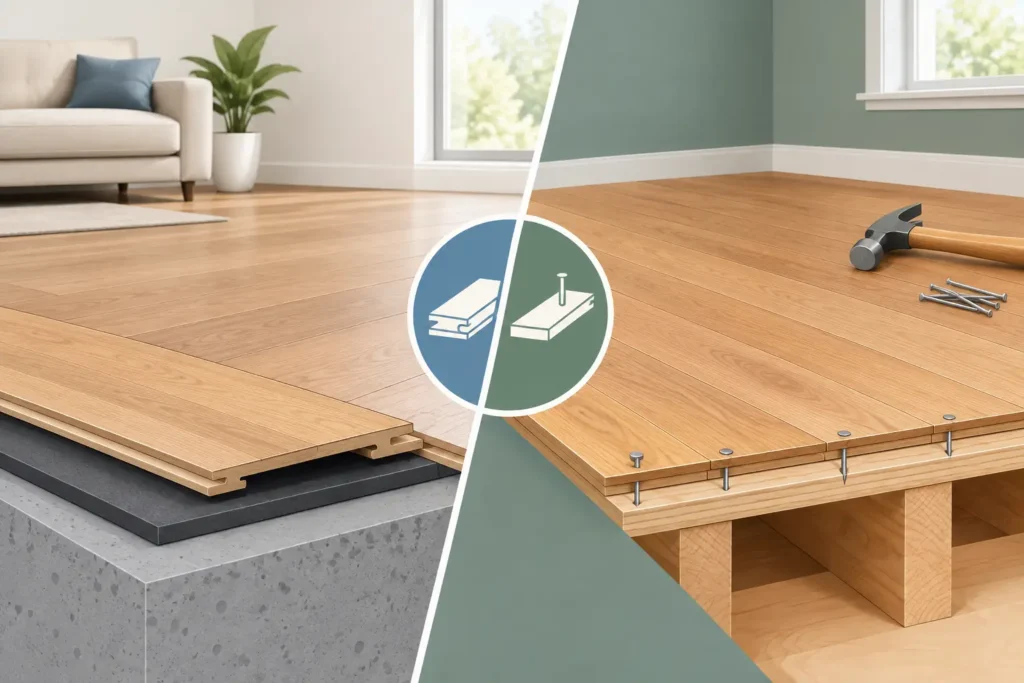
A floating floor is not fastened directly to the subfloor. Instead, the planks connect to one another through a click-lock or tongue-and-groove system and rest over an underlayment. The floor has a small expansion gap around the perimeter, usually concealed by baseboards or trim, so it can move naturally as temperatures and humidity change.
Floating installation is common with laminate, luxury vinyl plank, engineered wood designed for floating, and some bamboo products. It is a practical method for renovations because it may be installed over a flat, approved existing floor, reducing demolition and labor in the right conditions.
Nail-down flooring is secured directly to a wood subfloor with flooring nails or cleats. This traditional method is most often used for solid hardwood and certain engineered hardwood products. Each board is mechanically fastened, creating a firm connection between the flooring and the subfloor.
That difference affects nearly every part of the project: preparation, sound, repair options, moisture planning, cost, and long-term expectations.
When a Floating Floor Is the Better Choice
Floating floors are popular for good reason. They can be installed efficiently, especially when the existing floor is stable, level, and compatible with the manufacturer’s requirements. For occupied homes, rental turnovers, and commercial spaces where downtime matters, that efficiency can be a major advantage.
Luxury vinyl plank is one of the strongest candidates for floating installation. Quality waterproof vinyl plank works well in kitchens, entryways, offices, and other areas that see spills or frequent cleaning. It offers a wide range of wood-look styles without requiring the same level of maintenance as natural hardwood.
Laminate flooring also commonly floats. It can provide an attractive, budget-conscious option for bedrooms, hallways, and lower-traffic spaces when moisture exposure is controlled. Bamboo and engineered wood may also be floated when the specific product is approved for it.
A floating floor can be especially useful when a project involves a concrete slab. Nail-down installation requires a wood subfloor, so it is not a direct option over concrete. Depending on the material, a floating floor or a full-spread glue-down system may be more appropriate for condos, ground-floor rooms, and commercial spaces built on slab foundations.
There are trade-offs. A floating floor can sound more hollow underfoot if the underlayment is poorly chosen or the subfloor is uneven. It may also feel slightly less solid than properly installed nail-down hardwood. These issues are not reasons to avoid floating floors, but they are reasons to avoid treating installation as a shortcut.
When Nail-Down Flooring Is Worth It
Nail-down installation is the classic choice for solid hardwood because solid wood needs a stable wood subfloor and a fastening method that keeps each board secure. When installed correctly, it delivers the substantial feel and quiet firmness many people expect from a true hardwood floor.
This method is often worth the investment in main living areas, dining rooms, executive offices, and properties where hardwood is a long-term design feature. Solid hardwood can be refinished multiple times over its lifespan, allowing owners to refresh the color or address surface wear without replacing the entire floor.
Nail-down floors also tend to handle point loads well. Heavy furniture, desks, and active household traffic are less likely to create the movement sometimes felt in a floating installation. That can make nail-down hardwood an excellent fit for a busy home or a professional office with a wood subfloor.
However, nail-down flooring demands more from the project. The wood subfloor must be structurally sound, dry, clean, and properly prepared. A subfloor with squeaks, uneven areas, loose panels, or moisture problems needs attention before flooring goes down. Skipping that work can lead to gaps, cupping, movement, or persistent noise later.
Nail-down hardwood is also not the best fit for every room. Bathrooms, laundry rooms, and areas with recurring water exposure generally call for more water-resistant materials. Even in a beautiful hardwood home, it is often smarter to use waterproof vinyl plank in the spaces most likely to see spills or wet shoes.
Cost Depends on More Than the Installation Method
Floating installation can cost less than nail-down installation, but the final price is not as simple as comparing labor rates. A floating floor may reduce labor when it can be installed over a properly prepared existing surface. It can also reduce material costs if you choose laminate or vinyl plank instead of hardwood.
Still, floating floors are not automatically inexpensive. Premium engineered wood, high-end waterproof vinyl, upgraded underlayment, floor leveling, transitions, baseboard work, and furniture moving can all affect the estimate. A low-priced plank installed over an unprepared subfloor is rarely a value.
Nail-down installation usually costs more because it involves more detailed preparation and skilled fastening. Hardwood itself is often a higher material investment, and the work may include removing old flooring, repairing a plywood subfloor, installing moisture protection where needed, and fitting boards around walls and openings.
The better question is not, “Which method costs less?” It is, “Which method gives this room the performance and appearance I need without creating avoidable repairs later?” A professional site assessment is the best way to get a realistic answer.
Subfloor and Moisture Can Make the Decision for You
The condition below your flooring is just as important as the finish on top. Floating floors require a flat surface. Even small high spots or low spots can cause planks to flex, separate, or develop edge damage over time. The installer may need to level the subfloor before installation, whether it is concrete, plywood, tile, or another approved surface.
Nail-down flooring requires a suitable wood subfloor. If your property sits on a concrete slab, installing traditional nail-down hardwood usually means adding a plywood system first, which can increase cost and raise the finished floor height. That may affect doors, appliances, transitions, and stair connections.
Moisture testing is essential for both methods, particularly in Southern California properties with slab foundations, older construction, or rooms near exterior doors. Moisture can damage wood products, compromise adhesives, and create conditions that cause flooring to cup or gap. Waterproof vinyl plank protects against surface water, but it does not solve a moisture issue coming up through a slab. The underlying condition still needs to be evaluated.
Appearance, Comfort, and Long-Term Maintenance
If your priority is authentic natural wood and the ability to refinish years from now, nail-down solid hardwood has a clear advantage. Its look changes gracefully with age, and its long service life can support property value when it is properly maintained.
If your priority is easy care, water resistance, and a faster renovation timeline, a floating vinyl plank floor is often the more practical option. It can provide a convincing wood appearance in busy households, rental units, retail spaces, and offices without the same concern over everyday spills.
For sound control, underlayment selection matters with floating floors, especially in upstairs rooms, condos, and commercial spaces. For nail-down hardwood, a well-prepared subfloor is the foundation of a quiet, stable result. Neither method performs at its best when preparation is rushed.
Choose the Installation Method Around the Space
A floating floor is often the smart choice when you need waterproof performance, installation over an approved existing floor or concrete slab, and minimal disruption. Nail-down flooring is often the stronger choice when you have a suitable wood subfloor and want the solid feel, longevity, and refinishing potential of real hardwood.
Material specifications should always guide the final decision. Not every engineered wood, bamboo, laminate, or vinyl product can be installed the same way, and manufacturer requirements affect warranty coverage. Professional installers review those details before recommending an approach, rather than forcing the room to fit a preferred method.
For properties in Burbank, Glendale, North Hollywood, and nearby Los Angeles communities, Magnet Flooring can evaluate the subfloor, moisture conditions, material options, and project budget before work begins. A clear recommendation upfront helps prevent the costly surprises that show up after the furniture is back in place.
The best floor is the one that suits the way the room is actually used. Bring your goals, your timeline, and a realistic budget to the consultation, then let the condition of the space guide the installation method.