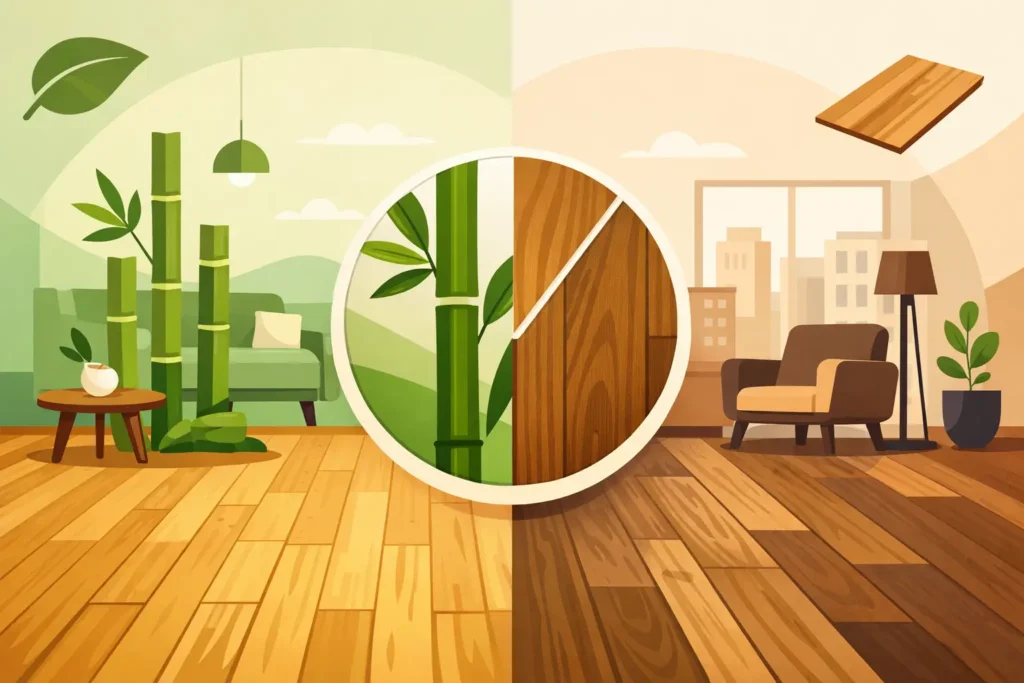
A beautiful apartment floor has to do more than look good on move-in day. It needs to handle daily foot traffic, furniture moves, pet claws, spills, and the sound of life happening above or below your neighbors. When comparing bamboo vs laminate for apartments, the better choice depends on whether you prioritize natural material, upfront cost, moisture protection, sound control, or a landlord-approved installation.
For Los Angeles apartment owners, landlords, and property managers, the decision also starts with the building. Concrete slabs, upper-floor sound rules, existing flooring, and rental turnover can change which material delivers the best value. Here is how bamboo and laminate compare where it matters most.
Bamboo vs Laminate for Apartments: The Core Difference
Bamboo is a natural grass material that is processed into flooring planks. Although it is often grouped with hardwood, its construction and performance vary widely by product. Strand-woven bamboo is made by compressing bamboo fibers under intense pressure, creating a dense, durable plank with a more contemporary wood-like appearance.
Laminate is a manufactured floating floor. It typically has a protective wear layer, a high-resolution decorative image layer, a dense fiberboard core, and a backing layer. Many laminate products convincingly resemble oak, maple, stone, or wide-plank hardwood without the price and maintenance demands of real wood.
That difference shapes the entire decision. Bamboo gives an apartment a genuine, natural flooring surface that can add warmth and perceived value. Laminate is generally built for practical performance, predictable pricing, and fast replacement when a unit needs to be turned over.
Appearance and Long-Term Appeal
Bamboo has character that printed flooring cannot fully duplicate. Grain patterns, color variation, and the natural feel underfoot can make a condo, apartment, or small office feel more finished. Natural bamboo is typically light and warm, while carbonized bamboo has a deeper caramel tone. Strand-woven styles can also offer a cleaner, more uniform look.
There is a trade-off. Bamboo can fade or shift in color over time with strong sunlight, especially in bright Southern California rooms with large windows. Rugs and window coverings help manage uneven fading. Like other natural flooring, bamboo can also show scratches and dents depending on the finish, quality, and activity level in the space.
Laminate gives you more design flexibility at a lower material cost. Modern options can recreate wide-plank oak, matte finishes, wire-brushed textures, and light coastal colors that work well in apartments. The visual layer is consistent from plank to plank, which can make it easier to match replacement boards later.
For a higher-end owner-occupied apartment, quality bamboo often has more visual appeal. For a rental property where a clean, current look and easy future replacement matter most, laminate is often the more practical choice.
Durability: Product Quality Matters More Than Labels
Neither bamboo nor laminate is automatically indestructible. The specific product, installation method, and care routine matter as much as the category.
High-quality strand-woven bamboo is very hard and can perform well in busy living rooms, hallways, and bedrooms. It is a strong option for homeowners who want a natural floor but need more everyday durability than many traditional hardwoods provide. Lower-quality bamboo, however, may be more prone to scratching, denting, or surface wear. Adhesives and finishes also vary, so material selection should include a close look at the manufacturer’s specifications and indoor air quality standards.
Laminate’s durability comes from its wear layer. A good residential laminate can resist scratches, scuffs, and fading exceptionally well, making it a smart fit for pet-friendly apartments and rental units. It is especially forgiving of everyday surface wear from chairs, shoes, toys, and rolling luggage.
Laminate is not immune to damage. A deep gouge can expose the decorative layer, and individual planks generally cannot be sanded or refinished. Bamboo may be refinishable in some cases, but that depends on the plank thickness and construction. It is not a guarantee, particularly with thinner engineered products.
Moisture and Spill Resistance
This is where apartment floor selection can prevent expensive problems. Kitchens, entryways, laundry areas, bathrooms, and units with pets all need careful consideration.
Bamboo handles normal indoor humidity better than many people expect, but it is not waterproof. Standing water, repeated leaks, and excessive moisture can lead to staining, swelling, or movement in the planks. Spills should be wiped up promptly, and bamboo is usually a better fit for dry living areas and bedrooms than full bathrooms.
Laminate has improved substantially, but buyers should understand the language on the box. Water-resistant laminate can handle everyday spills for a limited period. Waterproof laminate may protect the surface more effectively, yet moisture can still create problems at seams, edges, or an improperly prepared subfloor. No laminate floor should be treated like a permanent defense against plumbing leaks.
If the apartment has a history of moisture issues, a professional inspection of the subfloor comes before choosing either product. A flooring surface cannot solve an active leak, moisture vapor coming through concrete, or a damaged underlayment.
Noise Control in Multi-Family Buildings
Noise is one of the most overlooked parts of a flooring project. Hard flooring can increase impact noise from footsteps, dropped objects, and furniture movement. In apartments and condos, that can lead to neighbor complaints or conflicts with HOA and building requirements.
Both bamboo and laminate need the right underlayment, particularly over concrete slabs or on upper floors. A quality acoustic underlayment can reduce sound transfer while also helping smooth minor subfloor imperfections. However, underlayment is not a cure-all. The flooring system must meet the building’s stated sound rating requirements, and some properties require approval before installation begins.
Laminate is commonly installed as a floating floor, which makes it well suited to acoustic underlayment systems. Bamboo may be floated, glued down, or nailed down depending on the product and subfloor. Glue-down bamboo can feel more solid underfoot, but it requires careful moisture testing and professional preparation.
Before buying materials, ask the property manager for the flooring rules in writing. Confirm whether there are minimum sound ratings, limits on hard flooring, approved underlayments, or required inspection procedures. This step can save a costly removal and replacement later.
Cost and Installation Considerations
Laminate usually wins on upfront affordability. Material prices are often lower, and floating-floor installation can move quickly when the subfloor is level and dry. For landlords managing several units, laminate can offer a clean, durable update without putting too much of the renovation budget into one finish.
Bamboo typically costs more than basic laminate, especially when you choose dense strand-woven material with a quality finish. Installation costs can also rise if the product needs adhesive, floor leveling, moisture mitigation, or detailed transitions around cabinets and doorways. In return, bamboo can provide a more premium result for an owner-occupied apartment or a rental positioned at a higher price point.
Do not compare materials by square-foot pricing alone. Include removal of existing flooring, subfloor repairs, baseboards, underlayment, trim, furniture moving, and disposal. A low-cost product installed over an uneven or damp subfloor can become the more expensive choice when repairs are needed.
Which Apartment Flooring Should You Choose?
Choose bamboo when you want a natural, eco-conscious floor with a more upscale feel, and the space is primarily dry. It is a strong fit for living rooms, bedrooms, and well-maintained owner-occupied apartments where appearance and long-term material appeal matter.
Choose laminate when budget, scratch resistance, quick installation, and easy unit turnover are the priority. It works particularly well in rental apartments, pet-friendly homes, and spaces where a durable wood-look floor is more important than having a natural surface.
For either option, professional preparation is what protects the investment. A qualified installer checks moisture levels, evaluates floor flatness, chooses the right underlayment, and leaves the expansion space that floating floors need. Those details are easy to miss in a DIY project and difficult to fix after furniture is back in the room.
The right apartment floor should fit the building, the people living there, and the budget you plan to protect. Magnet Flooring can help evaluate those details before installation, so the final choice looks right, performs well, and does not create avoidable issues down the road.