
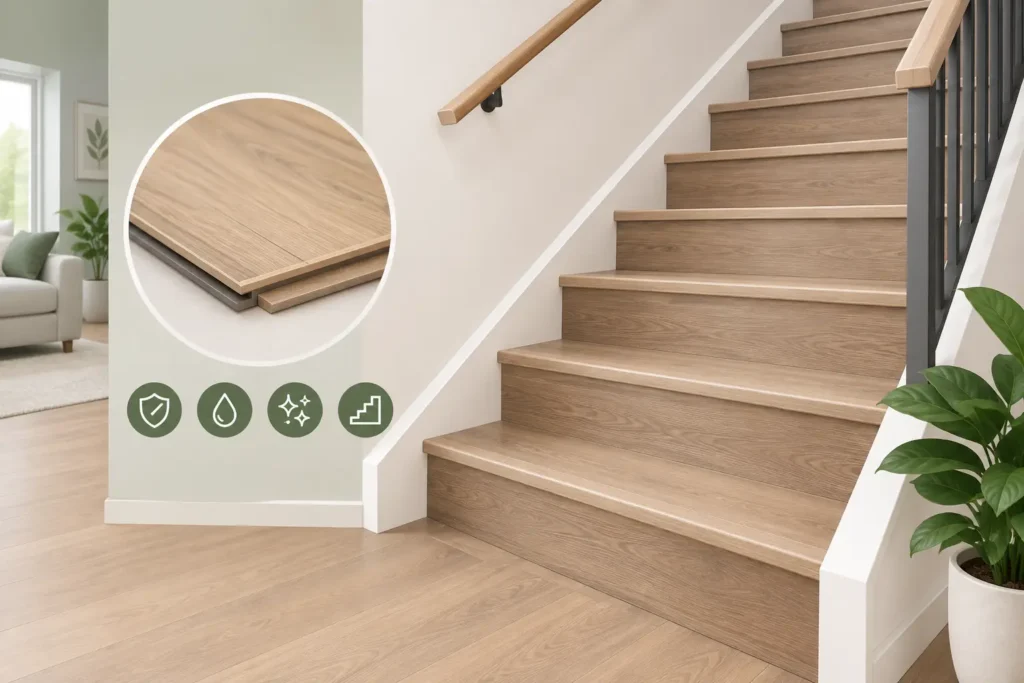
A staircase takes more punishment than almost any other floor in a property. It handles concentrated foot traffic, heel strikes, moving furniture, pet claws, and daily trips up and down. So, is laminate flooring good for stairs? It can be a smart, attractive, budget-conscious choice, but only when the product, stair design, and installation method are right for the job.
For many Los Angeles homeowners, landlords, and business owners, laminate offers the look of hardwood without the cost of solid wood. It can create a cohesive appearance between upstairs rooms, hallways, and the stairway. The trade-off is that stairs leave little room for installation shortcuts. A poor layout, mismatched stair nosing, or slick surface can turn a good-looking upgrade into a safety concern.
Is Laminate Flooring Good for Stairs in Everyday Use?
Laminate flooring is a layered material with a durable wear surface over a printed design layer and a dense core. Quality laminate can stand up well to ordinary residential stair traffic, particularly in homes without constant wet shoes, large dogs, or heavy moving activity. Its scratch resistance is often one of its strongest selling points.
That said, stairs are not the same as a living room floor. Each tread receives force in a small, repeated area, usually close to the front edge. The exposed edge of every step also needs protection. Laminate that performs well across a large open floor can still chip, separate, or wear prematurely on stairs if the installer does not use the correct stair components.
Laminate is generally a good choice when the goal is a clean wood-look staircase at a controlled price point, the stairs are dry and structurally sound, and a professional can install coordinating nosing made for the selected floor. It may be less suitable for entry-adjacent stairs that regularly get wet, heavily used commercial stairwells, or households where slip resistance is the top concern.
The Benefits of Laminate on Stairs
The biggest benefit is value. Laminate can deliver oak, hickory, maple, or contemporary wide-plank visuals at a lower material cost than many hardwood options. For a rental renovation or a whole-home update, that price difference can make it possible to carry one consistent style from the main level through the upper floor.
Modern laminate also offers convincing texture and color variation. This matters on stairs because the staircase is often visible from an entry, family room, or hallway. A well-selected laminate can make an older stairway look more finished without requiring a full hardwood investment.
Maintenance is another advantage. Routine care usually involves dry sweeping or vacuuming with a hard-floor setting, followed by a manufacturer-approved lightly damp cleaning method when needed. Unlike carpet, laminate does not trap the same level of dust, pet hair, or allergens. It is also easier to spot and clean scuffs from everyday traffic.
For property managers, laminate can be practical because it offers a polished appearance and predictable upkeep. The key is choosing a commercial-rated or high-quality residential product when traffic levels justify it, rather than selecting solely by the lowest price per square foot.
The Drawbacks to Consider Before You Install
Safety deserves an honest look. Some laminate surfaces, especially smooth or glossy styles, can feel slippery under socks or when moisture is present. This is more noticeable on stairs than on level flooring. A textured, lower-gloss finish can provide better traction, but no flooring choice eliminates the need for sensible stair safety.
Laminate is also vulnerable at its seams and cut edges. Water can seep into an unprotected joint and cause the core to swell. Even water-resistant laminate has limits. If a staircase is near an exterior door, pool access, or an area where wet shoes are common, waterproof vinyl plank may be the more forgiving option.
Noise is another consideration. Laminate stairs can sound harder underfoot than carpet, and some stair assemblies can develop a hollow or clicking sound if they are not properly prepared and secured. The condition of the existing steps matters just as much as the new surface. Loose treads, squeaks, uneven risers, and damaged subflooring should be addressed before installation begins.
Finally, laminate cannot usually be refinished. Once a tread is deeply damaged, repair may mean replacing a plank, tread covering, or section of the stair system. That is different from solid hardwood, which may be sanded and refinished several times over its lifespan.
Stair Nosing Is Not an Optional Detail
The front edge of a step is called the nosing, and it is one of the most important parts of a laminate stair installation. It protects the edge of the flooring, creates a finished transition, and helps define the step for safer footing. Using a random trim piece or trying to wrap standard planks around the edge is not a reliable substitute for a compatible stair-nosing system.
Manufacturers may offer flush-mount, overlap, or coordinating profile options. The best choice depends on the stair construction, the selected laminate, and the desired appearance. A flush profile can look clean and built-in, while an overlap profile may be appropriate in other situations. What matters is that the component is installed according to the product requirements and securely supported beneath the edge.
This is also why stair installations should not be treated like a floating-floor project. Laminate on open floor areas often uses a floating system that allows for expansion and contraction. On stairs, individual pieces generally need a different fastening approach to prevent movement. The exact adhesive, mechanical fastening, and preparation method must follow the flooring manufacturer’s instructions and suit the existing stair structure.
How to Choose the Right Laminate for a Staircase
Start with wear rating and construction quality, not color alone. A higher-quality laminate with a strong wear layer and dense core is better positioned to handle repeated stair traffic. Look for a finish with realistic texture rather than a highly polished surface if traction is a concern.
Then consider how the stairway connects to the rest of the property. If the main-floor laminate is already installed and you want the stairs to match, confirm that compatible nosing and transition pieces are available before purchasing material. A beautiful floor with no matching stair solution can create an unnecessary design and installation problem.
Color matters for practical reasons, too. Very dark treads can show dust and pet hair, while very light styles can reveal scuffs. Mid-tone wood looks often hide daily wear better. Strong grain patterns and embossed texture can also make small marks less noticeable than a flat, uniform finish.
For homes with young children, older adults, or frequent guests, evaluate the full safety picture. Good lighting, secure handrails, visible step edges, and an appropriate surface texture all contribute to safer stairs. Flooring is only one piece of that equation.
Laminate vs. Other Stair Flooring Options
Hardwood remains a premium stair choice because it has a classic appearance, can be refinished, and often adds long-term value. It also costs more and can scratch or dent, depending on the species and finish. For clients who want natural material and plan to stay in the property for many years, hardwood may justify the investment.
Luxury vinyl plank is often the stronger alternative where moisture resistance is essential. It can be quieter and more forgiving around spills, though it still requires the correct stair-nosing system and careful installation. Not every vinyl product is equally slip-resistant or durable, so product selection remains important.
Carpet provides the softest, quietest underfoot feel and can offer more grip, but it collects debris and may wear faster in the traffic path. Bamboo can be an appealing eco-conscious choice when properly selected for stairs, though its performance varies by product construction and finish.
The right answer depends on how the staircase is used, the condition of the existing structure, the desired style, and the budget. There is no single best material for every property.
Professional Installation Protects the Investment
Stair work requires precise measurements because small inconsistencies are obvious from one step to the next. Each tread and riser must be evaluated for levelness, squareness, and stability. A professional installer can correct minor surface issues, address squeaks where possible, plan clean transitions, and ensure the nosing aligns consistently throughout the staircase.
This attention to detail is especially valuable in older Los Angeles homes, where stairs may not be perfectly uniform. It also helps property owners avoid buying too little material or discovering late in the process that necessary trims are unavailable.
At Magnet Flooring, the goal is to help clients choose flooring that makes sense beyond the showroom sample. A staircase should look sharp, feel secure, and hold up to real life. Before committing to laminate, have the stairs and surrounding flooring evaluated so the final design balances appearance, performance, and cost from the first step onward.