
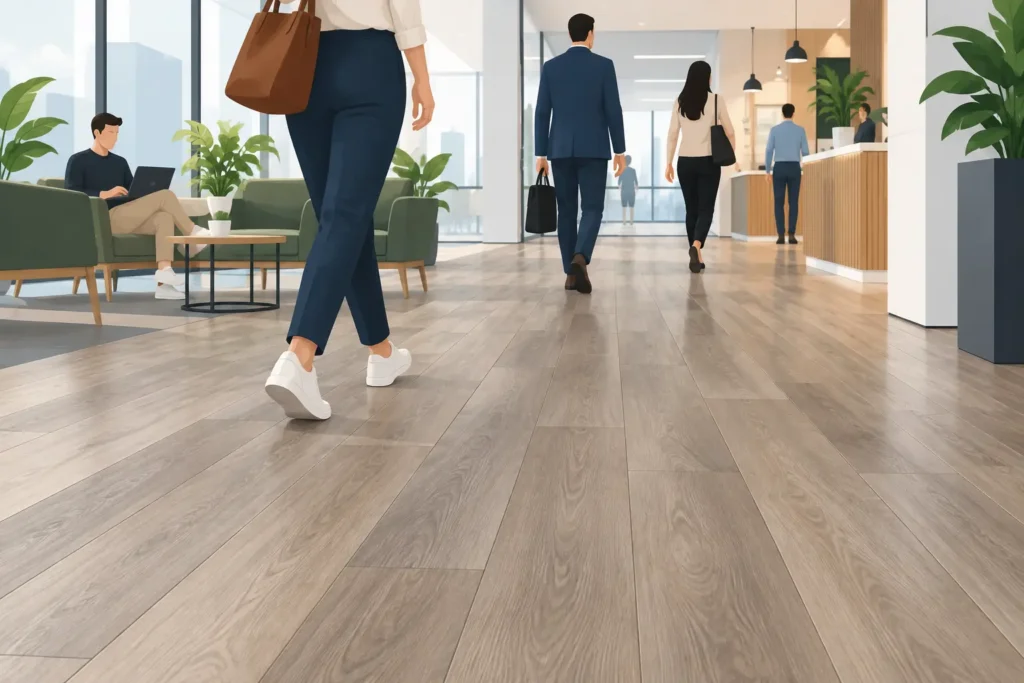
A kitchen floor that handles a dropped pan, a rental unit that turns over without a full remodel, and an office entry that still looks clean after a busy week all demand more than an attractive surface. Vinyl plank performance comes down to how the product is built, where it is installed, and whether the subfloor and finishing details are handled correctly.
Luxury vinyl plank has become a practical choice for Los Angeles homes and commercial spaces because it can deliver the look of wood with lower maintenance and better moisture resistance. Still, not every vinyl plank is designed for the same level of traffic, sunlight, rolling furniture, or temperature change. Choosing the right product is what protects your budget and keeps the floor looking finished for years.
What Vinyl Plank Performance Really Means
Performance is not one feature. It is the combined result of scratch resistance, dent resistance, water resistance, stability, comfort underfoot, appearance retention, and installation quality. A plank may be waterproof, for example, yet still show wear quickly if it has a thin wear layer or is installed in a high-traffic commercial setting without the proper protection.
For homeowners, the biggest concerns are usually pets, children, spills, furniture, and daily foot traffic. Property managers may focus more on easy turnover, dependable durability, and a material that works across several units. Business owners often need a floor that can handle chairs, carts, customers, and constant use without creating a maintenance burden.
The right vinyl plank should fit the room rather than simply fit the sample board. A quiet bedroom has different needs than a sun-filled living room, a busy restaurant waiting area, or a ground-floor rental near an exterior entrance.
The Wear Layer Sets the Surface Durability
The wear layer is the clear protective coating above the printed wood or stone design. It is one of the most useful specifications to compare because it helps determine how well the floor stands up to scuffs, scratches, and everyday wear.
For light residential areas, a thinner wear layer may be enough. For active households, rental properties, offices, and commercial interiors, a thicker wear layer is usually the better investment. It gives the floor more protection from chair movement, pet nails, shoes, and frequent cleaning.
Wear-layer thickness is commonly measured in mils, which is not the same as millimeters. A 6-mil product may work for low-traffic residential rooms, while 12 mil or 20 mil products are often stronger choices for busy homes and commercial applications. The best option depends on traffic, not just on selecting the thickest plank available.
Core Construction Affects Stability and Feel
Most rigid-core vinyl plank flooring uses either an SPC or WPC core. SPC, or stone plastic composite, is dense and firm. It typically offers strong dent resistance and good stability, making it a practical choice for high-traffic areas and spaces with heavy furniture.
WPC, or wood plastic composite, has a more cushioned feel underfoot and can help soften sound. It may be appealing for bedrooms and living areas where comfort matters most. Because WPC is generally softer than SPC, it may be less suitable for spaces with heavy rolling loads or furniture legs that are not properly protected.
Both options can perform well when matched to the right application. The key is to look past color and plank width and consider how the core supports the way the space is actually used.
Vinyl Plank Performance Depends on Installation
A quality product cannot compensate for a poorly prepared subfloor. Uneven areas, loose patches, moisture issues, and debris can create movement, gaps, clicking sounds, or visible imperfections after installation. Those problems are often blamed on the flooring when the real issue started below it.
Professional installers evaluate the subfloor before placing a single plank. Concrete needs to be checked for moisture and flatness. Wood subfloors need to be secure and level. Existing flooring may be a suitable base in some situations, but only if it is clean, stable, and approved by the manufacturer for an overlay installation.
Expansion space around walls, cabinets, and fixed objects also matters. Vinyl plank expands and contracts with changing temperatures. If the floor is installed too tightly, it can bind, lift, or separate. Proper transitions, trim, and underlayment selection help the finished floor move as intended while maintaining a clean appearance.
This is especially relevant in Southern California, where strong sunlight through large windows can heat a room quickly. Direct sun exposure does not automatically rule out vinyl plank, but it should influence product selection, window coverings, and installation planning. A floor in a shaded condo has different demands than one in a bright West Hollywood storefront with front-facing glass.
Waterproof Does Not Mean Problem-Proof
Many vinyl plank products are waterproof at the plank level. This makes them a strong option for kitchens, bathrooms, laundry rooms, and homes with pets. Spills can usually be wiped up without the swelling concerns associated with many wood-based floors.
However, water can still reach the subfloor through edges, perimeter gaps, floor drains, damaged planks, or poorly sealed transitions. Standing water should not be ignored simply because the floor is labeled waterproof. Fast cleanup protects the substrate, helps prevent odors, and keeps the installation performing as designed.
For bathrooms or areas with frequent water exposure, the installation details matter as much as the plank itself. An experienced flooring contractor can determine whether a floating floor, glued-down vinyl, or another material is the better long-term fit.
Choosing the Right Plank for Each Space
The most expensive vinyl plank is not always the best value. A better approach is to match product specifications to the room, expected traffic, and maintenance plan.
In a family room or bedroom, comfort, color, and moderate scratch resistance may be the priorities. In a kitchen, focus on water resistance, cleanability, and a wear layer that can handle chairs, dropped utensils, and regular activity. In a rental property, choosing a versatile neutral design with a stronger wear layer can reduce replacement costs between tenants.
For offices, retail spaces, and other commercial interiors, consider whether the floor will face rolling chairs, wheeled carts, frequent entry traffic, or heavy equipment. Chair mats, floor protectors, and entry mats can extend the life of the surface, but they should support the flooring plan rather than replace a suitable commercial-grade product.
Color and texture also affect visible wear. Very dark floors may show dust and light scratches more easily. Extremely smooth finishes can reveal scuffs in bright lighting. A realistic embossed texture or medium-tone wood look can be more forgiving in active spaces while still giving the room a polished appearance.
Simple Habits That Protect Vinyl Plank Floors
Vinyl plank is low maintenance, not no maintenance. Regular dry sweeping or vacuuming with a hard-floor setting removes grit that can act like sandpaper under shoes and furniture. Clean spills promptly, and use a manufacturer-approved cleaner or a mild cleaning solution that does not leave residue.
Avoid steam mops unless the flooring manufacturer specifically permits them. High heat and excess moisture can affect joints or compromise certain finishes. Abrasive pads, waxes, oil soaps, and harsh chemicals can also dull the surface or make future cleaning more difficult.
Furniture pads are inexpensive protection with a real payoff. Use wider pads under heavy pieces, lift furniture instead of dragging it, and place mats at exterior doors to reduce tracked-in grit. For office spaces, select floor-friendly casters and use a protective mat where rolling chairs are used heavily.
When Vinyl Plank Is the Right Investment
Vinyl plank is a strong choice when you want a practical, water-resistant floor with modern design options and manageable upkeep. It works particularly well for households with pets, rental units, kitchens, retail areas, and offices that need a finished look without the cost or maintenance demands of hardwood.
There are trade-offs. Vinyl plank cannot be refinished like real wood, and a damaged section may need replacement. Lower-grade products can feel less convincing, perform poorly under heavy use, or show movement when installation conditions are ignored. The answer is not to avoid vinyl plank, but to select a product with the right construction and have it installed with care.
At Magnet Flooring, we help property owners compare vinyl plank options based on how a room will be used, not just how a sample looks under showroom lighting. A professional consultation can identify the right wear layer, core type, installation method, and budget range before the project begins. That upfront guidance is often what turns a good-looking floor into one that keeps performing when life gets busy.