A bathroom remodel, a rental turnover, and a busy office entry all put flooring under different kinds of pressure. That is why vinyl plank versus ceramic tile is not a simple style decision. Both can deliver a clean, current look and handle daily use, but they differ sharply in comfort, installation demands, repair options, and long-term cost.
For homeowners, property managers, and business owners, the right choice starts with how the room is used. A floor that looks great in a showroom may be the wrong fit for a second-floor condo, a sun-exposed living room, or a high-traffic commercial space.
Vinyl Plank Versus Ceramic Tile: The Core Difference
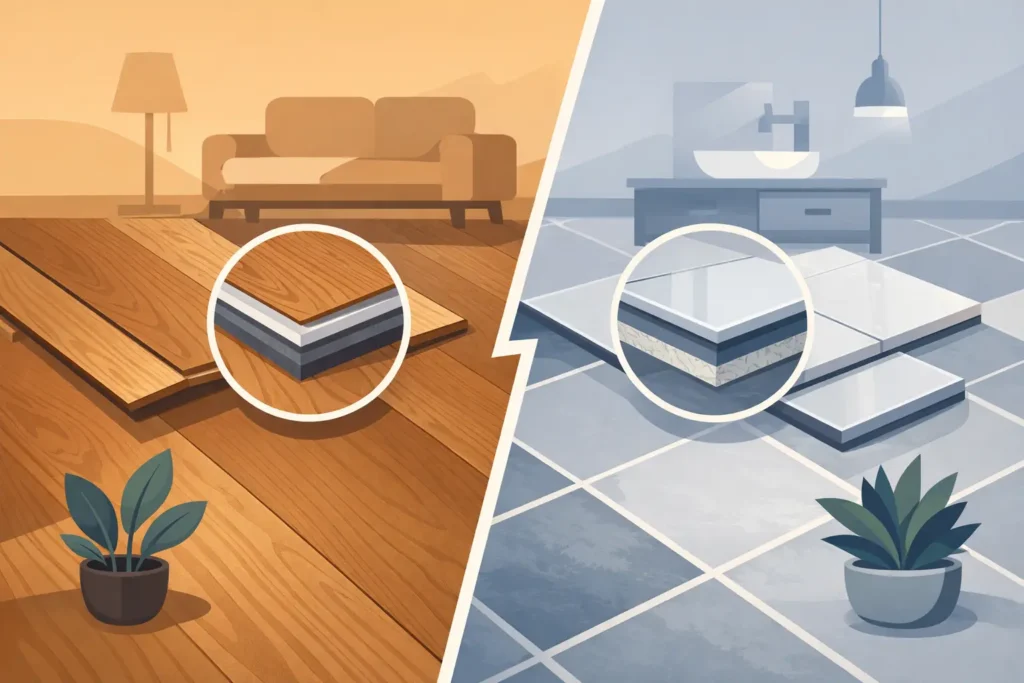
Luxury vinyl plank, often called LVP, is a resilient flooring material made in layered planks. Many styles closely replicate wood grain, while others resemble stone or concrete. It is warmer and softer underfoot than tile, and most modern products are designed to resist water from normal household spills.
Ceramic tile is a fired clay product with a hard glazed surface. It is highly durable, visually versatile, and especially well suited to areas where water, heat, and frequent cleaning are expected. Ceramic is not the same as porcelain tile, which is generally denser and less porous, but a quality ceramic tile can still perform very well when selected and installed correctly.
The practical difference is easy to feel. Vinyl plank has more give, stays more comfortable during long periods of standing, and is usually faster to install. Ceramic tile is harder, cooler, and more permanent, but it can withstand demanding conditions for decades when the subfloor and installation are right.
Appearance and Design Flexibility
Vinyl plank is an effective choice when you want the warmth of wood without using hardwood. Wide planks, light oak tones, natural textures, and low-gloss finishes work well in open-plan homes, apartments, offices, and retail spaces. Because planks can run continuously through several rooms, vinyl often creates a more visually connected floor plan.
Ceramic tile offers a different kind of design range. It can be simple and understated, or it can become a focal point through pattern, shape, grout color, and layout. Large-format tile can make a bathroom or lobby feel more open, while smaller tile can provide useful traction and detail in shower areas.
Neither material automatically looks better. Vinyl is often the stronger option for a wood-look design on a practical budget. Ceramic is often worth considering when you want a tailored, architectural finish that will not follow short-term flooring trends as quickly.
Which Floor Handles Water Better?
Ceramic tile is one of the most reliable surfaces for wet locations. Its glazed face resists water, and it performs well in bathrooms, laundry rooms, entryways, and kitchens. The weak point is not usually the tile itself – it is the grout and the condition of the installation. Cracked grout, loose tile, and failed waterproofing below a shower can allow moisture to reach places it should not.
Waterproof vinyl plank can also be an excellent choice for kitchens, powder rooms, and everyday living areas. Spills can be wiped up without the swelling concerns associated with many wood-based floors. Still, waterproof does not mean that every installation is protected from every water event. Flooding, a long-standing leak, or water entering around walls and transitions can affect the subfloor and may require the floor to be removed.
For a full bathroom with a shower or a commercial restroom, ceramic tile is usually the more dependable long-term material. For a kitchen, hallway, or family room where comfort and easy replacement matter, quality vinyl plank is often the more practical choice.
Comfort, Noise, and Everyday Living
This is where vinyl plank earns many of its strongest points. It is more forgiving underfoot, which makes a real difference in kitchens, workspaces, and homes where people spend a lot of time standing. It also tends to be quieter than tile, especially when paired with an appropriate underlayment where the product and subfloor allow it.
Ceramic tile is hard and naturally cool. That can be welcome in warm Los Angeles weather, particularly in a sunny home, but it can also make bedrooms and living spaces feel less comfortable without area rugs. Dropped dishes are more likely to break on tile, and the surface can be slippery if a smooth tile is used in a wet area.
Tile does work well with radiant floor heating, which can change the comfort calculation in a bathroom or upscale renovation. Vinyl plank is not always compatible with every heating system, so product specifications and temperature limits must be checked before installation.
Cost Is More Than the Material Price
Vinyl plank generally has a lower installed cost than ceramic tile. The material can be affordable, the installation process is faster, and many products can be installed over a properly prepared existing surface. That makes it especially attractive for rental properties, occupied homes, office updates, and projects with tight turnaround requirements.
Ceramic tile often costs more to install because the labor is more involved. The installer may need to remove existing flooring, correct subfloor unevenness, install backer board or an uncoupling membrane, lay out the pattern, cut tile, apply grout, and allow for curing time. Complex patterns, large tile formats, stairs, and detailed transitions can add to the price.
The lowest bid is not always the lowest cost. A poorly prepared vinyl floor may separate, telegraph subfloor flaws, or fail at the edges. A rushed tile installation can lead to cracked grout, uneven edges, hollow spots, or tile that eventually loosens. Professional preparation is what protects the value of either material.
Durability and Repair Considerations
Ceramic tile can last for decades and resists scratches better than most vinyl plank. It is a strong choice for entryways, busy commercial areas, and homes with pets when a durable surface is the priority. However, tile can crack if the subfloor moves or if a heavy object is dropped. Replacing a damaged tile is possible, but matching an older tile can be difficult if extra material was not saved.
Vinyl plank handles small impacts well and does not crack like tile. Its wear layer protects against everyday scuffs, but sharp furniture legs, heavy appliances, and dragged objects can gouge or dent it. In rooms with intense direct sun, lower-quality vinyl can also fade or shift in appearance over time.
Repairing vinyl is not always as simple as swapping one plank. Click-lock planks may require disassembling flooring from the nearest wall, while glued-down planks need careful removal and replacement. Keeping a carton of leftover material is smart with either option.
Maintenance Is Simple, but Not Identical
Both floors are easy to maintain with regular sweeping or vacuuming and prompt cleanup of spills. Vinyl plank should be cleaned with manufacturer-approved products and a damp mop rather than excess water. Abrasive scrubbers, steam cleaning, and harsh chemicals can dull or damage its finish.
Ceramic tile tolerates routine mopping and stronger cleaning better than vinyl, although grout needs attention. Light-colored grout can show dirt over time, especially in kitchens and commercial spaces. Periodic grout cleaning and, where appropriate, sealing help keep the floor looking maintained.
Furniture pads, entry mats, and quick cleanup benefit both materials. Those small habits often do more for a floor’s appearance than expensive cleaning products.
Choosing by Room and Property Type
Vinyl plank is commonly the better fit for bedrooms, living rooms, offices, rental units, and whole-home updates where a warm appearance, quieter surface, and efficient installation are priorities. It can also work well in kitchens and powder rooms when the subfloor is sound and moisture is managed.
Ceramic tile is especially effective in showers, full bathrooms, laundry rooms, mudrooms, exterior-adjacent entries, and spaces that need a hard-wearing finish. It is also a strong option for commercial settings where frequent cleaning, rolling traffic, or a more formal look matters.
For properties with multiple needs, mixing materials is often the smarter solution. Vinyl plank can create continuity through the main living or work areas, while tile protects the rooms that see the most water. The transition should be planned carefully so the finished floor heights, edges, and visual flow work together.
Installation Quality Decides the Result
Vinyl plank and ceramic tile both depend on a clean, dry, level, and structurally sound subfloor. Vinyl can reveal dips and ridges over time, while tile can crack when installed over movement or inadequate support. Moisture testing, proper floor preparation, and the correct installation method are not optional details.
A professional consultation can also prevent expensive material mistakes. Magnet Flooring helps Los Angeles-area property owners compare flooring based on room use, existing conditions, budget, and the finish they want to achieve. A clear plan before ordering materials can save time, avoid unnecessary demolition, and produce a floor that performs as well as it looks.
Before choosing, bring the decision back to the room: choose vinyl plank when warmth, speed, and value lead the project; choose ceramic tile when water exposure, hard-surface durability, and a lasting custom finish matter most. The right floor is the one that matches the way your property is actually used.