A beautiful floor has to do more than look good on installation day. It needs to handle chair legs, pet traffic, dropped pans, rolling office chairs, sunlight, and the everyday wear that comes with a busy property. The best durable flooring materials balance that real-world performance with the style, maintenance level, and budget that make sense for your space.
For a Los Angeles homeowner, that might mean a floor that stands up to kids and dogs while complementing an open-plan living area. For a property manager or business owner, it may mean minimizing repair calls and avoiding long closures for flooring work. There is no single material that wins in every room. The right choice depends on what happens on the floor every day.
What Makes Flooring Truly Durable?
Durability is not just about whether a plank can resist a scratch. A flooring material should be evaluated on several practical factors: resistance to dents and surface wear, moisture tolerance, stability through temperature changes, ability to be repaired, and expected service life when properly installed.
Installation matters just as much as the material itself. Even a high-quality floor can develop gaps, movement, squeaks, or moisture damage when the subfloor is unprepared or the product is installed incorrectly. Professional assessment helps identify issues such as uneven concrete, slab moisture, or areas that need a more water-resistant option before the project begins.
Consider the room first. A formal living room has different demands than a ground-level rental unit, a kitchen, or a commercial office entrance. Choosing a floor based on appearance alone often leads to avoidable maintenance costs later.
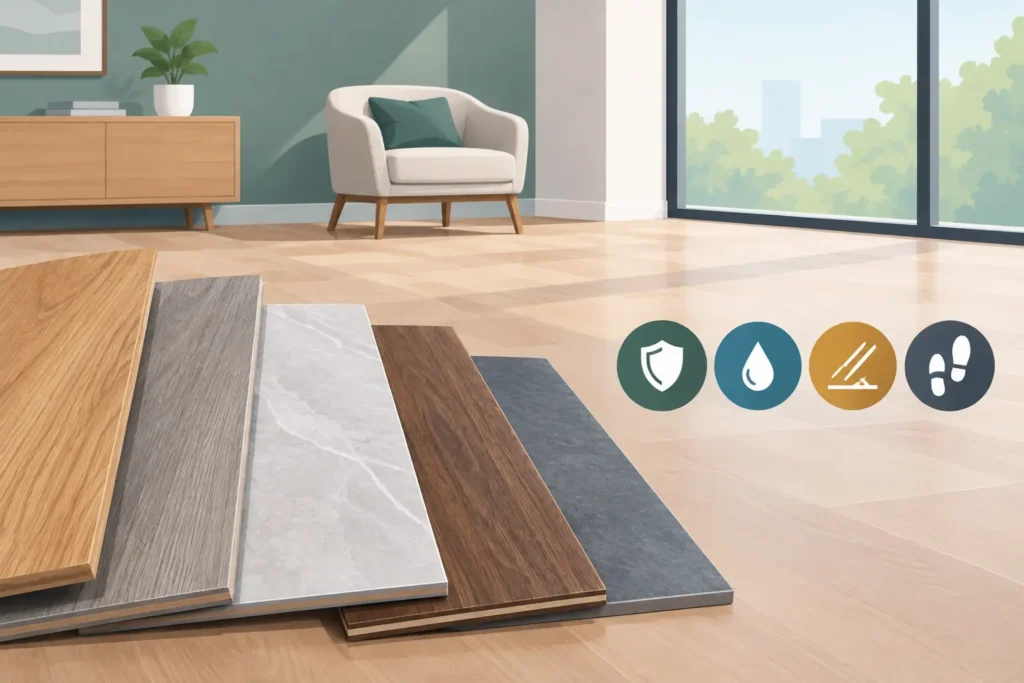
Durable Flooring Materials Compared
Hardwood: Long-Term Value With Repair Potential
Hardwood remains a strong choice for homeowners who want natural character and a floor with a long lifespan. Quality solid hardwood can be sanded and refinished multiple times, allowing it to recover from surface wear instead of needing complete replacement. That repairability is a major advantage over many manufactured flooring products.
Hardwood performs especially well in bedrooms, living rooms, hallways, and offices with controlled indoor conditions. Harder species generally resist dents better than softer woods, although no wood floor is fully scratch-proof. Large dogs, high heels, and moving furniture can leave marks, particularly on dark stains and glossy finishes.
Its main trade-off is moisture. Hardwood is not the practical choice for full bathrooms, laundry rooms, or areas with frequent leaks. It can also expand and contract when moisture levels change. A properly selected product, acclimated material, and expert installation reduce those risks, but they do not turn hardwood into a waterproof floor.
Luxury Vinyl Plank: Built for Water and Daily Traffic
Luxury vinyl plank, often called LVP, is one of the most practical options for busy households and commercial interiors. It is designed with a protective wear layer over a printed design layer, so it can closely resemble wood while offering better resistance to spills, stains, and routine scuffs.
Waterproof vinyl plank is a smart fit for kitchens, bathrooms, laundry rooms, entryways, and rental properties where quick cleanup matters. It is also comfortable underfoot and generally quieter than tile, making it useful in condos, offices, and multi-use spaces. With the right product, vinyl can manage high traffic without requiring the maintenance routine of natural wood.
Not all vinyl planks offer the same performance. Wear-layer thickness, core construction, locking system, and installation method affect how the floor holds up. A lower-grade product may save money upfront but show wear sooner in a busy hallway or commercial setting. Vinyl also cannot be refinished. Once the surface is severely damaged, replacement is usually the solution.
Bamboo: Sustainable Strength for Active Homes
Bamboo offers a distinctive look and an eco-conscious alternative to traditional hardwood. Because bamboo grows quickly, it appeals to property owners who want a renewable flooring material without giving up a clean, modern finish.
Its durability depends heavily on how it is manufactured. Strand-woven bamboo is typically denser and more resistant to dents than standard bamboo flooring, making it a better option for active living areas. It can work well in bedrooms, dining rooms, living rooms, and light commercial spaces where natural flooring is desired.
As with hardwood, bamboo does not belong in consistently wet areas. Quality also matters more than many buyers expect. Lower-quality bamboo products can be more vulnerable to moisture movement, fading, or adhesive-related issues. A flooring professional can help identify products suited to your subfloor and the conditions inside your property.
Laminate: Strong Surface Protection on a Budget
Laminate flooring is a cost-conscious option that can deliver convincing wood visuals and dependable scratch resistance. Its hard top layer makes it a practical choice for bedrooms, living rooms, hallways, and rental units where appearance and affordability both matter.
For homes with pets or children, laminate can be more forgiving than softer wood surfaces. It is also easy to clean with routine dry or lightly damp maintenance. Modern laminate styles offer more realistic texture and plank variation than older products, so it can provide a polished finish without the price of hardwood.
Water is the deciding factor. Some newer laminate products offer improved water resistance, but most are not truly waterproof through the joints and core. Standing water can cause swelling, especially at seams and edges. Laminate is best used where spills are occasional and cleaned promptly, not where water exposure is a daily concern.
Match the Floor to the Room, Not Just the Look
Choosing by room function protects your investment. In a kitchen, vinyl plank usually provides the strongest combination of water resistance, comfort, and easy maintenance. In a living room where natural grain and future refinishing matter, hardwood or quality bamboo can offer more long-term value. For a rental bedroom or a budget-focused office refresh, laminate may provide the right balance of durability and cost.
Commercial spaces require another layer of planning. Reception areas, retail floors, and office corridors see concentrated traffic, wheeled furniture, and more frequent cleaning. Commercial-grade vinyl may be the most efficient choice in these settings, especially when downtime needs to stay low. Hardwood can make an impressive statement in a professional office, but it should be reserved for areas where moisture and heavy impact are limited.
Sun exposure also deserves attention in Southern California. Large windows and strong afternoon light can affect the color of natural materials over time. Window coverings, appropriate finishes, and product selection help reduce visible fading. If a space gets intense direct sun, ask about color stability before choosing a dark or highly uniform finish.
Protect Your Flooring Investment After Installation
Even the most durable floor benefits from simple habits. Use felt pads under furniture, place walk-off mats at exterior doors, and lift heavy pieces rather than dragging them. Clean grit and sand regularly because small abrasive particles act like sandpaper under shoes and chair legs.
Use cleaning products approved for the specific floor type. Excess water is a problem for hardwood, bamboo, and many laminate products, while harsh chemicals can dull vinyl finishes. For offices, install protective mats under rolling chairs and check chair casters regularly. These small steps can extend the usable life of the floor and keep it looking professionally maintained.
Why Professional Installation Makes the Difference
A durable product needs a stable foundation. Before installation, experienced flooring professionals evaluate subfloor flatness, moisture conditions, transitions, and the way the new floor will meet cabinets, doors, and adjacent rooms. This planning prevents the rushed decisions that can create expensive issues after the job is complete.
Magnet Flooring helps homeowners and commercial clients select flooring that fits the demands of the space, not simply the latest trend. Whether the priority is waterproof performance, sustainable bamboo, a classic hardwood finish, or an affordable laminate upgrade, the goal is the same: a floor installed correctly and built to deliver value over time.
The best flooring decision starts with an honest look at how the room is used. Bring the details of your traffic, pets, moisture concerns, style preferences, and budget to a professional consultation, and you can choose a surface that stays attractive long after the first walk-through.