
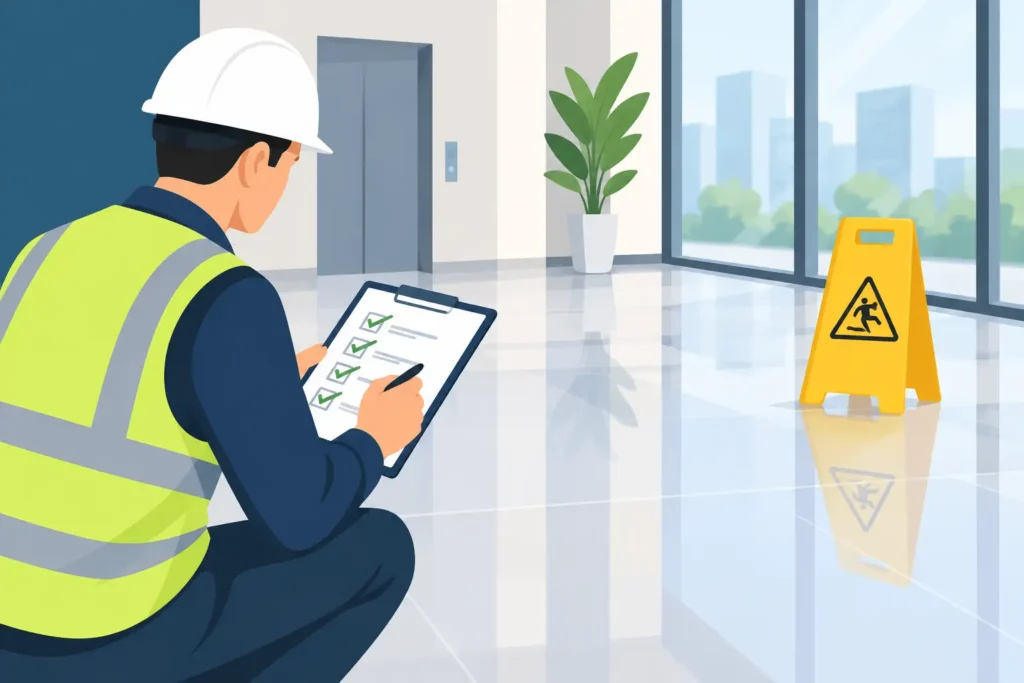
A floor can look clean, modern, and expensive while still creating a safety problem. Commercial floor safety compliance starts with the real conditions people face every day: wet entryways, spilled drinks, rolling carts, worn transitions, uneven subfloors, and high foot traffic. For business owners and property managers, the goal is not simply to avoid a failed inspection. It is to create a space that protects visitors and staff while holding up to daily use.
The right flooring decision balances traction, maintenance, accessibility, durability, and appearance. That balance changes from one commercial space to another. A polished showroom, medical office, restaurant, apartment corridor, and warehouse may all need different materials and installation details.
What Commercial Floor Safety Compliance Covers
Floor safety compliance is broader than selecting a product labeled slip resistant. It includes the condition of the existing floor, the material’s performance when dry and wet, transitions between surfaces, visible changes in elevation, floor drainage, maintenance procedures, and accessibility requirements.
Federal accessibility standards can affect items such as accessible routes, doorway clearances, floor transitions, and the stability of walking surfaces. Workplace safety expectations also require employers to keep walking-working surfaces clean, orderly, and as safe as practical. Local building requirements and the use of the space can add more considerations, especially during a tenant improvement or major renovation.
A flooring contractor can help identify installation and material concerns, but code interpretation may require input from the project architect, building official, or accessibility specialist. This matters most when a project includes permits, public-facing areas, or substantial changes to entrances, restrooms, ramps, or circulation paths.
Start With the Risks in Your Specific Space
The safest commercial floor is not always the floor with the roughest texture. Excessively aggressive texture can be difficult to clean, uncomfortable underfoot, and unsuitable for certain interiors. The better question is where, when, and why the floor becomes hazardous.
An office lobby in Los Angeles may stay dry most of the year, yet rain can turn a smooth entry surface into a slip risk within minutes. A restaurant may deal with grease near service areas and frequent liquid spills in dining spaces. A healthcare office needs a surface that supports easy cleaning and rolling equipment without creating trip points. Apartment buildings need durable hallways and entrances that continue to perform after years of tenant traffic.
Before selecting a material, assess traffic patterns, expected contaminants, cleaning methods, footwear, and the condition of the subfloor. Also look for areas where people change direction or move quickly, including entrances, reception desks, stair landings, elevators, break rooms, and restroom doors. These are often the places where a good flooring plan delivers the greatest safety value.
Choose Materials for Traction and Long-Term Wear
Material selection has a direct effect on commercial floor safety compliance, but product claims should be reviewed carefully. A surface that performs well in a dry retail environment may not be appropriate for a wet lobby or food-service setting. Ask for performance information relevant to the actual installation, including slip-resistance data where available and manufacturer guidance for commercial use.
Luxury vinyl plank and commercial sheet vinyl are popular choices because they can provide durable, water-resistant surfaces with practical maintenance needs. The available textures, wear layers, and installation systems vary widely. A product that looks like natural wood can offer better moisture tolerance than hardwood in an entry, hallway, or office break room.
Hardwood can be an excellent commercial choice in lower-moisture settings where design impact matters, such as executive offices, boutique retail, or professional service spaces. However, its finish, maintenance plan, and exposure to water must be managed carefully. Worn finish, cupping, loose boards, or seasonal movement can affect both appearance and safety.
Bamboo is another attractive option for businesses seeking a more eco-conscious floor. Quality and construction matter. Commercial spaces should use products rated for the expected traffic level and installed over a properly prepared subfloor. Like hardwood, bamboo works best where standing water and repeated wet cleaning are not routine concerns.
Laminate can provide a cost-conscious visual upgrade, but it is not the best fit for every commercial environment. Water exposure, edge swelling, and damaged locking joints can create maintenance issues if the product is not designed for the space. For high-risk moisture areas, a waterproof commercial-grade vinyl option is often the more practical investment.
Transitions, Edges, and Subfloors Matter as Much as the Surface
Many floor-related incidents are caused by details that receive little attention during product selection. A loose transition strip, a raised plank edge, a gap at a doorway, or an uneven patch in the subfloor can become a trip hazard even when the flooring itself is in good condition.
Professional preparation helps prevent these problems. Subfloors need to be clean, dry, stable, and sufficiently level for the selected material. Skipping preparation to reduce upfront cost can lead to movement, cracking, separation, or premature wear. Those repairs cost more later and can disrupt business operations.
Transitions between flooring types should be secure and appropriate for carts, wheelchairs, walkers, and regular foot traffic. Changes in elevation should be handled with the correct profile rather than improvised with caulk, loose trim, or a thin patch. At exterior and wet-area entries, flooring should work with mats, drainage, and cleaning procedures instead of relying on any one solution alone.
Build Safety Into the Installation Plan
Installation quality determines whether a commercial floor performs as intended. Even a high-quality product can fail if it is installed over moisture issues, an unstable substrate, or a poorly prepared surface. Scheduling also matters. A rushed installation can leave inadequate time for subfloor repairs, moisture testing, adhesive curing, or final inspection.
For occupied spaces, work should be planned around customer access, employee safety, and daily operations. This may mean installing in phases, isolating work zones, clearly marking temporary changes in walking paths, and reopening areas only after the floor is ready for traffic. The lowest installation quote is not always the lowest total cost if it leaves a property with early repairs or avoidable liability exposure.
At Magnet Flooring, commercial projects are approached with the material, traffic level, budget, and use of the space in mind. A practical consultation can identify whether a durable vinyl system, refinished wood, bamboo, or another option makes sense before work begins.
Maintenance Is Part of Compliance
A compliant installation can become unsafe without a consistent maintenance routine. Dirt, oils, wax buildup, moisture, and incorrect cleaning products can reduce traction. Cleaning crews should use products approved for the floor type and avoid treatments that leave a slippery residue.
Property managers should also have a clear process for spills, wet-weather entrances, damaged flooring, and loose transitions. Entry mats need to lie flat, stay in place, and be replaced when curled or worn. Wet-floor signs are useful during active cleaning or spills, but they are not a substitute for promptly removing the hazard.
Regular inspections are especially valuable in high-traffic properties. Walk the space from the customer’s perspective and watch for lifting edges, worn finish, uneven seams, water intrusion, and areas that feel unstable underfoot. Documenting maintenance and repairs can also support a more organized risk-management process.
Know When Repair Is Enough and When Replacement Is Smarter
Not every concern requires full replacement. A localized damaged vinyl section, loose transition, or worn wood area may be repairable if the surrounding floor is stable and matching material is available. Quick repairs can prevent a minor defect from becoming a safety issue.
Replacement is often the better choice when damage is widespread, moisture has compromised the subfloor, repeated repairs are failing, or the existing material no longer fits the use of the space. If a smooth, residential-grade finish is struggling in a busy commercial entry, replacing it with a more suitable commercial product may reduce maintenance demands and improve safety at the same time.
The best next step is a site-specific review before choosing a material or approving a repair. A professional flooring assessment can help you prioritize the areas that need attention now, protect your budget, and give customers and employees a safer surface to walk on every day.