A floor can look fine from the doorway and still be failing underneath your feet. A soft spot near the kitchen sink, boards that separate every dry season, or laminate that swells after one leak are not just cosmetic concerns. Knowing when to replace damaged flooring can help you avoid bigger repair costs, protect the subfloor, and choose a material that fits how the room is actually used.
For homeowners, property managers, and business owners, the right decision is not always replacement. Some scratches, loose planks, and isolated stains can be repaired effectively. The key is understanding whether the damage is surface-level, limited to one area, or a sign that the floor system itself has reached the end of its service life.
When to Replace Damaged Flooring Instead of Repairing It
Replacement usually makes more sense when damage affects the floor’s stability, moisture resistance, or appearance across a large area. A repair can solve a local problem, but it cannot correct weakened subflooring, widespread water intrusion, or materials that have worn beyond their intended lifespan.
The floor feels soft, bouncy, or uneven
A solid floor should feel stable underfoot. If sections dip, flex, squeak excessively, or feel spongy, the issue may extend below the visible surface. Water damage, pest activity, an uneven subfloor, or failed underlayment can all create movement that a simple plank replacement will not fix.
This is especially common around bathrooms, kitchens, laundry rooms, and exterior doors. Replacing the visible flooring without addressing the underlying cause can lead to the same failure again. A professional inspection can determine whether the subfloor needs repair before new hardwood, vinyl plank, bamboo, or laminate is installed.
Water damage has caused swelling, cupping, or warping
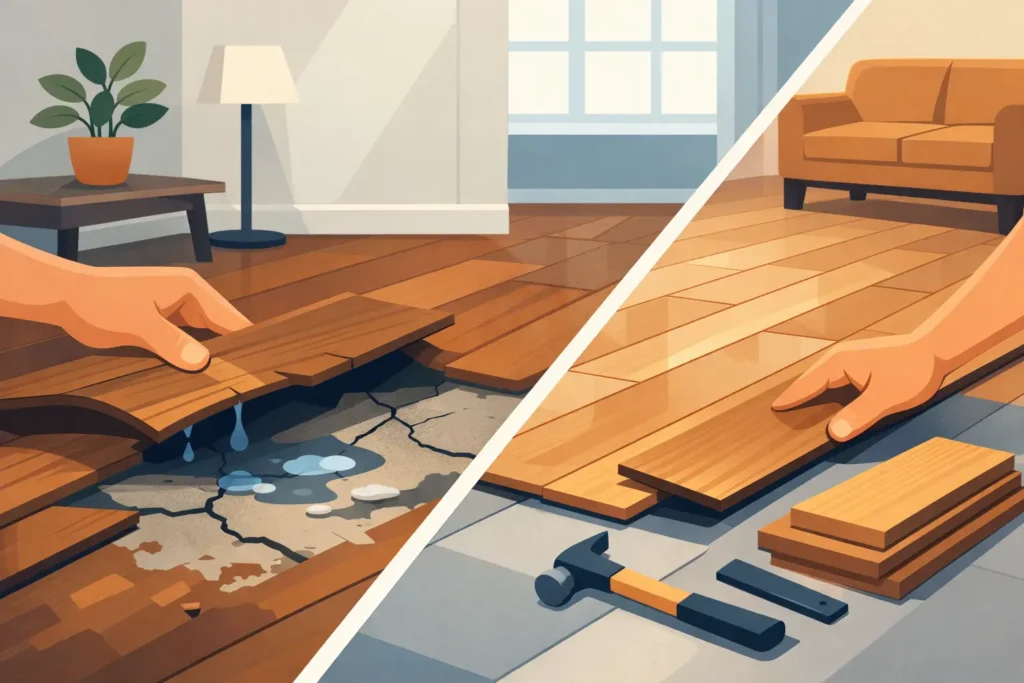
Moisture is one of the clearest reasons to replace damaged flooring. Hardwood boards may cup, crown, buckle, or develop dark water stains. Laminate often swells at the seams and does not return to its original shape once the core has absorbed water. Even vinyl flooring, which is highly water resistant, can fail if moisture gets beneath the planks and affects the adhesive, underlayment, or subfloor.
One small spill that was cleaned quickly may not justify a full replacement. A leak that sat unnoticed for days, however, is different. If boards are lifting, edges are curled, or there is a musty odor, removing the damaged material is often the safer and more cost-effective choice.
Damage appears in several areas, not just one spot
An isolated scratch, chip, or damaged plank is often repairable. Widespread wear is another matter. When multiple rooms have deep scratches, fading, cracks, peeling layers, or separating joints, paying for repeated spot repairs can become a poor investment.
This is particularly relevant in rental properties, offices, retail spaces, and busy family homes. High traffic eventually wears down protective finishes and exposes the flooring to dirt and moisture. At that point, replacement provides a more consistent appearance and may reduce ongoing maintenance costs.
Mold, mildew, or persistent odors are present
A lingering damp smell should not be covered with a rug or air freshener. Mold and mildew can develop beneath flooring after leaks, flooding, or long-term humidity exposure. The visible surface may look only slightly stained while the materials underneath retain moisture.
Replacement is often necessary when mold is confirmed or when odors return after cleaning. The source of moisture must be corrected first, then affected flooring and compromised underlayment should be removed. This approach protects indoor air quality and prevents new flooring from absorbing the same problem.
Signs Your Flooring May Still Be Repairable
Not every damaged floor needs to be torn out. Targeted repair can be the smart choice when the structure is sound, matching materials are available, and damage is limited.
Hardwood flooring with light surface scratches may benefit from refinishing rather than replacement. A few gouges can sometimes be filled and blended. Loose engineered wood or vinyl planks may be reset or replaced if the surrounding installation is stable. Laminate with one damaged board can also be repaired, although matching older colors and discontinued product lines can be difficult.
The trade-off is appearance. A repaired section may be noticeable if the original floor has faded from sunlight or worn unevenly. In a closet, spare room, or low-traffic area, that may be acceptable. In an open-concept living space or customer-facing business, a full replacement can provide a cleaner result.
Consider the Age and Material of the Floor
The expected lifespan of flooring matters, but age alone does not decide the issue. A well-maintained hardwood floor can last for decades and may be refinished more than once. Lower-quality laminate may show edge swelling or surface wear much sooner. Vinyl plank is durable and practical for many active homes and commercial settings, but damaged locking systems or widespread subfloor movement can still require replacement.
Bamboo offers an attractive, renewable option with good durability when it is properly selected and installed. Like wood, it performs best when moisture conditions are controlled. For Los Angeles properties, material selection should account for the room, sun exposure, indoor humidity, foot traffic, and the possibility of water from pets, appliances, or plumbing.
If your existing product is no longer manufactured, repairing it may also be impractical. Trying to blend a close-but-not-exact match can make the floor look patched, even when the repair itself is well done.
Do Not Ignore Safety and Daily-Use Problems
Flooring replacement becomes urgent when damage creates a trip hazard or interferes with normal use. Raised edges, cracked tiles, splintering wood, loose boards, and torn vinyl can cause injuries. In commercial spaces, these issues may also create liability concerns and leave customers with a poor impression of the property.
Flooring that traps dirt, cannot be cleaned properly, or has worn through in walking paths may be due for an upgrade even if it is technically still intact. This is common in entryways, hallways, office corridors, and areas near break rooms. A new floor can improve safety, cleaning efficiency, and the overall feel of the space.
How to Choose the Right Replacement Flooring
Once replacement is the right call, focus on performance before color. The best material depends on where it will be installed and how the space is used.
For moisture-prone rooms, waterproof vinyl plank is often a practical choice because it offers the look of wood with easy maintenance and strong water resistance. Hardwood brings long-term value and natural character to living rooms, bedrooms, and other dry areas. Bamboo can be an appealing eco-conscious option for clients who want a distinctive look without sacrificing durability. Laminate remains a budget-friendly choice for many low- to moderate-moisture areas when installed over a properly prepared subfloor.
Installation quality matters as much as the material. Floors need the correct moisture barrier, expansion space, underlayment, and subfloor preparation to perform as intended. Skipping those details may save money at the start, but it often leads to gaps, movement, and premature damage later.
Get a Clear Assessment Before You Spend
Before deciding between repair and replacement, look beyond the visible damage. Check the affected area for softness, moisture, odor, loose edges, and changes in floor height. Take note of when the problem started and whether it followed a leak, plumbing repair, heavy furniture move, or seasonal humidity change.
A flooring professional can assess the condition of the material and the subfloor, explain whether a repair will hold, and provide options that fit your budget. Magnet Flooring helps Los Angeles-area homeowners and businesses make that decision with practical recommendations, quality installation, and materials suited to real daily use.
A damaged floor rarely improves on its own. Addressing it early gives you more choices, protects the space beneath it, and helps ensure your next floor delivers the comfort, appearance, and durability you expect.