A new floor has to do more than look good on installation day. It has to handle dropped toys, office chair traffic, pet nails, sunlight, and the everyday movement of a busy property. Bamboo flooring appeals to homeowners and business owners because it delivers a clean, modern wood look while using a rapidly renewable material. The right product and installation method, however, make all the difference in how it performs.
For Los Angeles properties, bamboo can be an excellent choice when the room, subfloor, and expected traffic are considered before work begins. It is not a one-size-fits-all flooring material, and a professional assessment can prevent expensive surprises later.
What Makes Bamboo Flooring Different?
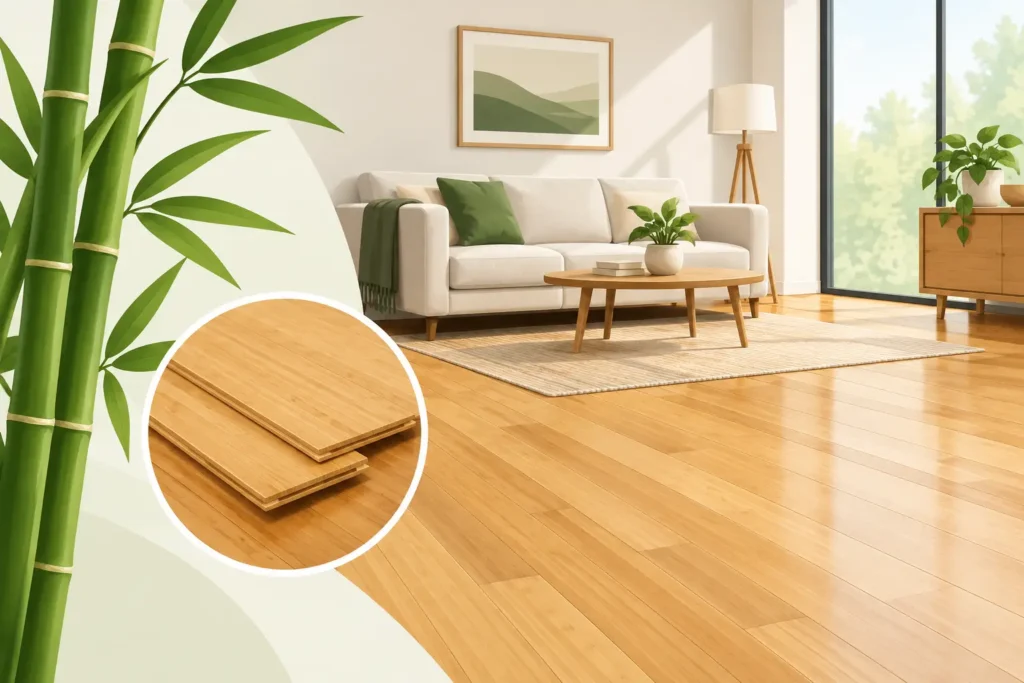
Bamboo is technically a grass, not a hardwood tree. Mature bamboo stalks are harvested, cut into strips or fibers, treated, and pressed into flooring planks. Because bamboo regenerates much faster than traditional hardwood species, it is often chosen by customers looking for a more eco-conscious flooring option.
Its appearance can range from light natural blond tones to warm caramelized shades and deeper contemporary colors. Depending on the manufacturing process, bamboo can have a clean, uniform look or a more textured, natural grain. That flexibility works well in modern condos, family homes, retail spaces, and offices that need a polished finish without moving to a synthetic material.
The sustainability benefit is real, but it should not be the only reason to choose bamboo. Manufacturing quality, plank construction, finish quality, and installation conditions have a direct effect on durability. A well-made bamboo floor is very different from a low-cost product with inconsistent milling or weak adhesives.
The Main Types of Bamboo Flooring
Not every bamboo plank is built the same way. The construction affects its appearance, hardness, stability, and price.
Horizontal and Vertical Grain Bamboo
Horizontal-grain bamboo displays the natural nodes of the stalk, creating a more traditional bamboo pattern. Vertical-grain bamboo arranges narrow strips upright for a cleaner, more linear appearance. Both can be attractive options for lower to moderate traffic areas, but performance depends heavily on the product’s density and finish.
Strand-Woven Bamboo
Strand-woven bamboo is made by shredding bamboo fibers, mixing them with resin, and compressing them under high pressure. The result is a denser product that is often harder than many traditional hardwoods. For active households, rental properties, offices, and commercial spaces with regular foot traffic, strand-woven bamboo is usually the strongest bamboo option to consider.
Hardness helps, but it is not a guarantee against damage. Sharp grit, heavy furniture, high heels, and rolling chairs can still scratch or dent any finished floor. Protective pads, entry mats, and appropriate chair mats remain worthwhile investments.
Solid and Engineered Bamboo
Solid bamboo planks are made from bamboo throughout their thickness. Some can be refinished, though the number of times depends on the product and wear layer. Engineered bamboo has a bamboo surface layer over a layered core, which can improve dimensional stability in spaces where indoor conditions change throughout the year.
An engineered product may be a better fit over certain subfloors or in properties where moisture control is a concern. The best choice depends on the room’s conditions, not simply which option has the lower initial price.
Where Bamboo Works Best
Bamboo flooring performs best in dry, climate-controlled interior spaces. Living rooms, bedrooms, hallways, dining areas, offices, and many retail environments are all strong candidates. It offers the warmth of real flooring material underfoot and can make a room feel more finished than carpet or basic laminate.
In Southern California, temperature swings and strong sun exposure deserve attention. Large windows can cause fading and heat buildup over time, especially on darker floors. Window coverings and UV-conscious finishes can help protect the color and extend the floor’s visual life.
Bamboo is generally not the first recommendation for full bathrooms, laundry rooms, or areas with frequent standing water. Even a dense strand-woven floor can be affected by repeated moisture exposure, leaks, or poor subfloor conditions. Kitchens can work if spills are wiped up promptly and the product is suited to the space, but waterproof vinyl plank may be the more practical alternative for homes that need maximum water resistance.
Benefits That Matter for Homes and Businesses
Bamboo offers a combination of visual appeal, responsible sourcing potential, and everyday durability. Its clean lines work with contemporary, minimalist, transitional, and even warmer traditional interiors. It can also add value to a property by replacing worn carpet or dated flooring with a more upscale surface.
For commercial clients, bamboo can create a professional setting without the visual repetition of many synthetic products. A properly selected product can stand up well in offices, boutiques, waiting rooms, and similar spaces. In areas with intense traffic, the finish system and maintenance plan are just as important as the plank itself.
Cost is another reason customers consider bamboo. Pricing can be competitive with many hardwood options, particularly when comparing higher-quality strand-woven products to premium wood species. Still, material cost is only one part of the project. Subfloor preparation, removal of existing flooring, moisture mitigation, trim work, transitions, and furniture moving can all affect the final estimate.
Installation Is Where Long-Term Performance Begins
A floor can be made from excellent material and still fail when installed over an uneven or damp subfloor. Before installation, the space should be measured, the subfloor evaluated, and moisture levels checked where appropriate. The flooring also needs time to acclimate according to the manufacturer’s requirements so it can adjust to the home’s interior conditions.
Professional installers determine whether the planks should be nailed, glued, floated, or installed using another approved method. They also leave the correct expansion space around walls, doorways, and fixed objects. This allows the floor to respond to normal seasonal movement without buckling, gapping, or pressing against surrounding surfaces.
Preparation is especially important in older Los Angeles homes and commercial buildings, where subfloors may have uneven areas, old adhesive, moisture concerns, or damage hidden beneath existing flooring. Addressing those conditions before new planks go down protects the investment and creates a cleaner finished result.
Simple Care Keeps Bamboo Looking Better Longer
Bamboo does not require complicated maintenance, but it does reward consistent care. Sweep or vacuum with a hard-floor setting regularly to remove sand and grit. Use a lightly damp microfiber mop and a cleaner approved for the specific floor finish, rather than soaking the surface with water.
Place mats at exterior doors, add felt pads beneath furniture, and clean spills promptly. Avoid steam mops, abrasive scrubbers, wax-based products, and excessive water. If a floor develops deep scratches, loose boards, unusual gaps, or signs of moisture damage, repairs should be addressed early before the issue spreads into surrounding planks.
For busy offices, establish a maintenance routine around entrances, rolling chairs, and break areas. Small preventive steps can make a noticeable difference in how the floor looks after several years of daily use.
Is Bamboo the Best Choice for Your Project?
Bamboo is a smart choice when you want the appearance of a natural floor, value sustainable material options, and can maintain stable indoor conditions. Strand-woven or engineered bamboo is often the best place to start for customers who prioritize durability and reliable performance.
It may not be the right answer for every room. If water exposure, frequent spills, or heavy commercial wear are the main concerns, vinyl plank or another moisture-focused material may deliver better long-term value. An experienced flooring professional can compare those trade-offs based on your room, budget, subfloor, and design goals.
The best flooring decision is the one that fits the way the space is actually used. A careful consultation before installation gives you the chance to choose bamboo with confidence, plan for the right preparation, and enjoy a floor built to work as well as it looks.