A floor can look perfect in a showroom and still be the wrong choice for a busy household, rental property, or office. When weighing bamboo versus oak flooring, the better material is the one that matches how the space is used, the look you want, and the level of maintenance you can realistically commit to.
Both options can deliver a polished, long-lasting result when selected and installed correctly. Bamboo appeals to buyers who want a contemporary look and a rapidly renewable material. Oak remains a trusted choice for its natural character, broad design range, and proven resale appeal. The differences matter most once daily life starts happening on the floor.
Bamboo Versus Oak Flooring: The Main Differences
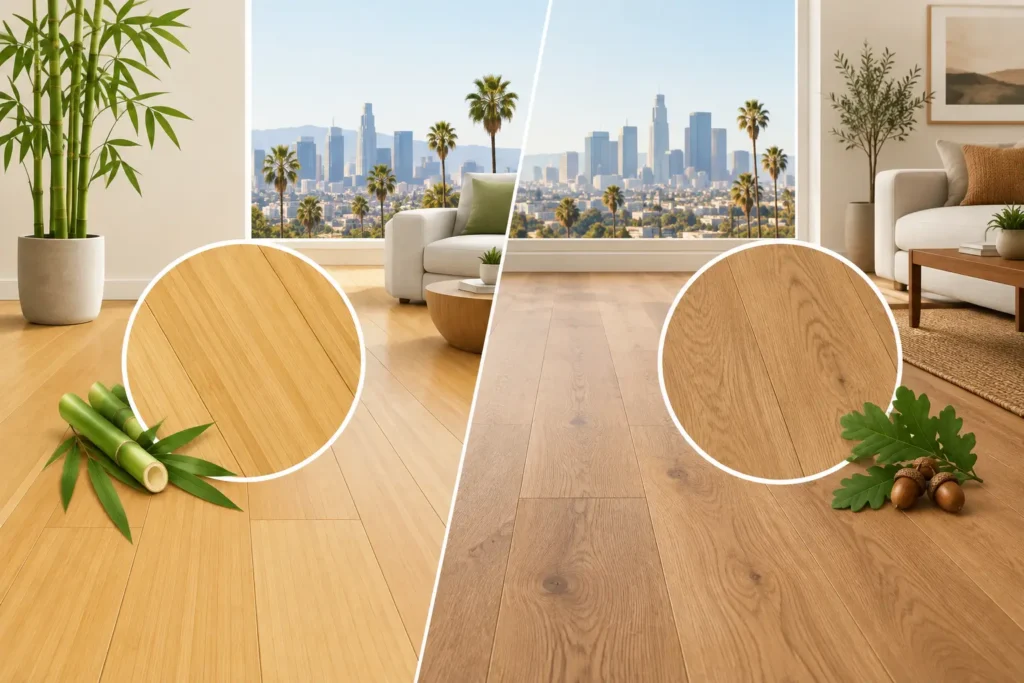
Oak is a hardwood cut from oak trees. It has visible grain patterns, natural color variation, and a traditional warmth that works in everything from historic homes to modern offices. It is available as solid hardwood or engineered planks, with red oak and white oak being the most common options.
Bamboo is technically a grass, not wood. Flooring is made by processing bamboo stalks into strips or fibers and bonding them into planks. Vertical and horizontal bamboo show a more uniform, linear grain. Strand-woven bamboo uses compressed bamboo fibers and can be exceptionally dense.
That manufacturing process is why bamboo quality varies more widely than many buyers expect. A well-made strand-woven product with low-emission adhesives can be a strong, attractive floor. A low-cost product made with weak adhesives or poor finishing may dent, scratch, or react poorly to moisture. Brand, construction, finish, and installation all matter.
Appearance and design flexibility
Oak offers more natural variation. Its grain, knots, and color shifts create a floor with depth and personality. White oak is especially popular for wide-plank, light-toned, and European-inspired interiors, while red oak provides warmer undertones and a classic hardwood look. Oak can also be stained in a wide range of colors and refinished later if design preferences change.
Bamboo has a cleaner, more consistent visual pattern. Natural bamboo tends to be light and warm, while carbonized bamboo has a deeper honey or amber tone. Strand-woven bamboo can be stained in darker shades and fits well in contemporary homes, creative offices, and spaces that need a streamlined appearance.
For a room where you want each plank to look distinctive, oak usually wins. For a controlled, modern look with less natural variation, bamboo may be the better fit.
Durability Depends on the Product, Not Just the Material
Many people assume hardwood is automatically tougher because it is wood. In practice, a quality strand-woven bamboo floor can be harder than many traditional oak products. Its dense construction can hold up well to active households, pets, and commercial foot traffic.
However, hardness is not the entire durability story. A very hard surface can still scratch when furniture is dragged across it, and it can still suffer from water exposure. The finish protects the floor from day-to-day wear, so finish quality is as important as the core material.
Oak is durable in a different, time-tested way. It may show dents and scratches over the years, especially in softer red oak, but it is familiar to flooring professionals and can often be sanded and refinished. Solid oak has the greatest refinishing potential. Engineered oak can also be refinished, depending on the thickness of its hardwood wear layer.
Bamboo refinishing depends on its construction. Some bamboo floors can be refinished carefully, while others have limits because aggressive sanding can damage the material or expose adhesive layers. This is worth confirming before purchase, particularly for a property you plan to keep for decades.
How Los Angeles conditions affect both floors
Los Angeles homes face their own set of flooring challenges: strong sunlight, low indoor humidity during dry periods, open doors, and occasional moisture from kitchens, bathrooms, or patio traffic. Neither bamboo nor oak should be treated as waterproof flooring.
Direct sun can fade or alter the color of both materials over time. Window coverings, rugs that are moved occasionally, and UV-resistant finishes help reduce uneven color change. Proper acclimation before installation is also essential. Flooring needs time to adjust to the conditions inside the home or business before it is installed.
If the project includes a frequently wet entry, full bathroom, laundry room, or an area prone to spills, waterproof vinyl plank may be a more practical option than either bamboo or oak.
Cost: Look Beyond the Price Per Square Foot
Bamboo is often viewed as the more affordable choice, but the final cost can overlap with oak depending on the product. Entry-level bamboo may cost less than premium oak, while premium strand-woven bamboo can cost as much as or more than some engineered oak selections.
Installation conditions have a major effect on the total project budget. Subfloor leveling, moisture testing, removal of existing flooring, trim work, stair details, furniture moving, and repairs can all change the estimate. A material that looks less expensive at first may not save money if the installation requires extensive preparation.
For commercial spaces and rental properties, it is also smart to consider replacement and repair. Can matching planks be sourced later? Will the finish hide minor wear? Is the floor likely to meet the expectations of future tenants, buyers, or clients? Oak has broad market familiarity, while bamboo can be a strong value when its clean look and sustainability benefits align with the property.
Sustainability and Indoor Air Quality
Bamboo grows much faster than oak trees, which is the main reason it is considered a renewable flooring option. It can be harvested without replanting the entire crop, making it appealing to homeowners and businesses looking for eco-conscious materials.
That said, sustainable flooring is more than a label. Bamboo flooring uses adhesives during manufacturing, so ask about low-VOC certifications and formaldehyde emissions. Responsible sourcing and quality manufacturing make a real difference.
Oak can also be a responsible choice when it comes from well-managed forests and is built to last. A floor that remains in service for decades rather than being replaced quickly can have a meaningful environmental advantage. The most sustainable choice is often a durable product that fits the room, is installed correctly, and is maintained rather than discarded.
Maintenance Expectations for Bamboo and Oak
Both floors benefit from the same practical habits: use mats at exterior doors, place protective pads under furniture, sweep or vacuum with a hard-floor setting, and clean spills promptly. Avoid soaking either surface with water or using steam mops, which can force moisture into joints and damage the finish.
Use a manufacturer-approved hardwood or bamboo floor cleaner rather than harsh chemicals, waxes, or oil soaps. Keep pet nails trimmed and use rugs in high-traffic areas, especially near kitchen sinks, hallways, and entrances.
Oak is often more forgiving from a long-term repair perspective because refinishing is a familiar option. Bamboo can perform very well with routine care, but it demands a careful choice at the start. Select a reputable product and have a professional evaluate the subfloor and moisture conditions before installation.
Which Flooring Is Right for Your Space?
Choose bamboo if you want a clean, contemporary floor, value rapidly renewable materials, and are prepared to invest in a quality strand-woven product. It can be an excellent fit for living rooms, bedrooms, offices, and low-to-moderate moisture spaces where a modern aesthetic matters.
Choose oak if you want natural grain, design flexibility, reliable resale appeal, and the option to refinish over the life of the floor. It is a strong choice for homes, higher-end rentals, and commercial interiors where a classic hardwood look supports the overall design.
The right decision is not simply bamboo or oak. It is the right construction, finish, plank style, subfloor preparation, and installation method for the room. A professional flooring consultation can identify moisture risks, traffic demands, and budget priorities before they turn into expensive surprises. Bring home samples into the actual space, view them in morning and afternoon light, and choose the floor you will be glad to live or work on every day.