
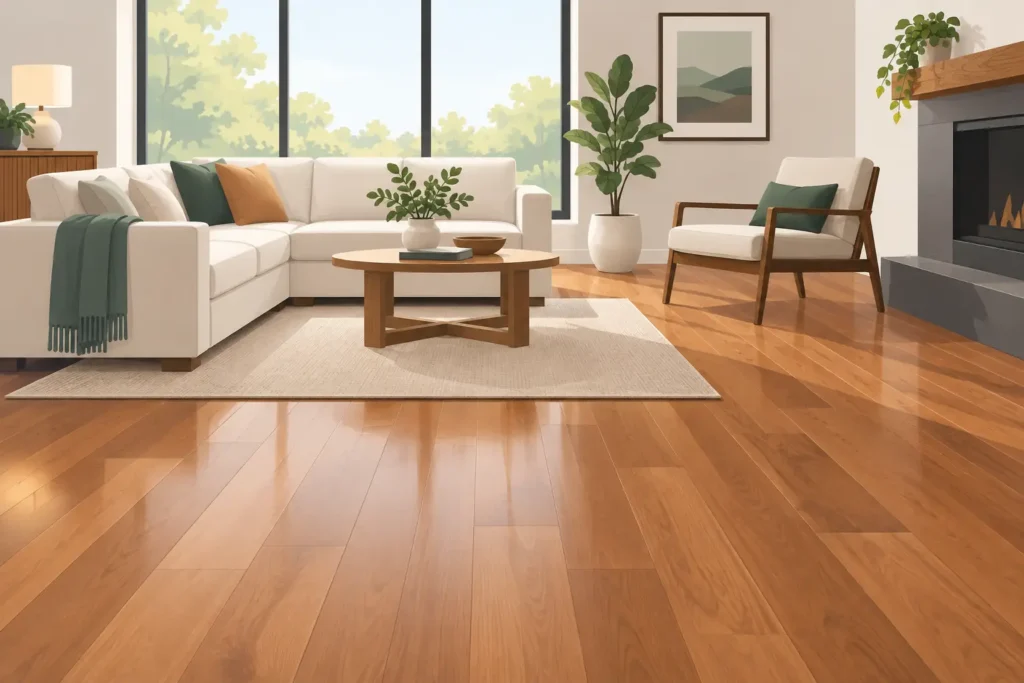
A living room floor takes more abuse than most homeowners expect. It handles daily foot traffic, furniture movement, pets, sunlight, and the occasional spill, while remaining one of the first design elements guests notice. That is why hardwood flooring for living rooms needs to do more than look beautiful on installation day. It should suit the way your household actually lives.
Hardwood brings warmth, character, and long-term value to a living space. The right material and installation can make a compact room feel more open, give a contemporary home more texture, or provide a timeless foundation for changing furniture and decor. The key is choosing the wood, finish, plank format, and installation approach with performance in mind.
Choosing Hardwood Flooring for Living Rooms
Solid and engineered hardwood can both work exceptionally well in a living room, but they are built for different conditions. Solid hardwood is milled from one piece of wood and can usually be sanded and refinished several times over its life. It is an excellent choice for above-grade living rooms where humidity is relatively stable and homeowners want a traditional, long-lasting floor.
Engineered hardwood has a real hardwood surface over layered construction. Those layers improve dimensional stability, which is useful in Los Angeles homes where indoor temperatures, sunlight exposure, and moisture conditions can vary from room to room. It is also often the better option for concrete subfloors, condos, and living rooms at or below grade.
Neither option is automatically better. A well-installed engineered floor with a quality wear layer can provide years of dependable performance. Solid hardwood may be the right investment for a homeowner who plans to refinish the floor decades from now. A professional flooring consultation helps determine which construction fits the subfloor, budget, and future plans for the property.
Match the Species to Your Household
Wood species affect color, grain pattern, and durability. Oak remains a popular living room choice because it has a classic appearance, takes stain well, and holds up to everyday use. White oak offers a cleaner grain and works especially well with modern, natural, and coastal-inspired interiors. Red oak has warmer undertones and a more pronounced grain.
For active households, harder species deserve a close look. Hickory has bold variation and strong resistance to dents, making it a practical option for homes with large dogs, children, or frequent entertaining. Maple offers a smoother, more subtle grain, while walnut delivers rich color and a more refined look but is softer than oak or hickory.
Hardness matters, but it is not the only factor. A light-textured oak can hide minor scratches better than a dark, smooth floor, even if the darker wood is technically harder. The finish, color, and amount of natural grain often have as much impact on day-to-day appearance as the species itself.
Choose a Finish That Works With Real Life
The finish determines much of the floor’s maintenance needs and visual character. Matte and low-sheen finishes are popular because they reduce glare and help conceal dust, light scratches, and footprints. They are a smart fit for bright living rooms with large windows or strong Southern California sun exposure.
Satin finishes offer a soft sheen without the reflective look of high-gloss flooring. High-gloss hardwood can look striking in a formal space, but it generally shows small scratches, pet hair, and cleaning marks more easily. For most busy living rooms, a matte or satin finish provides the better balance of style and practicality.
Color should also be selected carefully. Very dark hardwood creates dramatic contrast, but it can show dust and scratches quickly. Pale natural tones can make a room feel larger and brighter, while medium brown floors offer classic warmth and tend to be forgiving between cleanings. Gray-toned floors remain an option in certain interiors, although warmer wood tones often provide more flexibility as design trends change.
A quality finish protects the wood, but it does not make hardwood waterproof. Wipe spills promptly, use mats near exterior doors, and avoid wet mopping. If a living room opens directly to a pool area, patio, or heavily used entry, it may be worth discussing how to protect the transition zones or whether another material is better suited to those areas.
Plank Width Changes the Room
Plank width has a major effect on the finished look. Narrow planks create a more traditional appearance and can add visual detail in smaller rooms. Wider planks show off the natural character of the wood and create a cleaner, more contemporary feel. They are especially effective in open-concept homes where the living room flows into a dining area or kitchen.
Longer boards and wider planks can make a space feel less busy, but they require careful planning. More variation in subfloor conditions can be visible across wide boards, and material costs may be higher depending on the product. The installer should inspect the subfloor and account for expansion space, moisture conditions, and the direction of the boards before work begins.
In many living rooms, running planks parallel to the longest wall creates a natural visual flow. However, the final direction may also depend on joist orientation, adjoining flooring, and room layout. A professional recommendation can prevent an attractive design idea from becoming an avoidable installation problem.
Installation Quality Protects Your Investment
Hardwood flooring is only as reliable as the preparation beneath it. Before installation, the subfloor must be clean, level, dry, and structurally sound. Skipping this work can lead to squeaks, gaps, uneven boards, cupping, or premature wear.
Proper acclimation is equally important. Wood products need time to adjust to the home’s indoor environment before installation. This step helps reduce movement after the floor is installed. The exact acclimation process depends on the product, manufacturer requirements, and site conditions, so it should never be treated as a one-size-fits-all rule.
Experienced installers also plan for transitions, baseboards, door clearances, vents, fireplaces, and furniture placement. These details affect both appearance and performance. A clean installation gives the living room a finished look, while poor cuts or rushed transitions can draw attention away from even the most beautiful hardwood.
For homeowners in Burbank, Glendale, Beverly Hills, Santa Monica, and surrounding Los Angeles communities, professional installation is particularly valuable in older homes where subfloors may need repair or leveling before new flooring can be installed. Addressing those issues early helps protect the flooring budget and prevents surprises once work is underway.
Budget for More Than the Material
When comparing hardwood options, the material price is only part of the project cost. Installation, subfloor preparation, old-floor removal, trim work, moisture protection, furniture moving, and finishing details can all affect the estimate. Lower-priced boards are not always the better value if they require more repairs later or do not fit the conditions of the home.
Engineered hardwood may provide a more budget-conscious path to a real wood look, particularly in spaces over concrete. Solid hardwood can cost more upfront but offers refinishing potential that may appeal to long-term owners. The best choice is the one that delivers the appearance and durability you want without stretching the budget past what the room requires.
Ask for a clear estimate that separates material, labor, preparation, and optional upgrades. That gives you a realistic view of the project and makes it easier to compare products fairly.
Keep Your Living Room Hardwood Looking Its Best
Routine care is simple when it is consistent. Sweep or vacuum with a hardwood-safe attachment to remove grit that can dull the finish. Use felt pads under furniture legs, place protective rugs in high-traffic areas, and lift furniture instead of dragging it. Curtains, shades, or UV-filtering window treatments can help manage fading in rooms with intense sunlight.
If scratches, worn finish areas, or water damage appear, address them early. Small repairs are often more affordable than waiting until boards need replacement or the entire floor requires refinishing. Magnet Flooring can help homeowners assess whether a repair, screen and recoat, or more extensive restoration makes the most sense.
The right hardwood floor should feel like part of the home, not a surface you are constantly worried about protecting. Choose materials that fit your household, invest in proper preparation and installation, and you will have a living room floor that adds comfort and value for years to come.