
Hardwood Damage: What to Fix and What to Replace

Hardwood Damage: What to Fix and What to Replace

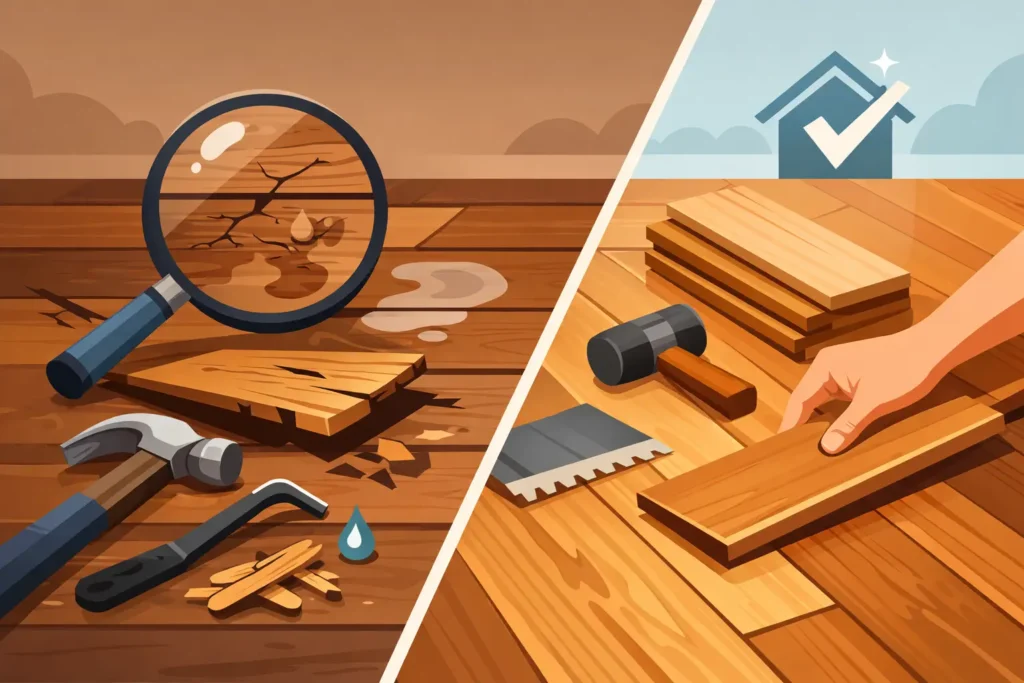
A dark water mark under a pet bowl, a widening gap between boards, or a deep scrape across a living room floor can make a beautiful hardwood floor look beyond saving. But hardwood damage does not automatically mean a full replacement. The right solution depends on what caused the problem, how deeply the wood is affected, and whether moisture has compromised the floor below the surface.

For homeowners, property managers, and business owners, acting early usually protects both the floor and the budget. Cosmetic wear may respond well to refinishing or board repair. Moisture damage, structural movement, and severe warping need a closer professional assessment before anyone starts sanding or replacing material.

What Causes Hardwood Damage?

Hardwood is durable, but it is still a natural material that reacts to water, impact, heat, sunlight, and changes in indoor humidity. In Los Angeles properties, strong sun exposure, dry indoor air, and the occasional plumbing leak can each create a different kind of flooring problem.

Surface scratches are among the most common issues. Furniture legs, pet nails, grit tracked in from outside, and moving appliances can wear through the protective finish. Light scratches may only affect the coating, while deeper gouges can expose bare wood and leave it more vulnerable to staining and moisture.

Water is more serious because it can move beneath the boards. A dishwasher leak, overflowing sink, window leak, slab moisture, or wet mopping can cause boards to cup, crown, separate, or turn dark. Water damage is rarely just an appearance problem. If moisture remains trapped, it can weaken the subfloor and create conditions for mold growth.

Sunlight creates a slower form of damage. Rugs, furniture, and window coverings can leave uneven color patterns as exposed boards fade or darken over time. This may be correctable through refinishing, though the final result depends on the species, stain color, and age of the floor.

Signs Your Hardwood Floor Needs Attention

A few visible marks do not always require urgent work. Still, certain warning signs should not be ignored. Boards that are lifting, buckling, cupping at the edges, or separating widely from one another often point to a moisture or humidity issue. Addressing only the visible boards without correcting the cause can lead to repeated repairs.

Dark or black staining is another reason to call a flooring professional. A small surface stain may sand out, but a deep water stain can penetrate well below the finish. The longer the wood stays wet, the less likely a simple refinishing process will solve it.

Soft spots, squeaks that suddenly worsen, and movement underfoot can indicate trouble with the subfloor, loose fasteners, or damaged material below the hardwood. In a commercial space, these issues can also become a safety concern. A qualified inspection helps determine whether the repair should focus on the finish, individual boards, the subfloor, or the entire affected area.

Hardwood Damage That Can Usually Be Repaired

Many floors have years of service left even when they look worn. The key is matching the repair method to the condition of the wood.

Light scratches, dull finish, minor scuffs, and shallow stains often respond to screening and recoating. This process refreshes the protective top layer without removing a significant amount of wood. It is generally less disruptive and more affordable than a full sand and refinish, but it will not remove deep gouges, uneven boards, or heavy discoloration.

Deeper scratches, widespread wear, and moderate sun fading may require sanding and refinishing. A professional removes the damaged finish, smooths the surface, then applies a new stain and protective coating. Solid hardwood can often be refinished multiple times, depending on its thickness and prior work. Engineered hardwood can sometimes be refinished too, but only if its top wood layer is thick enough. This is one area where assumptions can become expensive.

Localized damage can often be handled by replacing individual boards. This is a practical option for a limited number of stained, cracked, burned, or deeply gouged planks. The trade-off is color matching. New boards may not match an older floor immediately, especially where sunlight has changed the existing wood tone. Skilled repair work can minimize the contrast, and refinishing the surrounding area may improve the final appearance.

When Hardwood Replacement Is the Better Investment

Replacement becomes the smarter choice when damage extends beyond the surface or affects a large percentage of the floor. Boards that have severely buckled after a major leak may not return to their original shape, even after drying. If the subfloor has swelled, deteriorated, or developed mold, repairing the visible hardwood alone is not enough.

Extensive insect damage, widespread rot, repeated moisture problems, and very thin flooring with no remaining refinishing life can also justify replacement. In these cases, installing new flooring gives the contractor an opportunity to correct moisture protection, subfloor preparation, and transition details that may have contributed to the original failure.

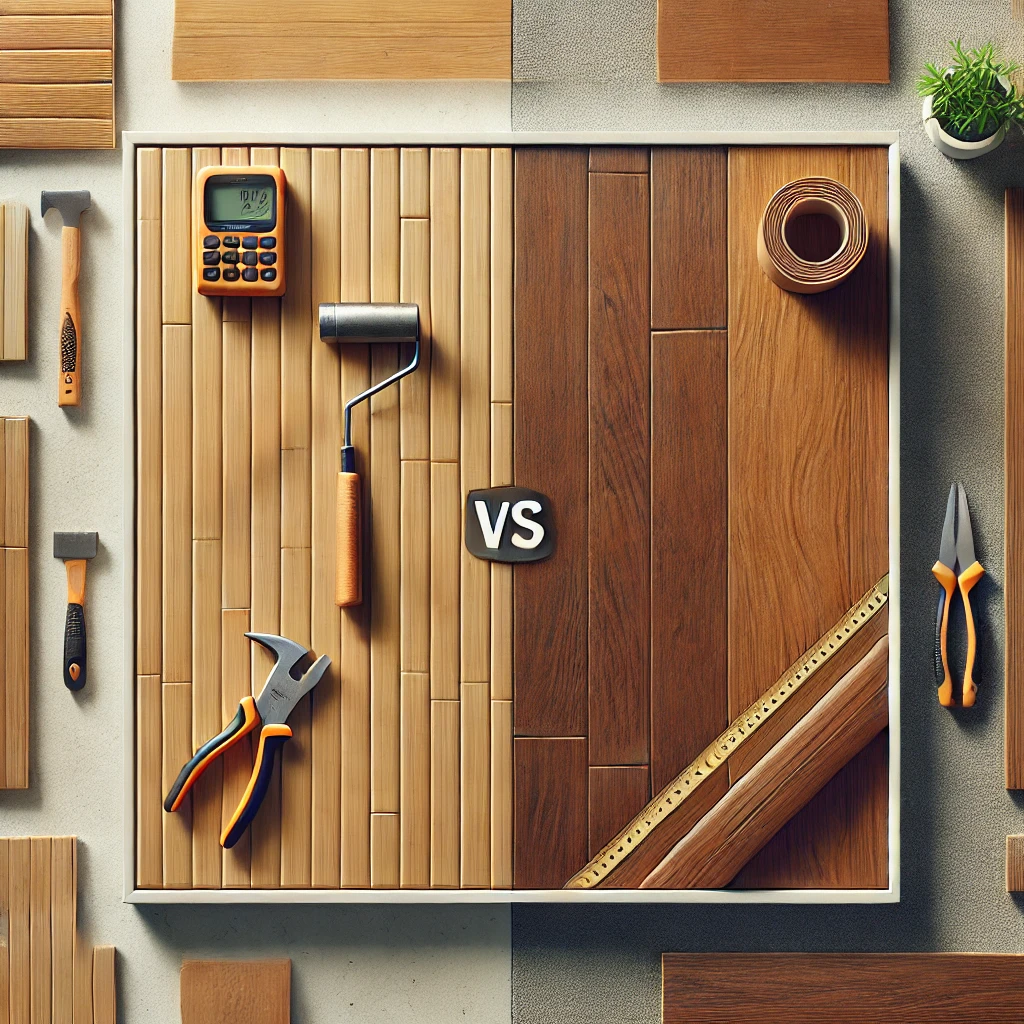
Replacement does not always mean installing the same material again. Solid hardwood offers long-term refinishing potential and classic appeal, but it needs stable indoor conditions. Engineered hardwood provides real-wood appearance with better dimensional stability in many settings. Waterproof vinyl plank may be a better fit for rental properties, busy offices, kitchens, or areas with a higher risk of spills. Bamboo is another durable, eco-conscious option for clients looking for a distinctive look and practical value.

Why Moisture Testing Comes Before Repair

Moisture is the detail that determines whether a repair lasts. A floor can look dry on top while the wood, adhesive, or subfloor still holds excess moisture underneath. Sanding or installing replacement boards too soon can lock in a problem that resurfaces later as gaps, cupping, or adhesive failure.

A professional flooring assessment should identify the moisture source first. That may involve checking plumbing, appliances, exterior drainage, window leaks, HVAC conditions, or concrete slab moisture. Once the source is corrected, the affected area needs adequate drying time before repair decisions are finalized.

This process can feel slower than immediately replacing damaged planks, but it saves money compared with doing the same job twice. For property managers, it also helps document the cause and scope of damage before repairs move forward.

How to Limit Further Damage Before Help Arrives

If you discover a leak or wet hardwood, remove standing water promptly and stop the source if it is safe to do so. Move rugs, furniture, and other items that can trap moisture against the floor. Use fans and ventilation to support drying, but avoid aggressive heat, which can dry the surface too quickly and worsen cracking or warping.

Do not use excessive water or steam to clean a damaged wood floor. Avoid sanding a stained or warped area before the moisture condition is understood. Sanding can hide evidence of the problem temporarily while leaving the underlying issue untouched.

For scratches, protect the area from further traffic until it can be evaluated. Place felt pads under furniture, use entry mats to reduce grit, and ask occupants to avoid dragging heavy items across the floor. These simple habits reduce new surface wear while you decide whether a touch-up, refinish, or board replacement is needed.

Choosing a Repair Plan That Fits Your Property

The best repair plan balances appearance, durability, downtime, and cost. A homeowner may prioritize a close color match in a visible living room. A business owner may need a durable solution completed around operating hours. A rental property may benefit from a material that handles frequent turnover and easier maintenance.

An experienced flooring contractor can evaluate the wood type, finish condition, affected square footage, subfloor condition, and moisture risk before recommending work. Magnet Flooring helps Los Angeles-area property owners make that decision with practical options rather than pushing a replacement when a repair will deliver dependable results.

A hardwood floor is worth protecting, but not every mark deserves the same response. Have the cause identified early, choose a repair that addresses more than the visible symptom, and invest where it will extend the life of your space.
Leave a Comment

Your email address will not be published. Required fields are marked *

Hardwood Damage: What to Fix and What to Replace

Hardwood Damage: What to Fix and What to Replace

A dark water mark under a pet bowl, a widening gap between boards, or a deep scrape across a living room floor can make a beautiful hardwood floor look beyond saving. But hardwood damage does not automatically mean a full replacement. The right solution depends on what caused the problem, how deeply the wood is affected, and whether moisture has compromised the floor below the surface.

For homeowners, property managers, and business owners, acting early usually protects both the floor and the budget. Cosmetic wear may respond well to refinishing or board repair. Moisture damage, structural movement, and severe warping need a closer professional assessment before anyone starts sanding or replacing material.

What Causes Hardwood Damage?

Hardwood is durable, but it is still a natural material that reacts to water, impact, heat, sunlight, and changes in indoor humidity. In Los Angeles properties, strong sun exposure, dry indoor air, and the occasional plumbing leak can each create a different kind of flooring problem.

Surface scratches are among the most common issues. Furniture legs, pet nails, grit tracked in from outside, and moving appliances can wear through the protective finish. Light scratches may only affect the coating, while deeper gouges can expose bare wood and leave it more vulnerable to staining and moisture.

Water is more serious because it can move beneath the boards. A dishwasher leak, overflowing sink, window leak, slab moisture, or wet mopping can cause boards to cup, crown, separate, or turn dark. Water damage is rarely just an appearance problem. If moisture remains trapped, it can weaken the subfloor and create conditions for mold growth.

Sunlight creates a slower form of damage. Rugs, furniture, and window coverings can leave uneven color patterns as exposed boards fade or darken over time. This may be correctable through refinishing, though the final result depends on the species, stain color, and age of the floor.

Signs Your Hardwood Floor Needs Attention

A few visible marks do not always require urgent work. Still, certain warning signs should not be ignored. Boards that are lifting, buckling, cupping at the edges, or separating widely from one another often point to a moisture or humidity issue. Addressing only the visible boards without correcting the cause can lead to repeated repairs.

Dark or black staining is another reason to call a flooring professional. A small surface stain may sand out, but a deep water stain can penetrate well below the finish. The longer the wood stays wet, the less likely a simple refinishing process will solve it.

Soft spots, squeaks that suddenly worsen, and movement underfoot can indicate trouble with the subfloor, loose fasteners, or damaged material below the hardwood. In a commercial space, these issues can also become a safety concern. A qualified inspection helps determine whether the repair should focus on the finish, individual boards, the subfloor, or the entire affected area.

Hardwood Damage That Can Usually Be Repaired

Many floors have years of service left even when they look worn. The key is matching the repair method to the condition of the wood.

Light scratches, dull finish, minor scuffs, and shallow stains often respond to screening and recoating. This process refreshes the protective top layer without removing a significant amount of wood. It is generally less disruptive and more affordable than a full sand and refinish, but it will not remove deep gouges, uneven boards, or heavy discoloration.

Deeper scratches, widespread wear, and moderate sun fading may require sanding and refinishing. A professional removes the damaged finish, smooths the surface, then applies a new stain and protective coating. Solid hardwood can often be refinished multiple times, depending on its thickness and prior work. Engineered hardwood can sometimes be refinished too, but only if its top wood layer is thick enough. This is one area where assumptions can become expensive.

Localized damage can often be handled by replacing individual boards. This is a practical option for a limited number of stained, cracked, burned, or deeply gouged planks. The trade-off is color matching. New boards may not match an older floor immediately, especially where sunlight has changed the existing wood tone. Skilled repair work can minimize the contrast, and refinishing the surrounding area may improve the final appearance.

When Hardwood Replacement Is the Better Investment

Replacement becomes the smarter choice when damage extends beyond the surface or affects a large percentage of the floor. Boards that have severely buckled after a major leak may not return to their original shape, even after drying. If the subfloor has swelled, deteriorated, or developed mold, repairing the visible hardwood alone is not enough.

Extensive insect damage, widespread rot, repeated moisture problems, and very thin flooring with no remaining refinishing life can also justify replacement. In these cases, installing new flooring gives the contractor an opportunity to correct moisture protection, subfloor preparation, and transition details that may have contributed to the original failure.

Replacement does not always mean installing the same material again. Solid hardwood offers long-term refinishing potential and classic appeal, but it needs stable indoor conditions. Engineered hardwood provides real-wood appearance with better dimensional stability in many settings. Waterproof vinyl plank may be a better fit for rental properties, busy offices, kitchens, or areas with a higher risk of spills. Bamboo is another durable, eco-conscious option for clients looking for a distinctive look and practical value.

Why Moisture Testing Comes Before Repair

Moisture is the detail that determines whether a repair lasts. A floor can look dry on top while the wood, adhesive, or subfloor still holds excess moisture underneath. Sanding or installing replacement boards too soon can lock in a problem that resurfaces later as gaps, cupping, or adhesive failure.

A professional flooring assessment should identify the moisture source first. That may involve checking plumbing, appliances, exterior drainage, window leaks, HVAC conditions, or concrete slab moisture. Once the source is corrected, the affected area needs adequate drying time before repair decisions are finalized.

This process can feel slower than immediately replacing damaged planks, but it saves money compared with doing the same job twice. For property managers, it also helps document the cause and scope of damage before repairs move forward.

How to Limit Further Damage Before Help Arrives

If you discover a leak or wet hardwood, remove standing water promptly and stop the source if it is safe to do so. Move rugs, furniture, and other items that can trap moisture against the floor. Use fans and ventilation to support drying, but avoid aggressive heat, which can dry the surface too quickly and worsen cracking or warping.

Do not use excessive water or steam to clean a damaged wood floor. Avoid sanding a stained or warped area before the moisture condition is understood. Sanding can hide evidence of the problem temporarily while leaving the underlying issue untouched.

For scratches, protect the area from further traffic until it can be evaluated. Place felt pads under furniture, use entry mats to reduce grit, and ask occupants to avoid dragging heavy items across the floor. These simple habits reduce new surface wear while you decide whether a touch-up, refinish, or board replacement is needed.

Choosing a Repair Plan That Fits Your Property

The best repair plan balances appearance, durability, downtime, and cost. A homeowner may prioritize a close color match in a visible living room. A business owner may need a durable solution completed around operating hours. A rental property may benefit from a material that handles frequent turnover and easier maintenance.

An experienced flooring contractor can evaluate the wood type, finish condition, affected square footage, subfloor condition, and moisture risk before recommending work. Magnet Flooring helps Los Angeles-area property owners make that decision with practical options rather than pushing a replacement when a repair will deliver dependable results.

A hardwood floor is worth protecting, but not every mark deserves the same response. Have the cause identified early, choose a repair that addresses more than the visible symptom, and invest where it will extend the life of your space.

Leave a Comment

Your email address will not be published. Required fields are marked *