A worn office floor sends the wrong message before a client reaches the reception desk. It also creates a daily maintenance problem for staff and property managers. The best affordable flooring options for offices balance upfront cost with durability, cleaning demands, installation downtime, and the look your business needs to project.
A low price per square foot can be attractive, but it is not the full cost of a flooring decision. A material that scratches easily, stains under coffee spills, or requires early replacement can cost more than a better-performing option installed correctly from the start. For many Los Angeles offices, vinyl plank, laminate, and bamboo offer practical value without sacrificing a professional finish.
Start With How Your Office Actually Works
Before comparing samples, look at traffic patterns. A quiet executive suite, a busy medical office, a shared workspace, and a retail-adjacent office all put different demands on the floor. Entrances, hallways, break rooms, copy areas, and conference rooms usually receive more wear than private offices.
Moisture matters, too. Rain tracked in during the winter, spills near water coolers, and frequent mopping can limit which materials make sense. If the office has rolling chairs, consider chair mats or flooring rated to handle repeated caster movement. A beautiful floor is only a value if it performs in the space where it is installed.
Installation conditions affect the budget as well. Existing flooring removal, uneven concrete, moisture issues in a slab, furniture moving, and after-hours scheduling can all change the final price. A professional site assessment identifies these issues before they become costly change orders.
Affordable Flooring Options for Offices Compared
Luxury Vinyl Plank: Strong Value for Active Workplaces
Luxury vinyl plank, often called LVP, is one of the most practical office flooring choices for businesses that need durability at a controlled price. It can create the appearance of hardwood while offering better resistance to water, everyday scuffs, and routine spills. That combination makes it especially useful for reception areas, hallways, break rooms, and offices that see frequent visitor traffic.
Vinyl plank is generally easy to clean with regular sweeping and manufacturer-approved cleaning products. It is also more forgiving underfoot than many hard surfaces, which can make a difference for employees who stand at reception desks or workstations throughout the day.
Not all vinyl flooring performs the same. Thinner products and low wear layers may save money initially but can show damage sooner in a commercial setting. For an office, focus on a quality wear layer, reliable locking system or adhesive method, and a product suited to the expected traffic level. Waterproof performance is a major advantage, but it does not eliminate the need to address subfloor moisture before installation.
Laminate: A Budget-Friendly Wood Look
Laminate flooring remains a cost-effective option for private offices, conference rooms, and other dry areas where a clean wood appearance is the priority. Modern laminate comes in convincing wood visuals and can deliver a polished finish for less than traditional hardwood.
Its main advantage is value. A well-selected laminate floor can refresh an outdated office quickly while keeping material costs manageable. It is also resistant to many everyday scratches, which helps in workspaces with standard foot traffic.
The trade-off is moisture. Laminate is not the first choice for break rooms, restrooms, or entrances where water is routinely tracked in. Liquid that reaches the seams or core can cause swelling and edge damage. If the office needs a single surface that can handle spills and frequent wet cleaning, vinyl plank is often the safer choice.
Bamboo: A Distinctive Sustainable Choice
Bamboo gives offices a warmer, more design-forward look while offering an eco-conscious material choice. Because bamboo grows quickly, it can appeal to companies that want their interior improvements to reflect sustainability goals. It works particularly well in professional offices, creative studios, boutique workplaces, and client-facing spaces where visual character matters.
Quality and construction are critical with bamboo. Strand-woven bamboo is typically denser and more resistant to wear than softer bamboo products, but it still needs proper care. It is not ideal for areas with regular standing water or uncontrolled humidity. In the right office environment, however, bamboo can provide long-term appeal that feels more elevated than a basic budget floor.
Bamboo also requires attention to the subfloor and acclimation process. Skipping those steps can lead to movement or gaps after installation. This is one area where professional planning protects both the appearance of the floor and the investment behind it.
Commercial Carpet Tile: Useful Where Noise Is the Problem
Although hard-surface flooring is a popular choice for many offices, carpet tile deserves consideration in conference rooms, open work areas, and spaces where acoustics are a concern. It softens footfall, reduces echo, and can make a large office feel quieter and more comfortable.
Its strongest budget advantage is repairability. When one section becomes stained or damaged, a single tile can often be replaced instead of re-flooring the room. The downside is that carpet requires regular vacuuming and periodic deep cleaning, particularly in high-traffic areas. It may not be the best fit for a lobby or break room, but it can be a smart targeted solution.
Spend Where Performance Matters Most
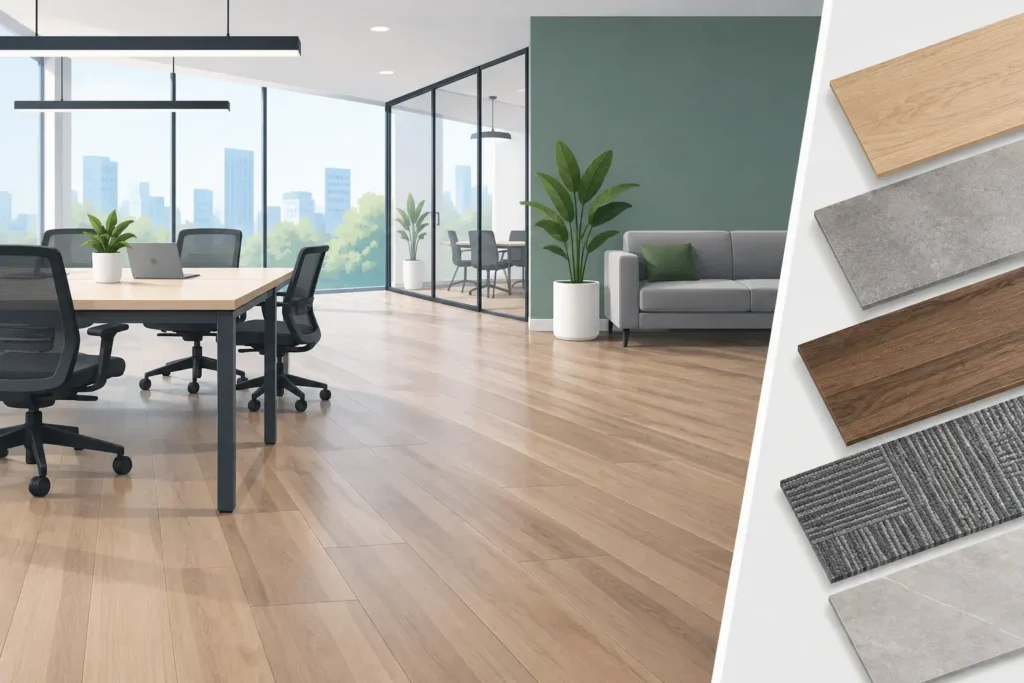
There is no rule that says every room needs the same flooring. Using one material throughout can simplify the design, but a mixed approach can reduce costs and improve performance. Vinyl plank may make sense in the entry, corridors, and break room, while laminate or bamboo may suit private offices and conference areas. Carpet tile can handle acoustic needs in a large collaborative space.
The areas that deserve the strongest flooring are usually entrances, main walkways, reception zones, and rooms with food or beverages. Saving money in low-traffic offices is often reasonable. Cutting corners at the front door is usually not.
Also consider transitions between materials. Poorly planned changes in floor height can create trip hazards and make an office look unfinished. Proper transitions, trim, and edge protection are small details that have a major impact on durability and appearance.
Installation Is Part of the Real Cost
A flooring product can only perform as well as the surface beneath it. Uneven subfloors may cause planks to shift, seams to separate, or floors to feel unstable underfoot. Moisture testing is equally important on concrete slabs, especially in commercial buildings where hidden moisture can damage certain materials over time.
Professional installation also reduces business disruption. A contractor can coordinate removal, preparation, installation, and cleanup around office hours when possible. For property managers and business owners, fewer days of downtime can be worth far more than a small difference in material price.
Ask for an estimate that clearly separates material, preparation, removal, installation, and finishing work. This makes it easier to compare proposals fairly and prevents a low initial number from becoming a surprise total later.
Choose for Maintenance, Not Just the Showroom Sample
Office floors need to look good on ordinary workdays, not only on installation day. Before choosing a product, ask how it handles chairs, cleaning chemicals, sunlight, scuffs, and common spills. A floor that needs specialty maintenance or frequent refinishing may not be affordable for a busy office over the long term.
Entry mats, felt pads under furniture, chair mats, and regular cleaning routines help any flooring last longer. These simple protections are especially valuable in reception areas and around workstations, where grit and rolling chairs cause the most surface wear.
For offices in Burbank, Glendale, North Hollywood, and nearby Los Angeles communities, Magnet Flooring can help evaluate traffic, subfloor conditions, design goals, and budget before installation begins. The right recommendation is not always the least expensive material. It is the floor that stays dependable, presentable, and easy to maintain after the first year of use.
A productive office should not have to choose between a professional appearance and a controlled budget. Start with the rooms that work hardest, select materials that match their demands, and invest in installation that gives the floor a fair chance to last.