Los Angeles floors take more abuse than people expect. Dry air, shifting temperatures, heavy foot traffic, pets, rolling office chairs, and constant sun exposure can all show up on the surface over time. That is exactly why bamboo flooring installation Los Angeles property owners choose should be based on more than looks. The right product and the right installer matter just as much as the color or plank width.
Bamboo is a smart option for homeowners, landlords, and business owners who want a clean modern finish without stepping into the highest hardwood price range. It has strong visual appeal, it works well in many interior styles, and it gives you an eco-conscious flooring choice that still feels practical. But bamboo is not a one-size-fits-all material. Some products perform very well. Others are less forgiving if the subfloor is uneven, the installation is rushed, or the room conditions are not considered early.
Why bamboo works well in Los Angeles
Bamboo flooring has earned attention for good reason. It delivers a hardwood-like look with a slightly different grain pattern, and many clients like the balance between style, value, and sustainability. In a city where design matters and budgets still need to make sense, that combination has real appeal.
Los Angeles homes and commercial spaces also benefit from bamboo because it can fit a wide range of interiors. In a contemporary condo, it keeps the space light and clean. In a rental property, it offers a more upgraded look than many lower-cost flooring materials. In offices, it gives a professional finish that feels warmer than tile and more polished than basic laminate.
That said, not every bamboo floor is built the same. Strand-woven bamboo is typically harder and more durable than traditional horizontal or vertical bamboo. If you have kids, pets, or high traffic, product selection becomes a performance decision, not just a design decision.
What to know before bamboo flooring installation in Los Angeles
A successful bamboo floor starts before the first plank goes down. The biggest problems usually come from poor prep, not the material itself. If the subfloor has moisture issues, low spots, old adhesive problems, or structural movement, those conditions can affect how the bamboo performs later.
In Los Angeles, subfloor conditions vary widely. One property may have a concrete slab, while another has an older plywood subfloor with years of movement and patching underneath. That changes the installation approach. A floating floor may be a good fit in one room, while a glue-down method makes more sense in another. There is no universal answer because the room use, subfloor type, and product construction all matter.
Acclimation is another point people often overlook. Even in Southern California, flooring materials need time to adjust to indoor conditions before installation. Skipping that step can lead to gaps, movement, or stress on the locking system. A professional installer plans around moisture levels, room temperature, and material condition instead of assuming all dry weather is the same.
Choosing the right type of bamboo flooring
If you are shopping for bamboo, the first question should not be color. It should be how the floor will be used.
Solid bamboo can be a good choice in some settings, but engineered bamboo often gives more flexibility, especially over concrete subfloors that are common in Los Angeles. Engineered products can offer better dimensional stability, which helps in spaces where minor environmental shifts happen throughout the year.
Strand-woven bamboo is often the strongest option for active households and busy commercial settings. It resists wear better than softer bamboo constructions and tends to hold up better under regular traffic. If appearance is the priority in a lower-traffic room, other styles may still work well, but durability should stay part of the conversation.
Finish also matters. Matte and low-gloss finishes tend to hide dust and small scratches better than high-gloss surfaces. In sunny rooms, that can make daily maintenance easier. For families, landlords, and business owners, that practical detail often matters more than a showroom shine.
The installation process and what affects the timeline
Most clients want to know how long the job will take, and the honest answer is that it depends on the condition of the space. The actual plank installation may move quickly, but prep work often decides the schedule.
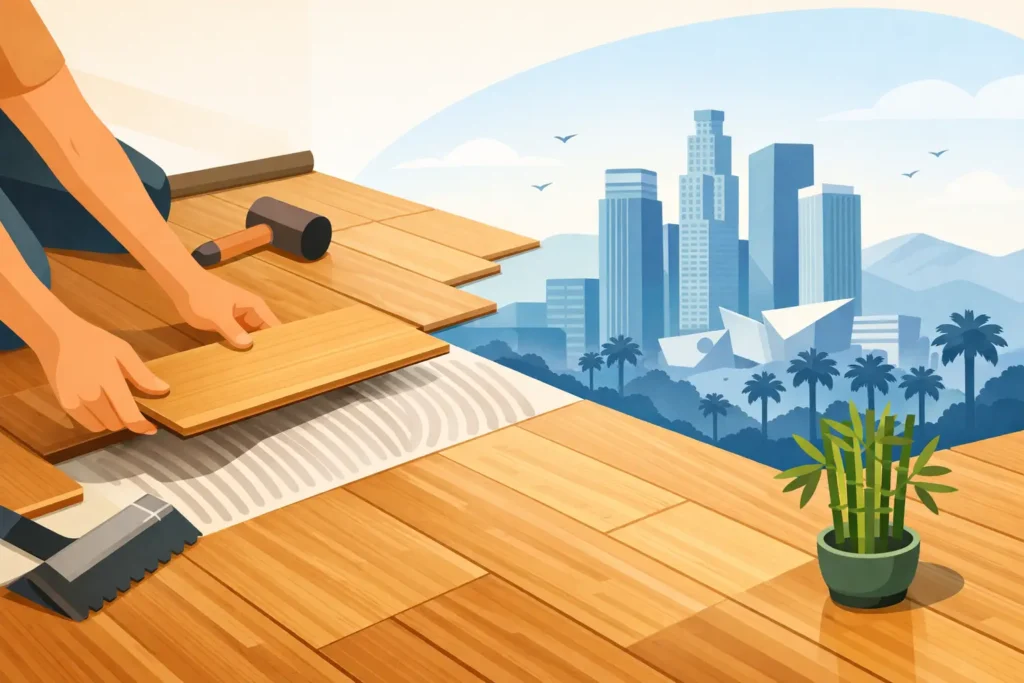
The process usually begins with measuring, inspecting the subfloor, and identifying any repairs needed before installation. Existing flooring may need to be removed. Baseboards may need to come off and be reinstalled or replaced. If the subfloor is uneven, leveling work may be required before any bamboo can be installed correctly.
Once the surface is ready, the flooring is laid out with attention to transitions, expansion space, and board pattern. This is where experienced craftsmanship shows. A floor can be technically installed and still look rushed if the layout is poor, the cuts are inconsistent, or the transitions are awkward. Clean lines at doorways, walls, and room edges make a major difference in the final result.
For many residential projects, installation can be completed within a few days. Larger homes, occupied properties, and commercial jobs may take longer, especially if the work needs to be phased to reduce disruption. If furniture moving, floor prep, or custom trim work is part of the job, that adds time but usually improves the final outcome.
Cost factors for bamboo flooring installation Los Angeles clients should expect
Price is one of the first questions people ask, and it should be. A flooring project needs to make sense on paper as well as in the room.
The total cost depends on the bamboo product itself, the square footage, the installation method, and the condition of the subfloor. Lower-cost material may look attractive upfront, but if it lacks stability or wears down quickly, it can cost more in the long run. On the other hand, the most expensive bamboo option is not automatically the best fit for every property.
Labor pricing also changes based on layout complexity. Straightforward rooms are faster to install than spaces with multiple angles, built-ins, stairs, or tight transitions. Floor removal, leveling, moisture barriers, and trim work all affect the final estimate.
For property managers and business owners, downtime is another cost factor. A faster, professionally managed project can reduce disruption and help get units or workspaces back in service sooner. That efficiency has real value, especially when delays affect tenants, staff, or operations.
Common mistakes to avoid
The biggest mistake is treating bamboo like a simple DIY weekend project. Even quality material can fail if the floor underneath is not properly prepared or if the installation method is wrong for the product and subfloor.
Another common issue is buying based only on appearance. A beautiful plank in the showroom may not be the best match for a pet-friendly home, an active office, or a rental property that needs durable long-term performance. Product selection should match real use, not just first impressions.
Moisture testing, acclimation, and expansion spacing also get skipped too often. These are not minor technical details. They are part of what keeps the floor stable after installation. When they are ignored, the problems usually show up later, after the job is finished.
Residential and commercial bamboo flooring benefits
For homeowners, bamboo offers a strong mix of style, comfort, and value. It can modernize a living room, bedroom, hallway, or home office without making the space feel cold or overly formal. It also pairs well with many interior finishes, from minimalist designs to warmer, more traditional rooms.
For commercial spaces, bamboo can create a cleaner, more professional appearance while still supporting budget goals. Offices, retail spaces, and small business interiors often need flooring that looks polished but does not require the cost of premium hardwood. Bamboo can fill that gap when the right product is selected and installed correctly.
This is where working with an experienced local contractor helps. A team that understands both material performance and jobsite realities can guide product choice, prep needs, and installation strategy in a way that saves time and prevents expensive corrections later. That is part of the value Magnet Flooring brings to bamboo projects across Los Angeles-area homes and businesses.
Is bamboo the right fit for your space?
Sometimes yes, sometimes no. If you want a natural-looking floor with good durability, modern appeal, and a more eco-conscious profile, bamboo is a strong option. If the room has ongoing moisture exposure or the subfloor needs major correction, another material may be the better move. Good advice starts with the space itself, not with a sales script.
A well-installed bamboo floor should feel solid underfoot, look clean from every angle, and hold up to the way the room is actually used. If you are planning a flooring upgrade, the best next step is not guessing from samples alone. It is getting clear guidance on product quality, subfloor condition, installation method, and total project cost so the floor looks right and performs the way you need it to.