A floor can look beautiful in a showroom and still be the wrong choice for a busy kitchen, sunny office, or rental property. This bamboo flooring pros and cons review looks past the eco-friendly sales pitch and focuses on what Los Angeles homeowners, property managers, and business owners need to know before choosing bamboo.
Bamboo can deliver a clean, modern wood look at a competitive price. The right product, installed correctly, can hold up well in living rooms, bedrooms, hallways, and many commercial spaces. But bamboo is not automatically waterproof, scratch-proof, or maintenance-free. Its performance depends heavily on the product construction, finish quality, room conditions, and installation method.
Why Bamboo Flooring Gets Attention
Bamboo is a fast-growing grass rather than a traditional hardwood tree. Because it can regrow relatively quickly after harvesting, it is often considered a more renewable flooring option than many solid hardwood materials. That appeals to property owners who want a natural-looking floor without overlooking environmental considerations.
Appearance is another major reason bamboo remains popular. It is available in natural blondes, warm caramel tones, gray washes, espresso-inspired finishes, and wider contemporary planks. Some styles have a consistent, linear grain that works especially well in modern homes, offices, retail spaces, and updated rental units.
Still, “bamboo flooring” describes several different products. Quality varies dramatically. A low-cost bamboo floor with a thin finish and weak core may not perform like a premium strand-woven product designed for active households. Comparing samples, warranties, and construction details matters more than the label alone.
Bamboo Flooring Pros and Cons Review: The Advantages
Strong options are genuinely durable
High-quality strand-woven bamboo is one of the tougher bamboo options available. It is manufactured by compressing bamboo fibers under significant pressure, creating a dense material that can perform well in high-traffic areas. For households with children, dogs, or frequent guests, strand-woven bamboo may be a practical alternative to some softer hardwood species.
Durability is not just about the core material, however. The finish is equally important. A quality factory-applied finish helps resist everyday scuffs and surface wear. Furniture pads, entry mats, and regular cleaning will still be necessary, but a well-selected bamboo floor can handle normal daily use without looking worn too quickly.
It offers natural style without the cost of some hardwoods
Bamboo gives many properties the visual warmth of wood flooring while often staying below the price of premium solid hardwood. For a homeowner renovating several rooms or a property manager updating multiple units, that difference can make a project more attainable.
The installation cost depends on the flooring format, subfloor condition, demolition needs, transitions, baseboards, and layout. A square room with a sound, level subfloor is usually more straightforward than an older home with moisture concerns or uneven concrete. Getting a professional assessment before selecting material prevents surprise costs after work begins.
It can support sustainability goals
Bamboo’s fast growth cycle is a real advantage, especially for customers seeking lower-impact material choices. It can be a sensible fit for homes and businesses that want to balance design, budget, and environmental priorities.
That said, sustainability is not determined by bamboo alone. Manufacturing adhesives, transportation, finish chemistry, and product longevity all affect the larger picture. Choosing a reputable product with low-emission certifications and a long expected service life is usually a better decision than choosing the least expensive option marketed as green.
It works across many interior settings
Bamboo flooring can suit bedrooms, living areas, dining rooms, offices, hallways, and reception spaces. Its clean appearance works with minimalist interiors, mid-century homes, contemporary commercial spaces, and warmer traditional designs.
In Los Angeles, bamboo can also be a practical choice for spaces where a wood-like floor is preferred over carpet. It is easier to sweep and maintain than carpet, which can be helpful in homes with pets, allergies, or frequent foot traffic.
The Drawbacks to Consider Before Buying
Water and moisture remain real concerns
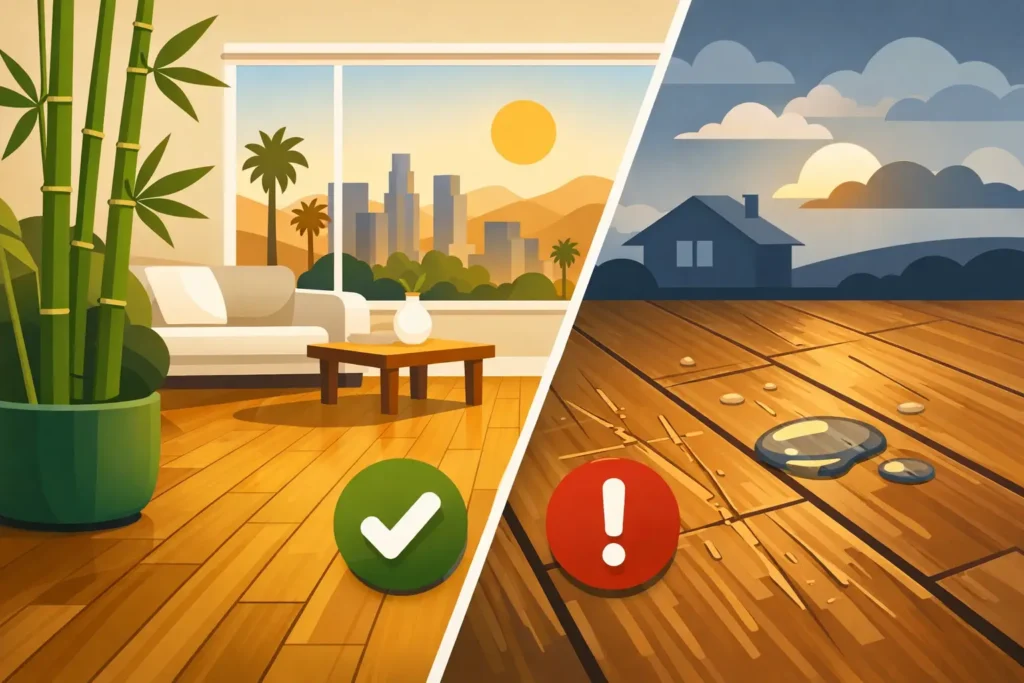
Bamboo is more moisture-sensitive than waterproof vinyl plank. Spills should be wiped up promptly, and standing water can cause staining, swelling, cupping, or separation over time. This is especially important near exterior doors, pet water bowls, kitchen sinks, and ground-level concrete slabs.
Bamboo may work in a carefully managed kitchen, but it is usually not the first choice for full bathrooms, laundry rooms prone to leaks, or areas with repeated moisture exposure. For those spaces, waterproof vinyl plank often offers more dependable protection and easier maintenance.
Moisture must also be tested before installation. Concrete subfloors can release vapor even when they look dry. Proper moisture testing, vapor control when needed, and subfloor preparation help protect the flooring investment from problems that may not appear until months after installation.
Not every bamboo product has the same quality
The market includes excellent bamboo flooring and products that are best avoided. Lower-grade materials may have inconsistent milling, weak locking systems, thin wear layers, noticeable color variation, or finishes that scratch easily. Some may also use adhesives that produce stronger odors or higher emissions.
A very low material price can become expensive if the floor needs early repair or replacement. Ask about product construction, finish protection, warranty terms, emissions certifications, and whether replacement planks will be available later. These details matter when a damaged section needs repair.
Scratches and dents can still happen
Bamboo is often described as harder than many hardwoods, but that does not mean it is immune to damage. Dragged furniture, high heels, heavy equipment, grit from outside, and energetic pets can mark nearly any hard-surface floor.
Dark bamboo finishes can make scratches more visible because lighter material may show beneath the finish. Natural or medium tones often hide everyday wear better. In commercial settings, protective mats at entrances and felt pads beneath movable furniture are simple investments that reduce avoidable damage.
Refinishing options depend on construction
Some solid bamboo floors can be refinished, while many engineered or click-lock products have limited refinishing potential. If long-term refinishing is a priority, review the wear layer and manufacturer recommendations before purchasing.
This is one area where product selection should match the property’s plan. A homeowner expecting to stay for decades may prioritize a floor that can be renewed. A landlord preparing a well-designed rental may value a durable, cost-effective engineered product that is easier to replace if damaged.
Choosing the Right Type of Bamboo Flooring
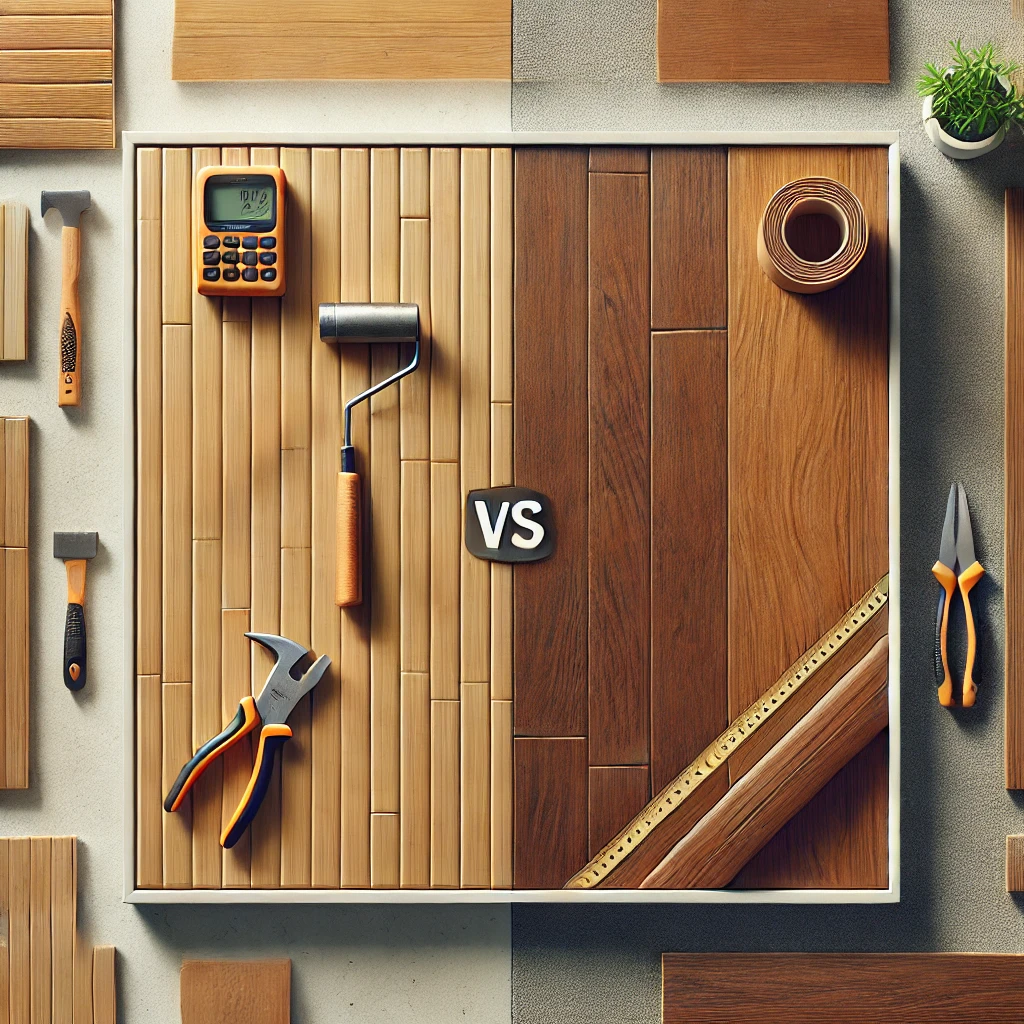
Horizontal bamboo displays wider bamboo nodes and creates a more traditional natural pattern. Vertical bamboo has a tighter, more uniform stripe. Strand-woven bamboo is denser and often selected for its durability and contemporary appearance.
Engineered bamboo combines a bamboo surface layer with a layered core for added dimensional stability. Depending on the product and installation system, it may be a better option over concrete or in spaces with moderate environmental changes. It is not a substitute for moisture preparation, but the right engineered product can provide more flexibility than a solid floor in certain conditions.
The best choice depends on where the floor will go. A sun-filled living room, a busy office corridor, and a second-floor bedroom have different demands. Samples should be viewed in the actual room, because natural and artificial light can change how bamboo color and grain appear throughout the day.
Installation Makes a Major Difference
Even premium bamboo flooring can fail when installed over an unprepared subfloor. Floors need to be clean, dry, flat, and structurally sound. Small subfloor problems can lead to movement, squeaks, gaps, cracked locking edges, and premature wear.
Bamboo also needs time to acclimate according to the manufacturer’s requirements. Indoor temperature and humidity should be stable before, during, and after installation. Skipping this step can create expansion or contraction issues later.
Professional installation helps ensure the right underlayment, expansion gaps, transitions, moisture barriers, and layout are used for the job. Magnet Flooring helps customers compare bamboo with hardwood, laminate, and vinyl plank based on room use, budget, and the condition of the existing floor – not just the appearance of a sample board.
Is Bamboo Flooring Worth It?
Bamboo flooring is worth considering when you want a natural, modern floor with renewable-material appeal and strong value potential. It performs best in dry interior areas where spills are addressed quickly and the product is matched to the amount of traffic the space receives.
It may not be the best fit if waterproof performance is your top priority, if the room has ongoing moisture exposure, or if you need a floor that can tolerate frequent flooding, leaks, or wet cleaning. In those situations, a waterproof vinyl plank may be the more practical choice.
The most reliable way to decide is to start with the room, not the material. Consider how the space is used, what is happening beneath the existing floor, how much sunlight and traffic it gets, and how long you expect the floor to serve the property. A well-chosen bamboo floor can bring lasting warmth and value, but only when its strengths match the job.