That sharp squeak under your feet usually means one thing – movement where there should not be any. If you are wondering how to repair squeaky floorboards, the good news is that many cases can be fixed without tearing out the whole floor. The key is finding out what is actually moving, because the right repair depends on whether the noise is coming from the board itself, the subfloor, or the framing underneath.
A lot of property owners put off the repair because the squeak seems minor. In practice, squeaks tend to get worse with time, foot traffic, and seasonal changes. In homes and commercial spaces, that small sound can point to a floor system that is loosening, drying out, or rubbing in places it should not.
What causes squeaky floorboards?
Most squeaks happen because two materials are rubbing against each other. That friction creates the noise. In a wood floor system, that can happen where a hardwood plank shifts against a fastener, where the subfloor lifts slightly from a joist, or where boards expand and tighten during dry or humid weather.
In Los Angeles area properties, seasonal humidity swings are usually milder than in other parts of the country, but indoor climate control still affects wood movement. Air conditioning, direct sun exposure, and older construction can all create small gaps that turn into squeaks. In upper-floor rooms, stair landings, and hallways with heavy traffic, the problem is often more noticeable because those areas take repeated pressure every day.
Floor type matters too. Solid hardwood, engineered wood, laminate, and even some floating floors can make noise, but they do not all need the same solution. A repair that works on nailed hardwood may be the wrong move for laminate or vinyl plank.
Before you repair squeaky floorboards, find the exact source
The most common mistake is fixing the wrong spot. The sound may seem like it is coming from one board when the movement is actually happening a few inches away.
Start by walking slowly across the area and shifting your weight from heel to toe. Have another person listen while you step on different sections. Mark the noisy spots with painter’s tape. Then check whether the squeak happens near the edge of a board, over a joist line, or in the center of the panel.
If you have access below the floor from a basement or crawl space, your job gets easier. You can look up at the subfloor while someone walks above. If you see movement where the subfloor lifts from a joist, that is usually the problem. If there is no access below, you will need to work from the top surface and be more careful about the finish.
Also pay attention to the flooring material. Hardwood can usually be face-fixed or repaired with specialized fasteners. Floating laminate or engineered flooring may squeak because of underlayment issues or uneven subfloor conditions, which is a different kind of repair.
How to repair squeaky floorboards from above
If you cannot access the underside, a top-down repair is usually the practical option. This approach works best when the squeak is isolated and the finished floor is wood.
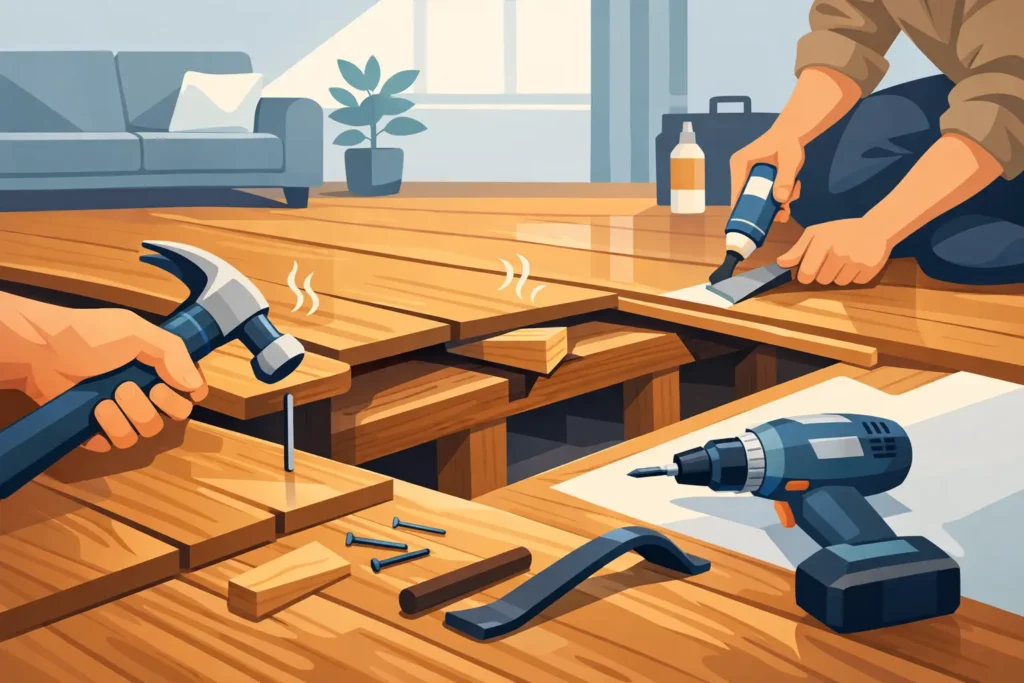
One common fix is securing the loose board or subfloor with a trim screw designed for flooring repairs. These screws are made to pull the material down tightly and often snap off below the surface so they can be concealed. The goal is to stop the vertical movement without cracking the board or leaving a visible, rough repair.
Placement matters. You want to fasten into solid framing when possible, not just into thin flooring material. If you miss the joist, the squeak may return. On hardwood floors, that means identifying the joist direction first and drilling carefully. After fastening, the tiny hole can usually be filled with color-matched wood filler.
This repair can work well, but it is not ideal for every floor. On high-end hardwood, wide-plank flooring, or older boards with brittle finishes, a poor screw placement can leave permanent cosmetic damage. That is where a professional repair often saves money in the long run.
Using powder or lubricant for minor friction
If the noise is coming from boards rubbing together rather than a loose subfloor, a dry lubricant such as powdered graphite or talc may reduce the sound. You work it into the seam between boards and remove the excess from the surface.
This is a light-duty fix, not a structural one. It may quiet minor squeaks for a while, but it will not solve movement caused by loose fasteners or subfloor separation. It is best used when the floor is otherwise stable and the squeak is mild.
How to repair squeaky floorboards from below
If you can reach the floor from underneath, you can often fix the problem with less risk to the finished surface. This is usually the preferred method for preserving hardwood appearance.
The first option is re-securing the subfloor to the joist. If there is a visible gap between them, you may be able to drive a screw through the subfloor and into the joist from below. The screw should be long enough to hold but not so long that it pierces through the finished floor above.
Another method is using a wood shim in the gap between the joist and subfloor. This has to be done carefully. If you force the shim in too tightly, you can lift the floor and create a new problem. A small amount of construction adhesive with a lightly set shim is usually safer than hammering it hard into place.
For some floors, adding a wood cleat along the joist can help support a weak subfloor edge. This is especially useful in older homes where the original subfloor has loosened over time. It is a solid repair when done correctly, but it takes some carpentry judgment to avoid overcorrecting the issue.
When the squeak points to a bigger flooring problem
Not every squeak is a simple fastener issue. If you hear widespread noise across multiple rooms, feel bounce underfoot, or notice visible gaps, the floor system may have a deeper problem. That can include subfloor damage, improper installation, water exposure, or an uneven base.
Floating floors are a good example. If laminate or engineered planks were installed over an uneven subfloor, the floor can flex with every step and make clicking or squeaking sounds. In that case, adding screws from above is not the right answer. The correct repair may involve lifting sections of the floor, correcting the substrate, and reinstalling the material properly.
The same goes for damaged hardwood. If boards have warped, split, or pulled away because of moisture or age, quieting the squeak is only part of the issue. The floor may also need board replacement, refinishing, or subfloor repair.
DIY or professional repair?
It depends on the floor, the finish, and how visible the area is. A single squeak in a utility area may be a reasonable DIY project. A noisy hallway in a hardwood floor that runs through the center of the home is a different story.
Professional repair is usually the better choice when the flooring is expensive, the source is hard to isolate, or there may be more than one cause. It also makes sense when the floor is part of a larger design upgrade and you want the repair to blend cleanly with the rest of the surface.
For homeowners, property managers, and business owners, the real cost question is not just whether you can stop the squeak today. It is whether the fix will last and whether it will leave the floor looking worse. That trade-off matters more than most people expect.
Preventing squeaks after the repair
Once the noise is gone, a few smart habits can help keep it that way. Indoor humidity should stay reasonably consistent, especially for hardwood and bamboo flooring. Heavy traffic areas should be monitored for early movement. If you are replacing flooring, proper subfloor prep matters just as much as the material you choose.
This is one reason professionally installed flooring tends to perform better over time. The visible finish is only part of the job. The structure underneath, the fastener pattern, the underlayment, and the flatness of the substrate all affect whether the floor stays quiet.
If you are already planning a remodel or replacing damaged material, it can be worth looking at more stable options for the space. Engineered wood, quality laminate, or vinyl plank may perform better than traditional solid wood in some settings, while bamboo can be a strong option for clients who want durability with a more eco-conscious material choice.
A practical answer to how to repair squeaky floorboards
The right repair starts with a clear diagnosis. If the problem is simple friction, a minor surface fix may help. If the subfloor is moving, the repair needs to secure the structure. And if the squeak is part of a larger flooring issue, patching the sound without addressing the cause will only buy a little time.
For many property owners, the smartest move is getting the floor checked before the noise spreads or the finish gets damaged by trial-and-error repairs. A squeaky floorboard is not always urgent, but it is usually telling you something useful. When you handle it early, the repair is often faster, cleaner, and more affordable than people expect.