
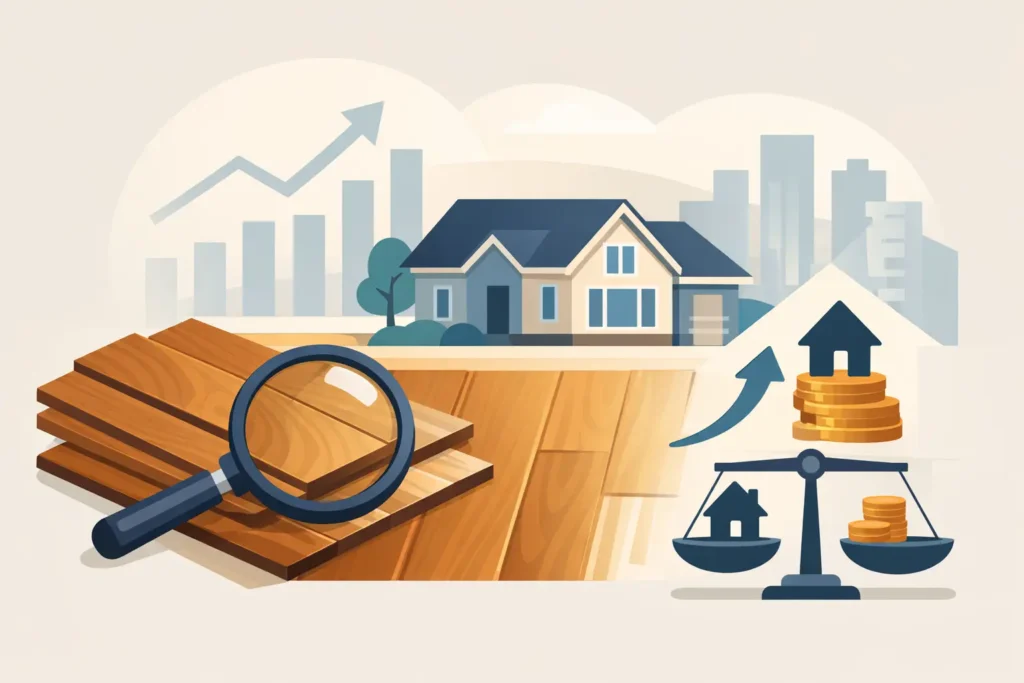
Buyers notice floors fast. Before they comment on your kitchen layout or the size of the backyard, they are already making a judgment about how the home feels underfoot. That is why hardwood flooring for resale value comes up so often when homeowners are deciding whether to renovate before listing or simply improve the property they plan to keep for a few more years.
The short answer is yes – hardwood can add real resale appeal. But not every hardwood project delivers the same return, and not every room needs the same approach. If your goal is to make a smart investment instead of just an expensive upgrade, the details matter.
Why hardwood flooring for resale value gets attention
Hardwood has a strong reputation because buyers associate it with quality, durability, and a cleaner, more finished look. In many homes, especially in competitive markets, wood floors help a property show better both online and in person. They photograph well, they work with almost any design style, and they tend to make rooms feel more established than carpet or dated sheet flooring.
That said, resale value is not just about choosing a material buyers like. It is also about matching the flooring to the price point of the home, the neighborhood, and the condition of the rest of the property. Installing premium hardwood in a home with an outdated kitchen, worn baseboards, and deferred maintenance may not produce the return you expect. Buyers respond to consistency.
For many sellers, hardwood makes the most sense when it solves a visible problem. Replacing stained carpet, mismatched flooring, or cheap-looking surfaces can improve the impression of the entire home. In that case, the value comes from removing a buyer objection as much as adding a luxury feature.
What buyers actually want from hardwood floors
Most buyers are not flooring experts. They are reacting to appearance, maintenance, and confidence. They want floors that look clean, feel solid, and do not suggest a major project right after closing.
This is why species, finish, and color matter just as much as the fact that the material is hardwood. A floor can be technically high quality and still miss the mark if it looks too trendy, too dark for the space, or too delicate for everyday living. Wide swings in style can narrow your buyer pool.
In general, buyers respond well to hardwood that feels timeless. Medium tones, matte or low-sheen finishes, and natural-looking grain tend to appeal to more people than glossy red-toned planks or heavily distressed surfaces. If you are thinking about resale, broad appeal usually beats personal taste.
The other thing buyers want is continuity. A home with three different wood tones across connected rooms can feel choppy and unfinished. Even when the flooring itself is good, inconsistency can make the property seem patched together.
Solid hardwood vs engineered hardwood for resale
This is where homeowners often hesitate. Solid hardwood has prestige, and for some buyers that label still carries weight. It can be sanded and refinished multiple times, which supports its long-term value.
Engineered hardwood, however, is often the more practical choice, especially in homes where moisture, slab foundations, or installation conditions make solid wood less ideal. In much of Los Angeles, engineered products are common and accepted, particularly when they are professionally installed and visually convincing. A good engineered floor can still support resale if it looks right, performs well, and fits the house.
The mistake is assuming buyers will pay a premium just because the material is technically superior. Most buyers respond to the finished result, not the product spec sheet. If engineered hardwood allows a cleaner install, better stability, and a more affordable budget, it can be the smarter move.
The best rooms for hardwood if resale is the goal
If your budget is not unlimited, prioritize visible living areas first. Entryways, living rooms, dining rooms, hallways, and primary bedrooms usually offer the strongest payoff because they shape the first and longest impressions.
Kitchens can also benefit from hardwood, especially in homes where an open layout makes flooring continuity important. But the kitchen has to be realistic for your lifestyle and the market. If the household is hard on floors or moisture is a concern, another material may make more practical sense.
Bathrooms are a different story. Hardwood can work, but it is rarely the first recommendation when resale value and maintenance are both priorities. Buyers often prefer materials that handle moisture with less risk.
If you are preparing a rental or a mid-range resale property, it may be better to use hardwood selectively and pair it with durable alternatives in the right spaces. A smart flooring plan often outperforms a one-material-everywhere approach.
When hardwood flooring for resale value may not be the best investment
There are situations where hardwood is not the strongest financial play. If the home is in a lower price segment where buyers are more payment-sensitive than finish-sensitive, the added cost may not come back to you fully. The same is true if you are rushing to sell and other repairs are more urgent.
Sometimes refinishing existing hardwood is the better answer. If you already have wood floors hidden under carpet or a hardwood floor that has surface wear but good structure, restoration can create much of the same resale benefit for less money.
There is also the issue of over-improving. In some properties, luxury-grade hardwood can feel out of step with the rest of the home. Buyers may appreciate it, but they will not always raise their offer enough to cover the difference between a sensible material choice and a premium one.
A direct, budget-conscious flooring consultation usually saves money here. It helps you focus on what supports the sale instead of what simply sounds high-end.
Color, plank width, and finish choices that protect resale
If you are choosing hardwood with resale in mind, neutral and flexible is usually the winning direction. That does not mean boring. It means selecting a floor that works with many furniture styles, paint colors, and buyer preferences.
Medium natural tones are often a safe bet because they hide dust better than very dark floors and feel warmer than very pale gray-washed looks. Matte and satin finishes also tend to wear more gracefully than glossy finishes, which can show scratches and reflect every imperfection.
Plank width depends on the home. Wider planks feel current and can make rooms look larger, but in smaller or more traditional homes, a moderate width may feel more balanced. This is one of those details where context matters more than trend.
Texture matters too. Light wire-brushed or low-character surfaces can be forgiving in active households, while highly rustic floors may limit appeal if the rest of the home is clean and modern.
Installation quality affects value more than many owners expect
Poor installation can erase the benefit of a good product fast. Gaps, uneven transitions, noisy boards, sloppy cuts, and weak subfloor prep are all things buyers notice, even if they cannot name the technical problem.
Professional installation supports resale because it creates confidence. Floors should look intentional, level, and integrated with the room. Trim details matter. Transitions matter. So does moisture testing, acclimation, and choosing the right underlayment or installation method.
This is especially true if you are replacing flooring before listing. A rushed job done to save money can create the exact concern you were trying to avoid. Buyers do not want to inherit a problem, and inspectors often catch what sellers hope no one will see.
For homeowners and property managers who want a balance of appearance, durability, and cost, working with an experienced local contractor is usually the safest route. A company like Magnet Flooring can help match the flooring choice to the property type instead of pushing a one-size-fits-all recommendation.
How to think about ROI without guessing
Resale value is rarely a simple formula. Hardwood can increase buyer interest, shorten time on market, and improve the quality of offers, even when the exact dollar-for-dollar return is hard to isolate. That softer value still matters.
A practical way to think about it is this: will the new floor help your property compete better, photograph better, and feel more move-in ready than similar homes? If the answer is yes, the investment may be worthwhile even if it is not the single highest-return upgrade on paper.
The smartest projects usually balance three things – what buyers expect in that market, what condition the current floors are in, and how long you plan to keep the property. If you are staying for several years, you also get to enjoy the upgrade yourself, which changes the math.
Hardwood is often a strong resale move because it improves both perception and function. Just make sure the product, style, and installation match the house. The best flooring investment is not the most expensive option. It is the one that makes the next buyer feel like less work is waiting for them.
Pingback: 7 Questions For A Flooring Contractor In Beverly Hills | Flooring Contractor Los Angeles | Magnet Flooring