
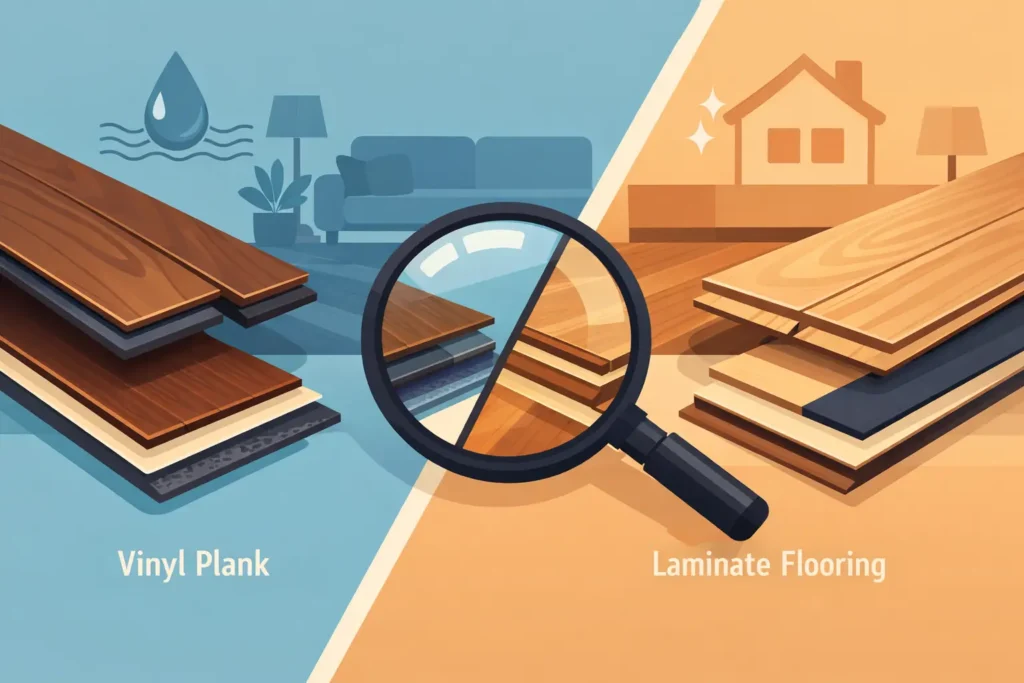
A floor can look great in a showroom and still be the wrong choice for your home or business. That is why the vinyl plank vs laminate flooring decision deserves a closer look before you commit. The right pick depends on how the space is used, how much moisture it sees, and how long you expect the floor to hold up under daily traffic.
For many property owners, these two materials end up on the final shortlist for a simple reason: they offer a clean, modern look at a more approachable price than solid hardwood. But they do not perform the same way. If you want fewer surprises after installation, it helps to compare them where it counts – water resistance, comfort, wear, maintenance, and total value over time.
Vinyl plank vs laminate flooring: the basic difference
Luxury vinyl plank, often called LVP, is a synthetic flooring product made primarily from PVC and layered materials. It is built to resist moisture and imitate the look of hardwood with printed visuals and textured surfaces. Many newer products are fully waterproof, which is a major reason they are popular in kitchens, bathrooms, laundry rooms, and busy commercial spaces.
Laminate flooring is made with a fiberboard core topped by a photographic layer and a protective wear layer. It also mimics wood well and often has a slightly firmer, more natural underfoot feel than lower-end vinyl. Laminate has come a long way in appearance, but its core is still more vulnerable to moisture than vinyl unless you choose a water-resistant line and install it properly.
At a glance, they can look very similar. Once you get into real-life use, the differences become more noticeable.
Water resistance is often the deciding factor
If the room has any regular chance of spills, humidity, pet accidents, or wet shoes, vinyl plank usually has the edge. Waterproof vinyl plank is designed for these conditions, and that matters in active households and business settings where moisture is hard to control.
Laminate can handle light everyday use, but standing water is where problems begin. If moisture seeps into the seams or reaches the core, the planks may swell or warp. Some premium laminate products offer better moisture protection than older versions, but they still require more caution.
This is one of those cases where the best flooring is not just about style. In Los Angeles homes, moisture issues may not look the same as they do in wetter climates, but bathrooms, kitchens, break rooms, and entryways still see enough exposure to make waterproof performance a practical advantage.
Durability depends on the kind of wear
Both materials are built for everyday traffic, but they handle damage differently. Vinyl plank is more flexible and generally better at resisting water-related damage. It also does well in homes with kids, pets, and frequent cleaning. In commercial settings, it can be a smart choice because it stands up well to repeated use without demanding much maintenance.
Laminate tends to resist scratches well, especially in higher-quality products with a strong wear layer. That can make it appealing for living rooms, offices, and bedrooms where moisture is not a major concern but foot traffic is steady. At the same time, laminate is less forgiving if the subfloor is uneven or if moisture becomes a recurring issue.
Neither floor is indestructible. Heavy furniture, poor installation, and neglected spills can shorten the lifespan of both. The better question is what kind of stress the room sees every day.
Comfort and sound underfoot
This is where buyers are sometimes surprised. Laminate often feels a little warmer and more solid underfoot because of its dense core. Some people prefer that feel, especially in bedrooms and main living areas where comfort matters.
Vinyl plank can feel slightly softer and quieter, particularly when installed with a quality underlayment or attached pad. It is also a good option when you want less echo in an office or multi-use room. That said, product quality makes a big difference. Thin, low-cost vinyl can feel less substantial than premium laminate.
If sound control matters in a condo, office, or upstairs room, installation method and underlayment should be part of the conversation, not an afterthought.
Appearance and design flexibility
Both laminate and vinyl plank have improved significantly in style. Better printing, embossing, and plank sizing have made both options more convincing than they were years ago. You can find realistic wood tones, modern finishes, and wider plank formats in both categories.
Vinyl plank usually offers more flexibility across the whole property because it can move from dry rooms to moisture-prone rooms without a major performance drop. That makes it easier to create a consistent look throughout a home or commercial space.
Laminate still has strong appeal when the goal is a wood-look floor with a crisp visual and a budget-conscious price point. In the right room, it can deliver excellent value and a polished finish. If your main concern is appearance in dry interior spaces, laminate deserves serious consideration.
Cost: material price vs long-term value
Laminate often comes in at a slightly lower material cost, though pricing overlaps depending on brand, thickness, wear layer, and water-resistance features. If you are comparing entry-level products, laminate may look like the clear budget winner.
But installation and long-term performance matter just as much as the sticker price. A lower-cost floor that struggles with moisture or needs early replacement is not really the cheaper option. Vinyl plank can cost more upfront, especially in waterproof and commercial-grade lines, but it often returns better value in rooms where durability and water resistance are non-negotiable.
This is also where professional guidance helps. Homeowners and property managers sometimes choose based on a sample board alone, then end up paying more later because the floor was not matched to the room. A good flooring recommendation considers traffic, subfloor condition, moisture exposure, and how long you plan to keep the property.
Installation matters more than most people expect
A well-made floor can still fail if it is installed over an uneven subfloor, rushed at the seams, or forced into a room without proper prep. Both laminate and vinyl plank often use click-lock systems, which makes them look simple on paper. In practice, layout, expansion spacing, moisture barriers, and transitions all affect the final result.
Vinyl plank is generally more forgiving in moisture-prone areas, but it still needs a properly prepared surface. Laminate is even less forgiving if the subfloor has issues or if moisture control is handled poorly. Gaps, movement, hollow spots, and premature wear often come back to installation, not the product itself.
For residential and commercial clients who want the floor to look clean and perform the way it should, professional installation saves time and reduces the risk of costly corrections.
Which rooms are best for each option?
Vinyl plank is usually the safer choice for kitchens, bathrooms, laundry rooms, entryways, retail spaces, and busy offices. It works well where water, spills, and high traffic are part of normal use. It is also a strong all-around option for whole-home flooring when consistency and low maintenance are priorities.
Laminate is often a good fit for bedrooms, living rooms, conference rooms, and other dry areas where comfort, scratch resistance, and price are bigger factors than waterproofing. If the room stays dry and the subfloor is in good shape, laminate can perform very well.
The right answer is not always one material for the entire property. In some projects, the smartest move is using vinyl plank in wet or high-risk areas and laminate in dry spaces where you want to manage cost without giving up style.
So, which floor should you choose?
If you want the safer, more versatile option, vinyl plank usually wins. It is easier to recommend when moisture, heavy use, pets, or commercial traffic are part of the picture. For many homes and businesses, that combination of resilience and low maintenance makes it the stronger investment.
If your project is focused on dry interior rooms and budget control, laminate can still be an excellent choice. It offers strong visual appeal, good scratch resistance, and a comfortable feel underfoot when installed correctly.
That is the real answer to vinyl plank vs laminate flooring: it depends on the room, the traffic, and the level of risk you are willing to accept. A floor should do more than match your color palette. It should work for the way your space actually functions. If you are choosing for a home, rental, or commercial property, the best results come from matching the product to the job – then making sure the installation is done right the first time.

Pingback: How To Get An Accurate Quote For New Flooring | Flooring Contractor Los Angeles | Magnet Flooring