A busy kitchen, an active office entry, and a rental unit between tenants all put flooring through a real-world test. When comparing laminate flooring vs tile durability, the better material is not always the one that lasts the longest in theory. It is the one that holds up to the moisture, traffic, impact, maintenance habits, and budget of your specific space.
Tile has a well-earned reputation for longevity, especially porcelain tile. Laminate has improved dramatically, offering realistic wood visuals, strong wear layers, and more comfortable performance at a lower installed cost. Understanding where each floor can fail helps homeowners, property managers, and business owners make a choice they will still feel good about years from now.
Laminate Flooring vs Tile Durability: The Short Answer
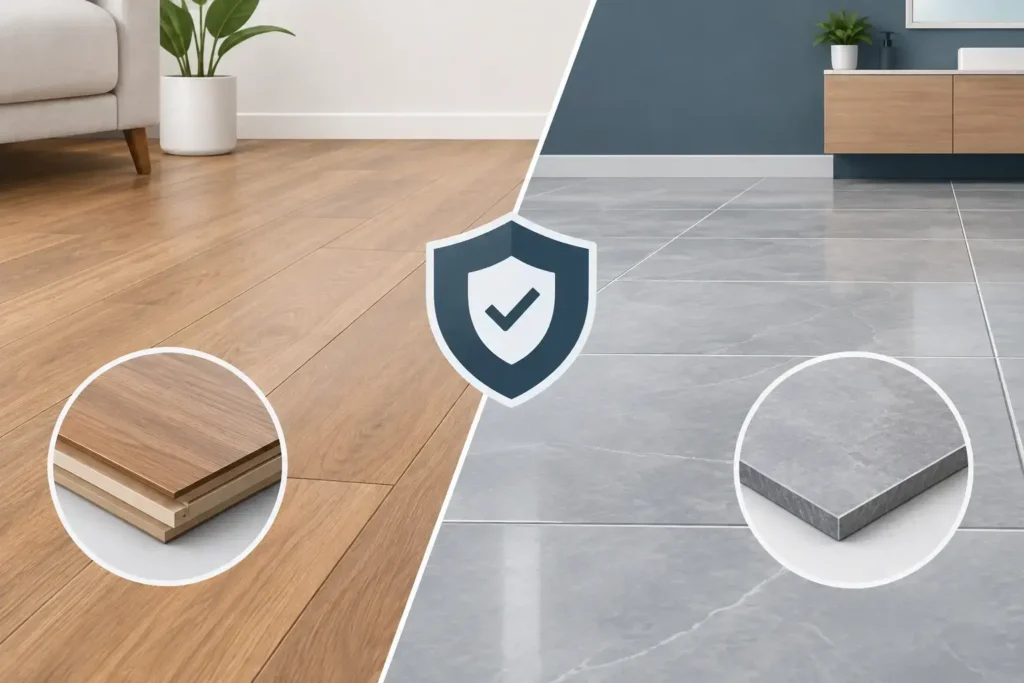
Tile generally wins for maximum lifespan and water resistance. A quality porcelain tile floor, installed over a properly prepared subfloor, can perform for decades. It resists water, staining, scratches, and routine wear exceptionally well.
Laminate is highly durable for everyday residential use and many light-to-moderate commercial settings, but it has limits around standing water and damaged seams. Its protective top layer handles normal foot traffic, pet nails, and furniture movement well. Once moisture reaches the core, however, planks can swell or separate and usually need replacement.
That does not make tile the automatic choice. Tile can crack from impact or subfloor movement, grout requires care, and installation is more labor-intensive. Laminate is often faster to install, easier to replace in a small area, warmer underfoot, and more budget-friendly. The right answer depends on how the room is used.
How Each Material Handles Daily Wear
Scratches, scuffs, and surface wear
Both materials perform well against common household wear, but they do it differently. Laminate relies on a factory-applied wear layer. Higher-quality products are designed to resist scratches, fading, and scuffing from regular foot traffic. This makes laminate a practical option for living rooms, bedrooms, hallways, offices, and rental properties where appearance and cost control both matter.
Tile has a hard surface that is difficult to scratch under normal conditions. Porcelain is especially strong and is usually a better pick for busy entryways, retail areas, kitchens, and spaces exposed to grit from outdoors. Sand and small stones can act like sandpaper on almost any floor, so entry mats still matter.
The key difference is repairability. A deeply scratched or chipped laminate plank can be replaced, but the surface itself cannot be refinished. Tile can also chip, yet individual tiles may be replaced if matching extras were saved from the original installation.
Dents, cracks, and dropped objects
Laminate has a little more give than tile, which makes it less likely to crack when something is dropped. That flexibility can be useful in homes with kids, upstairs rooms, or workplaces where employees stand for long periods. It also feels less hard and cold underfoot.
Tile is extremely hard, but hardness comes with brittleness. A heavy pan, tool, or object dropped in the wrong spot can chip tile. More significantly, tile may crack when the subfloor flexes or when an existing concrete slab has movement issues. A professional installer evaluates the floor beneath the tile, uses appropriate preparation materials, and plans joints carefully to reduce that risk.
Moisture Is the Biggest Divide
For bathrooms, laundry rooms, mudrooms, commercial restrooms, and areas near exterior doors, tile has a clear durability advantage. Tile itself does not absorb water, and properly installed porcelain tile is one of the most dependable flooring options for wet locations. Grout is more porous than tile, but sealing and routine cleaning help protect it.
Standard laminate should not be treated as waterproof. Spills should be wiped up promptly, and flooding, overflowing appliances, or repeated wet mopping can cause lasting damage. Water-resistant laminate can provide more time to clean a spill, but water-resistant does not mean it can safely handle prolonged standing water.
This distinction is especially relevant in Los Angeles properties, where a leak from an appliance, an overflowing sink, or rain tracked through an entry can create expensive repairs. If a space needs a wood-look floor but has frequent moisture exposure, waterproof vinyl plank may be a better fit than either traditional laminate or tile.
Installation Quality Determines Real Durability
A durable flooring material can still fail early when the installation is rushed. This is true for both laminate and tile, though the failure signs look different.
Laminate needs a clean, level, dry subfloor. If the floor underneath has noticeable dips or high spots, planks can flex, separate at the locking system, or develop noisy movement. Correct expansion gaps around walls and fixed objects are also essential because laminate naturally expands and contracts with changing conditions.
Tile requires even more careful preparation. The subfloor must be stable enough to prevent excessive movement. Poor bonding, uneven surfaces, or improper mortar coverage can lead to loose tiles, hollow sounds, grout cracking, and broken tile. Tile installation usually takes longer, but the added preparation is a major reason a properly installed tile floor can last so long.
For commercial properties, installation planning should also account for business interruption, traffic patterns, transitions, and accessibility. The least expensive bid can become costly if the floor needs repairs shortly after opening.
Maintenance and Long-Term Appearance
Tile is easy to maintain day to day. Sweep or vacuum grit, mop with a suitable cleaner, and address grout care as needed. Light-colored or textured grout can show dirt over time, particularly in kitchens, restaurant-adjacent spaces, and busy entrances. Choosing an appropriate grout color and keeping a small amount of replacement tile can save trouble later.
Laminate is also simple to care for, but cleaning methods matter more. Use a microfiber mop or lightly damp mop rather than soaking the floor. Avoid steam cleaning unless the manufacturer specifically allows it, and use protective pads under furniture. With those habits, quality laminate can stay attractive for many years.
Sun exposure deserves consideration in Southern California homes. Both tile and quality laminate can handle bright rooms well, but lower-grade laminate may fade over time. Window coverings and products with reliable fade resistance are worthwhile in rooms with strong afternoon sun.
Cost Per Year Matters More Than Initial Price
Laminate usually costs less to purchase and install than tile. It can often be installed more quickly, which may reduce labor costs and shorten disruption in an occupied home or business. For a property owner refreshing several units or updating an office on a defined budget, laminate can deliver a polished look without the larger upfront investment of tile.
Tile costs more initially because materials, subfloor preparation, labor, grout, and setting time add up. Yet its long service life can make it a strong value in high-moisture or high-traffic rooms. The practical question is not simply which floor is cheaper. It is whether the material will avoid premature replacement in the environment where it is installed.
A guest bedroom may not need the lifetime performance of porcelain tile. A ground-floor bathroom with frequent moisture exposure should not rely on standard laminate simply because it costs less on installation day.
Which Flooring Is Best for Your Space?
Choose tile when water exposure, intense traffic, and maximum longevity are top priorities. Porcelain tile is particularly effective in bathrooms, kitchens, laundry rooms, entryways, patios designed for tile-rated products, and commercial areas that need a hard-wearing surface.
Choose laminate when you want the appearance of hardwood at a more accessible price, need a faster installation, and are flooring a dry area with normal daily use. It works well in bedrooms, living rooms, hallways, offices, and many rental-property upgrades. Select a quality product with a durable wear rating, and do not overlook subfloor preparation.
If you are deciding between materials for several rooms, mixing flooring types is often the most practical solution. Tile can protect wet or high-impact areas, while laminate creates warmth and visual continuity in dry living or work spaces. Professional planning helps transitions look intentional rather than pieced together.
Before choosing based on a showroom sample alone, consider where water enters, how much traffic the room sees, what sits above and below the subfloor, and how long you expect to keep the property. A flooring consultation from Magnet Flooring can turn those details into a durable plan that protects your budget as well as your space.