A scratched entryway, a few lifted boards near the kitchen, a dark stain under a plant stand – hardwood damage usually starts small and gets expensive when it is ignored. If you are searching for hardwood floor repair Glendale homeowners and property managers can rely on, the real goal is not just making the floor look better. It is protecting the life of the wood, avoiding full replacement, and restoring a clean, durable surface that fits the space.
Hardwood floors are one of the strongest investments you can make in a home or commercial property, but they are not indestructible. Daily foot traffic, furniture movement, pet nails, moisture, sun exposure, and aging all leave a mark. The good news is that many problems can be repaired without tearing out the entire floor. The right solution depends on the type of damage, the age of the flooring, and how well the repair can blend with the surrounding boards.
What hardwood floor damage usually looks like
Most repair calls start with one of a few common problems. Surface scratches are the most obvious, especially in hallways, living rooms, and office entries. These may stay in the finish layer, or they can cut into the wood itself. That difference matters because a light buff and recoat may solve one issue, while the other may need board-level work or sanding.
Water damage is another major concern. In Glendale homes, leaks from appliances, plumbing, or window intrusion can cause boards to cup, warp, stain, or separate. Some moisture damage dries out with minimal lasting effect. Some does not. If the wood swells and the finish fails, repairs need to happen quickly before the subfloor or adjacent planks are affected.
There is also wear that builds up over time. Faded color, dull traffic lanes, small gaps, minor edge splintering, and uneven sheen can make a floor look tired even when the structure is still sound. In these cases, repair may overlap with refinishing. A professional inspection helps separate cosmetic wear from true material failure.
Hardwood floor repair Glendale properties often need most
Not every damaged floor needs the same approach. One of the most common mistakes property owners make is assuming all hardwood issues can be fixed with sanding. Sanding helps in many cases, but it is not the answer for deep water damage, loose boards, or isolated impact breaks.
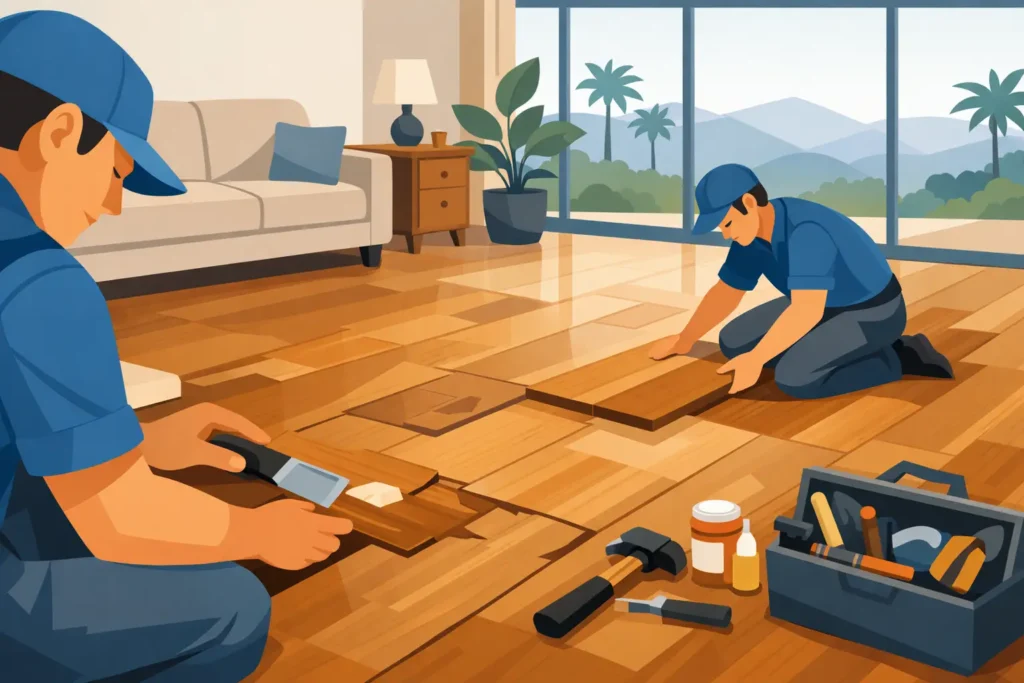
For localized damage, individual board replacement is often the most cost-effective option. If only a few planks are cracked, stained, or warped, replacing those boards preserves the rest of the floor and keeps the project more affordable. This is especially useful in bedrooms, offices, and smaller damaged zones where full refinishing would be unnecessary.
For widespread scratching or finish wear, sanding and refinishing may bring the floor back to life. This works best when the wood still has enough thickness and the damage is spread across larger sections rather than concentrated in one severe spot. The trade-off is that refinishing is more involved, and matching stain color across old and new sections requires skill.
For squeaks, movement, or lifting boards, the repair may involve securing planks, correcting subfloor issues, or addressing moisture conditions below the surface. This is where experience matters. A floor can look fine after a quick patch, but if the underlying cause stays in place, the problem usually returns.
When repair makes more sense than replacement
Repair is often the better choice when damage is limited, the existing hardwood is still structurally solid, and the floor has enough life left to justify restoration. It is also a smart move when you want to preserve original flooring in a home or keep a commercial space looking consistent without a larger renovation.
Replacement starts to make more sense when damage is widespread, the floor has already been refinished too many times, or water exposure has compromised large sections of the wood and subfloor. There are also cases where older materials are difficult to match, and patching multiple areas would leave the floor looking uneven. A trustworthy contractor should tell you when repair is the smart investment and when it is just delaying a larger issue.
Why color matching is where repairs succeed or fail
The technical fix is only half the job. The other half is making the repair disappear as much as possible. That means matching species, board width, grain pattern, stain tone, finish level, and even the way the floor has aged over time.
Oak does not reflect light like maple. New boards do not absorb stain exactly like older ones. Sun-faded sections may look warmer or lighter than protected areas under rugs and furniture. A strong hardwood repair team plans for those details instead of treating every patch like a simple swap.
This is one reason cheap repairs can disappoint. The damaged board may be gone, but the eye goes straight to the patch because the finish is off by a shade or the sheen is too glossy. Professional repair focuses on structural correction and visual consistency. Both matter if you want the floor to add value to the property.
Repair timelines and what affects cost
Property owners usually want two answers right away – how long will it take and how much will it cost? The honest answer is that both depend on the scope of damage.
A minor scratch repair or isolated board replacement can be relatively quick. Larger repairs involving stain blending, sanding, finish curing, or moisture correction take longer. If the damaged area is in a high-traffic business or a busy household, scheduling also matters because floors may need protection and limited use while finishes set.
Cost is shaped by the species of hardwood, how many boards are affected, how easy matching materials are to source, whether refinishing is needed, and whether there is hidden damage below the surface. Moisture-related repairs often cost more than they appear at first because the visible issue is only part of the problem. The most useful estimate is one based on an in-person evaluation, not a guess from a photo alone.
What homeowners and property managers should do first
If you notice floor damage, the first step is to stop the cause from getting worse. Clean up standing water immediately. Use felt pads if furniture is scraping. Avoid over-the-counter repair products that promise a fast fix but can interfere with proper refinishing later. Wax sticks, tinted fillers, and glossy touch-up coatings can make professional color matching harder, not easier.
Next, get the floor assessed before the damage spreads. A loose board can affect nearby planks. Moisture under one section can migrate. Small repairs are usually more affordable because the problem is still contained. Waiting tends to reduce your options.
For rental properties and commercial spaces, this matters even more. Flooring condition affects appearance, safety, maintenance costs, and tenant perception. Repairing hardwood early helps protect the value of the space and keeps a manageable issue from turning into downtime or a larger capital expense.
Choosing a contractor for hardwood floor repair Glendale
If you are comparing flooring companies, ask how they handle diagnosis, not just repair. You want a contractor who can tell the difference between finish damage and wood damage, between a cosmetic stain and a moisture event, and between a board issue and a subfloor issue. Repair done without proper diagnosis is usually where callbacks start.
It also helps to work with a team that handles both residential and commercial flooring. The repair demands in a family home are different from those in an office or managed property, but the core standards stay the same – clean workmanship, realistic pricing, and repairs that hold up under use.
A local company familiar with Glendale-area properties can also spot common conditions faster, whether that is sun exposure near large windows, wear from active households, or moisture issues around kitchens and entry points. That practical experience saves time and helps you get a repair plan that fits the actual condition of the floor, not a generic package.
At Magnet Flooring, the focus is straightforward: repair what can be saved, recommend replacement only when it makes financial sense, and deliver workmanship that looks right and lasts.
The best repair is the one that extends the floor’s life
Hardwood floors do not need to be perfect to be worth saving. In many cases, they just need skilled repair at the right time. A good repair protects your investment, restores the look of the room, and buys you years of performance without the cost of a full new floor. If your floor is showing damage, the smartest move is to address it while the fix is still simple.