If you are comparing laminate vs engineered wood, you are probably trying to balance three things at once: appearance, durability, and budget. That is exactly where most flooring decisions get stuck. Both options can look great from across the room, but they perform very differently once real life starts happening – foot traffic, pets, furniture, spills, and years of use.
For homeowners, landlords, and business owners, the right choice usually comes down to how the space is used. A quiet bedroom has different needs than a busy office. A rental unit has different priorities than a forever home. The material that looks like the better deal upfront is not always the one that delivers the best value over time.
Laminate vs engineered wood: the core difference
The simplest way to understand laminate vs engineered wood is this: laminate is a synthetic flooring product made to imitate wood, while engineered wood contains real hardwood on the surface. That difference affects everything else, from price and feel underfoot to refinishing potential and moisture resistance.
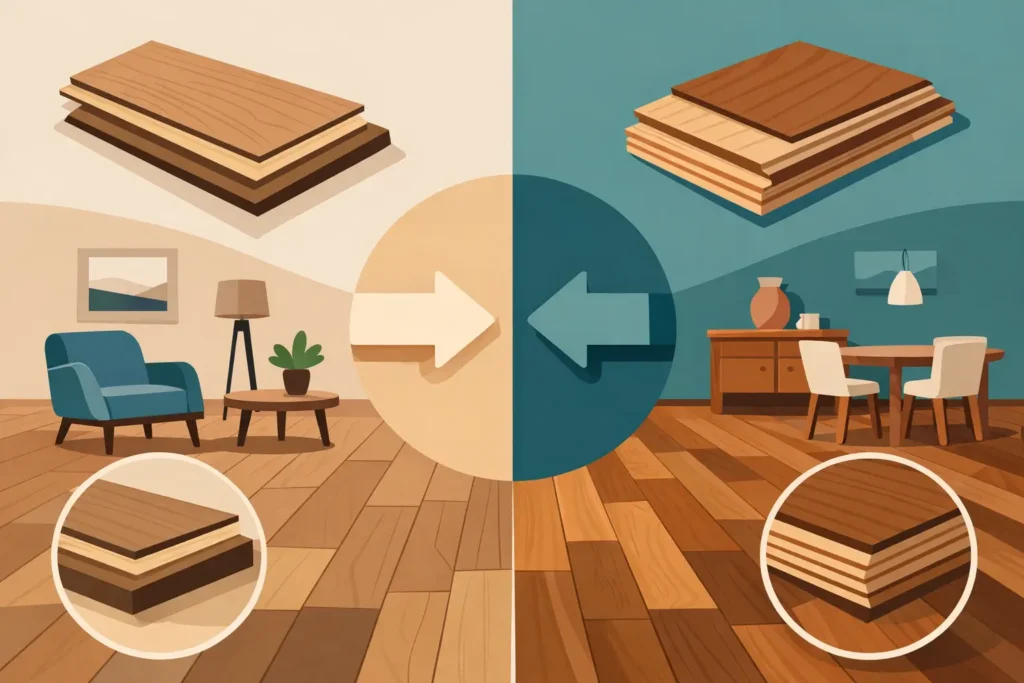
Laminate is built in layers, with a printed image layer that gives it the look of oak, walnut, maple, or other wood styles. On top, it has a wear layer designed to resist scratches and fading. Underneath, it usually has a dense fiberboard core. It is made for practical performance and cost control.
Engineered wood also uses a layered construction, but the top layer is actual hardwood veneer. Below that are plywood or high-density core layers that improve dimensional stability. You get a floor that looks and feels more like solid wood, but with better resistance to expansion and contraction than traditional hardwood.
Appearance and resale appeal
If appearance is your top priority, engineered wood usually has the edge. Because the top layer is real wood, the grain pattern, texture, and variation are natural. That matters when light hits the floor, when boards are viewed up close, and when you want a higher-end finish in living rooms, offices, or retail spaces.
Laminate has improved a lot in recent years. Better products now offer realistic textures and wider plank styles that look far better than older glossy laminate floors. Still, laminate is a photographic reproduction of wood, not wood itself. In some rooms that difference may not matter much. In others, especially higher-value homes or spaces where design is a selling point, it can be noticeable.
For property owners thinking about resale, engineered wood often feels like the stronger long-term investment. Buyers tend to respond well to real wood surfaces. Laminate can still be a smart choice, but it is usually viewed as a budget-conscious flooring option rather than a premium one.
Cost: upfront savings vs long-term value
Laminate is usually more affordable than engineered wood, both in material cost and sometimes in installation. If you are flooring a large area and trying to control project costs, laminate can be appealing right away. It gives you the wood look at a lower price point.
Engineered wood typically costs more because it includes real hardwood and often requires more careful handling during installation. That higher upfront price can make sense if you want a better finish, longer life potential, and stronger resale perception.
This is where a lot of buyers need practical guidance. The cheapest option is not always the most affordable over the life of the floor. If laminate gets damaged beyond repair in a few key sections, replacing planks can become a matching issue later. If engineered wood has a thick enough wear layer, it may be refinished at least once, which can extend its usable life.
The better question is not just, What does it cost today? It is, What do I need this floor to do for the next 10 years?
Durability in busy homes and commercial spaces
Durability depends on the kind of wear your floor will face.
Laminate performs well against scratches, surface wear, and everyday traffic. That makes it a strong option for households with kids, dogs, or frequent foot traffic. In office settings, rental units, and other practical environments, laminate often holds up well as long as moisture is controlled.
Engineered wood is durable too, but it is still real wood on top. That means it can scratch, dent, and show wear differently than laminate. Some homeowners prefer that because wood develops character over time. Others want a floor that looks cleaner with less visible impact from daily use.
If you are placing flooring in a commercial setting with rolling chairs, frequent movement, or heavy use, the choice should be made carefully. Some engineered wood products are excellent, but they are not automatically better for every business environment. A tougher laminate may outperform a softer wood species in day-to-day surface resistance.
Moisture and climate performance
Moisture is one of the biggest decision points in laminate vs engineered wood.
Standard laminate does not handle standing water well. If water gets into the seams and reaches the core, swelling can occur. Some newer water-resistant laminate products perform better, but they are still not the same as a truly waterproof floor.
Engineered wood handles humidity changes better than solid hardwood, which is one reason it is popular in many California homes. But it is not immune to moisture problems. Excess water can still damage the wood surface or affect the structure over time.
In areas where spills, damp mopping, or moisture exposure are common, neither option is the perfect answer in every case. Kitchens, entryways, and some commercial spaces may call for a different material altogether depending on use. In parts of Los Angeles where indoor-outdoor living is common and dust, traffic, and occasional moisture come in from patios or entrances, performance under real conditions matters more than showroom appearance.
Comfort, sound, and feel underfoot
Engineered wood generally feels more solid and more natural underfoot. It also tends to deliver the warmth and texture people expect from real wood flooring. For primary living spaces or executive-style commercial interiors, that can make a noticeable difference.
Laminate can feel slightly harder or more hollow, especially if the subfloor is uneven or the underlayment is not ideal. Good installation helps a lot here. The same laminate product can feel very different depending on how well the floor prep was done.
Sound matters too. In upstairs rooms, condos, offices, or multi-unit properties, the wrong floor can create extra noise. Both materials can benefit from the right underlayment, but engineered wood often has a more solid acoustic profile when installed properly.
Installation and subfloor conditions
Laminate is often quicker to install because many products use a click-lock floating system. That can reduce labor time and make it practical for faster turnarounds.
Engineered wood offers more installation flexibility. Depending on the product, it may be floated, glued, or nailed down. That flexibility is useful, but it also means the installation plan needs to match the subfloor, the room, and the performance goals.
This is one area where professional guidance saves money. A floor can fail early not because the material was bad, but because the subfloor was uneven, moisture levels were not checked, or the wrong installation method was used. That is especially true in remodels, mixed-use properties, and older homes where conditions are not always straightforward.
Which one makes more sense for your space?
Choose laminate if your priority is value, scratch resistance, and a wood-look floor at a lower cost. It works well for rentals, busy family spaces, and projects where budget control matters most.
Choose engineered wood if your priority is a more authentic appearance, better resale appeal, and a finish that feels closer to traditional hardwood. It is often the better fit for main living areas, upscale interiors, and clients who want real wood without going fully solid hardwood.
There is no one-size-fits-all winner in laminate vs engineered wood. The better option depends on the room, the traffic level, the subfloor, and how long you plan to keep the property. At Magnet Flooring, this is the kind of decision we help clients make every day – not based on trends, but based on how the floor will actually perform once you start living or working on it.
A good floor should do more than look right on installation day. It should keep making sense months and years later, when the chairs have moved, the shoes have crossed it a thousand times, and the space still needs to work as hard as you do.