
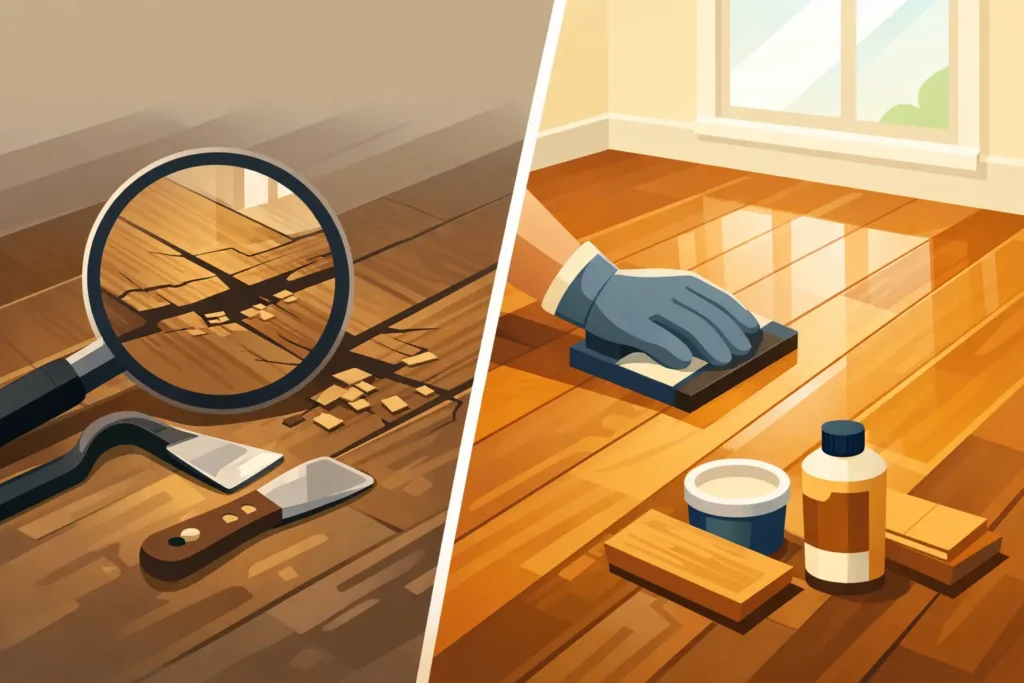
A dropped pan, a pet accident, a slow leak under the fridge – hardwood usually tells the story fast. The good news is that can damaged hardwood be repaired is often a yes, but the real answer depends on what kind of damage you are looking at, how deep it goes, and whether the boards are still structurally sound.
Hardwood is one of the most repairable flooring materials in a home or commercial space. That is a big reason people continue to choose it. Unlike many surface-only products, real wood can often be sanded, refinished, patched, or selectively replaced without tearing out the entire floor. Still, not every problem should be treated the same way, and the wrong repair can waste time and money.
Can damaged hardwood be repaired in every case?
Not every case, no. Cosmetic wear is usually very repair-friendly. Deep water damage, mold, widespread warping, or long-term structural movement can push the floor past the point where a simple repair makes financial sense.
The key distinction is whether the damage is mostly on the surface or whether it has changed the shape, stability, or integrity of the boards and subfloor. Light scratches, dull finish, minor stains, and a few damaged planks can often be handled without replacing the full room. But if the wood has cupped badly, blackened from moisture, or started separating because the subfloor is compromised, a larger correction may be the smarter move.
That is where a professional inspection matters. A floor can look fixable from above while hiding moisture or movement underneath.
The most common hardwood problems and what can be done
Surface scratches and finish wear
This is the easiest category to repair. If the finish is scratched but the wood itself is not deeply gouged, the solution may be as simple as buffing and recoating. In other cases, a full sanding and refinishing job brings the floor back to life.
This is common in busy households, retail spaces, offices, and rental properties. Chairs, pet nails, and dirt tracked in from outside gradually wear down the protective finish. The wood underneath may still be in very good shape.
The trade-off is color consistency. If you only touch up one area, it may not blend perfectly with older finish around it. For visible spaces, a broader refinish often looks cleaner.
Gouges and deeper dents
When the wood itself is damaged, the repair depends on depth and location. A single dent in a low-visibility corner may be filled and color-matched. Larger gouges in high-traffic areas often look better if the affected board is repaired or replaced.
This is one of those cases where cheap patching can be obvious. Professional wood fillers and stain matching help, but deep damage in a prominent part of the room sometimes requires a more exact fix.
Water stains and discoloration
Water is where things get more complicated. A white haze or light discoloration may be limited to the finish. Dark stains usually mean moisture has penetrated into the wood.
If the damage is minor and dry, sanding and refinishing may solve it. If boards are swollen, soft, or starting to cup, you may need board replacement and moisture correction first. Repairing the wood without fixing the source of the leak is a short-term solution at best.
In Los Angeles homes, this often shows up around entry points, kitchens, and appliance lines rather than from heavy seasonal humidity. The source tends to be a specific plumbing or appliance issue, which can make targeted repair possible if caught early.
Cupping, crowning, and warping
Boards that lift at the edges or arch in the middle usually point to moisture imbalance. Sometimes the wood can settle back after the moisture problem is corrected and the floor is allowed to dry fully. Sometimes it cannot.
This is where patience matters. Sanding a floor too early can make the problem worse. If the boards are still changing shape, refinishing should wait until moisture levels stabilize. Once stable, the floor may be sanded flat if the distortion is mild. Severe warping usually means replacement of the affected sections.
Gaps between boards
Some small gaps are seasonal and normal, especially in older hardwood floors. Permanent or widening gaps can signal installation issues, indoor climate shifts, or movement in the structure.
Minor gaps may not need repair at all if they close naturally during part of the year. Filling every gap without understanding the cause can backfire. If the boards continue expanding and contracting, filler may crack or push out. Wider, persistent gaps may need a more tailored repair depending on the floor type and age.
When repair makes more sense than replacement
Repair is usually the better option when the damage is limited, the surrounding floor is in good condition, and matching materials are still available or can be blended effectively. It is also the right move when the floor has strong value and enough wear layer left for sanding or refinishing.
For homeowners, this often means saving the look they already like without the cost and disruption of a full tear-out. For property managers and business owners, targeted repair can reduce downtime and protect the appearance of the space without overextending the budget.
Selective board replacement, sanding, and refinishing can be especially cost-effective when the damage is isolated to one room or a small area. A qualified flooring contractor can usually tell fairly quickly whether the problem is local or part of a larger failure.
When replacement is the smarter investment
There are times when repairing hardwood is technically possible but still not the best call. If a large percentage of the floor is damaged, if repeated repairs have left the surface uneven, or if the wood is too thin to sand again, replacement may provide better long-term value.
The same applies when moisture has spread under multiple boards or into the subfloor. At that point, patching the visible area can leave hidden issues untouched. You may spend money twice – once on a repair and again on a more complete correction later.
For some clients, this is also a design decision. If older hardwood no longer fits the function of the space, moving to a different flooring material in select areas may be worth considering. Kitchens, rental units, and commercial interiors sometimes benefit from a tougher or more water-resistant option while keeping hardwood in the main living or front-facing areas.
How professionals repair damaged hardwood
The process starts with diagnosis, not sanding. A good contractor checks the finish condition, wood thickness, board movement, moisture levels, and the source of the damage. That determines whether the right fix is a screen and recoat, full refinish, spot repair, board replacement, or partial rebuild.
For isolated board damage, the affected planks are carefully removed and new wood is fitted in. Then the challenge becomes blending. Species, grain, width, stain color, and sheen all affect how invisible the repair looks. That is why craftsmanship matters as much as the material itself.
For broader wear, sanding and refinishing can erase years of use. This can dramatically improve the floor, but it is not unlimited. Solid hardwood generally allows more refinishing opportunities than engineered hardwood, depending on the thickness of the top wood layer.
Can engineered hardwood be repaired too?
Sometimes, yes. Engineered hardwood is real wood on top, but the repair options depend on the veneer thickness. Light scratches and finish problems may be repairable. Some engineered floors can be lightly sanded and refinished once, while others are too thin for that.
Board replacement is often the safer option for localized damage in engineered products. If you are unsure what type of floor you have, it is best to confirm before any aggressive repair starts.
What property owners should do first
If you notice damage, avoid guessing and avoid waiting too long. Water issues spread. Minor scratches become bigger finish failures in heavy traffic. Loose boards can start affecting nearby boards.
Start by identifying the likely cause, especially if moisture is involved. Then get the floor evaluated before choosing between repair and replacement. A practical assessment should include what can be saved, what it will cost, how well it can be matched, and how long the result is likely to last.
That straightforward approach is what most clients want anyway – not a sales pitch for a full replacement when a repair will do, and not a cheap patch when the floor clearly needs more.
For homes and commercial spaces across the Los Angeles area, hardwood repair is often a very workable solution when handled early and correctly. If the boards are solid and the damage is limited, there is a good chance your floor can be restored to a condition that looks clean, performs well, and extends its life for years.
The best next step is simple: treat damaged hardwood like a fixable asset, not an automatic tear-out.
Pingback: Refinish Versus Replace Hardwood Floors? | Flooring Contractor Los Angeles | Magnet Flooring
Pingback: Hardwood Floor Refinishing Guide For LA Homes | Flooring Contractor Los Angeles | Magnet Flooring
Pingback: Commercial Flooring Material Selection Guide | Flooring Contractor Los Angeles | Magnet Flooring