In Los Angeles, flooring choices get tested fast. Dry air, strong sun, busy households, pets, office traffic, and constant style updates all put pressure on your floors. That is why hardwood flooring installation Los Angeles property owners choose should be about more than color and finish. It should be about fit, performance, and workmanship that holds up long after installation day.
Hardwood still stands out because it brings something many flooring materials try to imitate but rarely match – real character. It adds warmth to modern homes, depth to classic interiors, and a more polished look to offices, retail spaces, and rental properties. When installed correctly, it also delivers long-term value. The key phrase there is installed correctly.
Why hardwood flooring still makes sense in Los Angeles
Los Angeles properties vary widely. A hillside home in the Hollywood Hills, a condo in Koreatown, a storefront in Glendale, and a rental in the Valley do not have the same traffic patterns or subfloor conditions. Even so, hardwood remains a strong option because it is versatile, durable, and widely accepted as a premium finish.
For homeowners, hardwood offers a clean, timeless look that works across design styles. It can make smaller rooms feel more finished and open, and it tends to age better visually than trend-driven materials. For business owners and property managers, it can elevate a space without looking overly flashy. It signals quality, which matters in customer-facing spaces and high-value rentals.
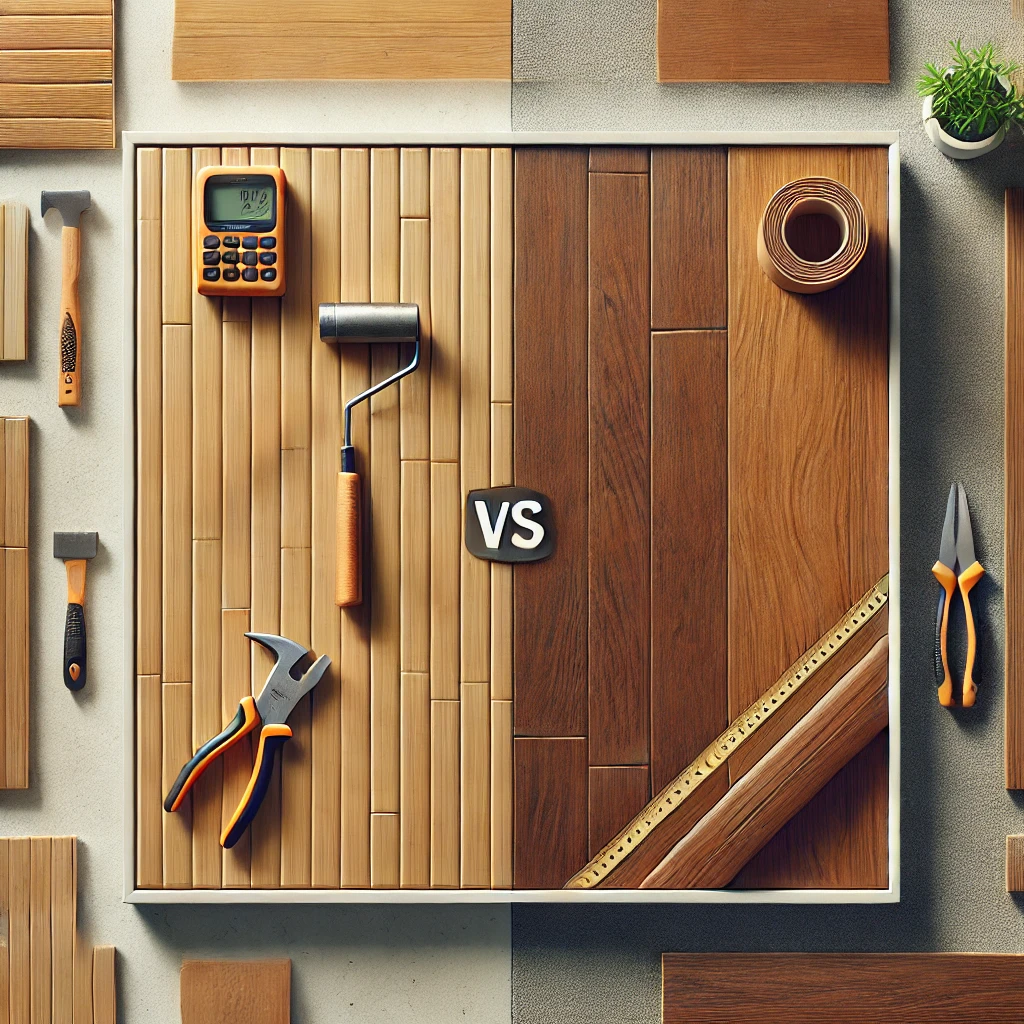
That said, hardwood is not one-size-fits-all. Some clients are better served by engineered hardwood than solid wood, especially in areas where moisture variation or slab foundations create challenges. Others may want the hardwood look in main living spaces but choose vinyl plank or bamboo in adjacent rooms for budget or performance reasons. A good installer helps you make those calls before the project starts, not after problems show up.
What matters most in hardwood flooring installation Los Angeles projects
Material choice gets a lot of attention, but installation quality is what determines whether your floor feels solid, looks clean, and lasts. In Los Angeles, many homes and commercial buildings come with conditions that need to be evaluated carefully. Concrete slabs, older subfloors, uneven surfaces, and previous flooring layers can all affect the final result.
Professional installation starts with preparation. That means checking moisture levels, inspecting the subfloor, confirming grade and layout, and identifying transitions between rooms. Skipping those steps is where many flooring problems begin. Gaps, movement, squeaks, lifting, and premature wear often trace back to poor prep work, not bad wood.
Acclimation also matters, although how much depends on the product. Solid hardwood and engineered hardwood respond differently to indoor conditions, and Los Angeles homes with powerful HVAC systems or large sun-facing windows can shift temperature and humidity more than owners expect. A professional team accounts for those conditions when planning the installation.
Layout is another detail that separates average work from high-quality craftsmanship. Board direction, plank length variation, stagger patterns, and transition placement all affect the finished appearance. In open-concept homes and commercial spaces, these visual details are impossible to ignore once the floor is down.
Solid vs engineered hardwood for Los Angeles properties
Many customers begin by asking whether solid hardwood is better than engineered hardwood. The real answer is that it depends on the space, budget, and long-term goals.
Solid hardwood is cut from a single piece of wood. It offers authenticity, can be sanded and refinished multiple times, and appeals to buyers who want traditional hardwood performance. It is a strong choice in many residential settings, especially above-grade rooms with stable interior conditions.
Engineered hardwood has a real wood top layer over a layered core. That construction gives it more dimensional stability, which can make it a better fit over concrete slabs or in buildings where moisture and temperature shifts are more of a concern. Since many Los Angeles properties are built on slab foundations, engineered wood is often the more practical recommendation.
Neither option is automatically right. Solid hardwood can be worth the investment in the right environment, while engineered hardwood can save time and reduce installation risk without sacrificing visual appeal. The best choice usually comes from balancing appearance, structure, and budget instead of chasing a blanket rule.
The cost of hardwood installation and what affects it
Price matters, especially in a market like Los Angeles where renovation budgets can move quickly. Hardwood flooring costs are shaped by more than square footage. Species, plank width, finish type, subfloor condition, room layout, demolition needs, and trim work all influence the final estimate.
Labor is a major part of the value. A lower quote can look attractive at first, but if it leaves out floor prep, moisture testing, furniture moving, or finish details, the savings may disappear fast. Flooring is one of the most visible surfaces in a property. If boards shift, edges lift, or cuts around walls look rough, it shows every day.
The smarter way to evaluate cost is to ask what is included and what problems are being prevented. Professional installation helps avoid expensive corrections later. It also saves time, which matters for rental turnovers, business operations, and families trying to keep disruption to a minimum.
Hardwood flooring for homes, rentals, and commercial spaces
Not every hardwood project has the same goal. A family home may prioritize comfort, appearance, and long-term resale value. A rental property may need a finish that looks upscale but can handle turnover. A commercial office may need a clean, durable surface that supports branding and daily use without constant maintenance.
This is where product guidance becomes just as important as installation. Wider planks may look great in a contemporary residence, but a busier office might benefit from a finish and grain pattern that hides wear more effectively. A lighter wood tone can open up a room visually, while a darker tone may create a richer look but show dust and scratches more easily.
For clients who love the look of hardwood but have concerns about maintenance or budget, it may make sense to compare options honestly. In some areas, bamboo or vinyl plank can solve performance issues better. In others, real hardwood is absolutely worth it. The right contractor should be willing to say both.
How to choose the right contractor for hardwood flooring installation Los Angeles
A good-looking sample board does not install itself. The contractor you hire will determine whether the finished floor feels level, sounds solid, and wears evenly over time.
Look for a team that knows local property conditions, explains material options clearly, and gives straightforward guidance instead of overselling a single product. You want experienced flooring professionals who can assess the subfloor, flag problem areas early, and provide a quote that reflects the real scope of the job.
It also helps to work with a company that handles more than one flooring type. That usually means they are evaluating your project based on what works best, not just on what they happen to stock or push most aggressively. A service-focused contractor should be able to explain why hardwood is the right fit for one room and why another material may be smarter elsewhere.
At Magnet Flooring, that practical approach is part of the value. Clients want craftsmanship, but they also want honest recommendations, affordable pricing, and a process that respects their time and property.
What to expect during the installation process
Most hardwood projects begin with an on-site assessment and estimate. This is where room measurements, subfloor conditions, material preferences, and timeline expectations get clarified. Once the product is selected, the next steps usually include surface preparation, removal of existing flooring if needed, moisture checks, layout planning, and installation.
Depending on the product and site conditions, the floor may be nailed, glued, or floated. Each method has its place. What matters is using the right system for the material and substrate. After installation, trim details, transitions, and final cleanup help complete the job.
For occupied homes and businesses, communication matters just as much as technique. Customers need to know how long the project will take, when rooms can be used again, and what kind of noise or disruption to expect. Clear expectations make the process easier from day one.
Hardwood flooring is an investment, but in the right space, it pays you back every day in appearance, durability, and property value. If you are planning a floor upgrade in Los Angeles, the smartest move is not just choosing a wood you like. It is choosing an installation team that knows how to make that floor perform the way it should.